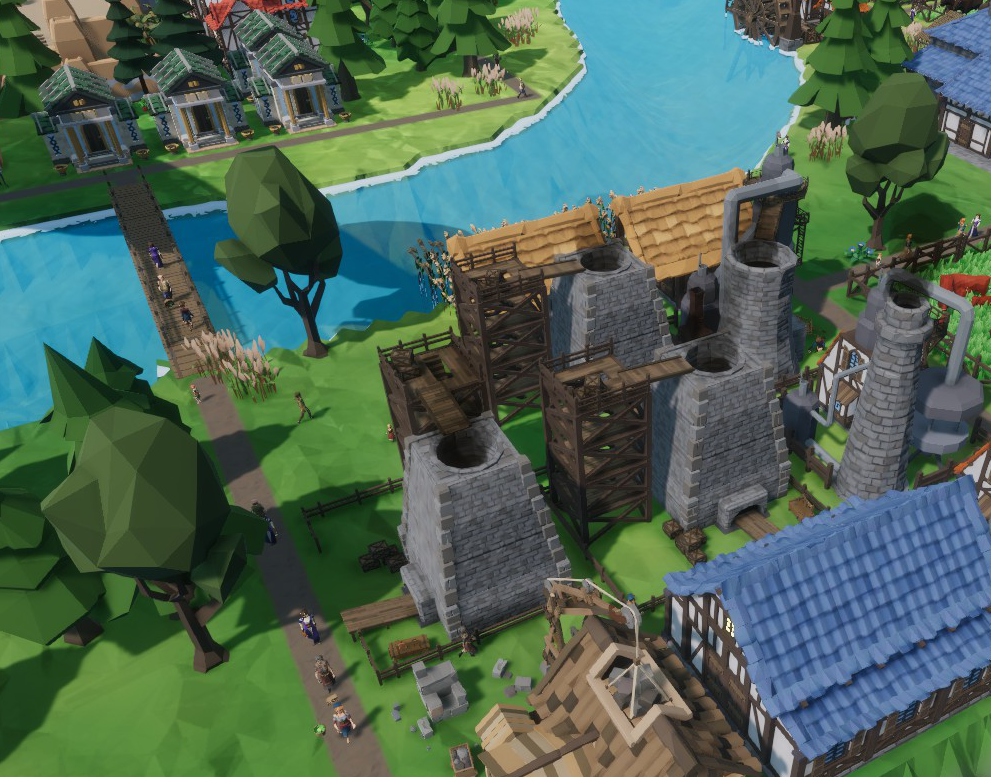
library("DiagrammeR")One of my silly side-projects is to organize the dependency chart in the Settlement Survival video game into a mermaid diagram (or a similar flow chart).
I called this settlement “Eugene” since I am currently reading Crying in H Mart by Michelle Zauner. Otherwise, this city creation has nothing to do with the real Oregon town.
I was also reading another history book called Salt, and Settlement Survival will allow me to simulate a community that relies on salt exports.
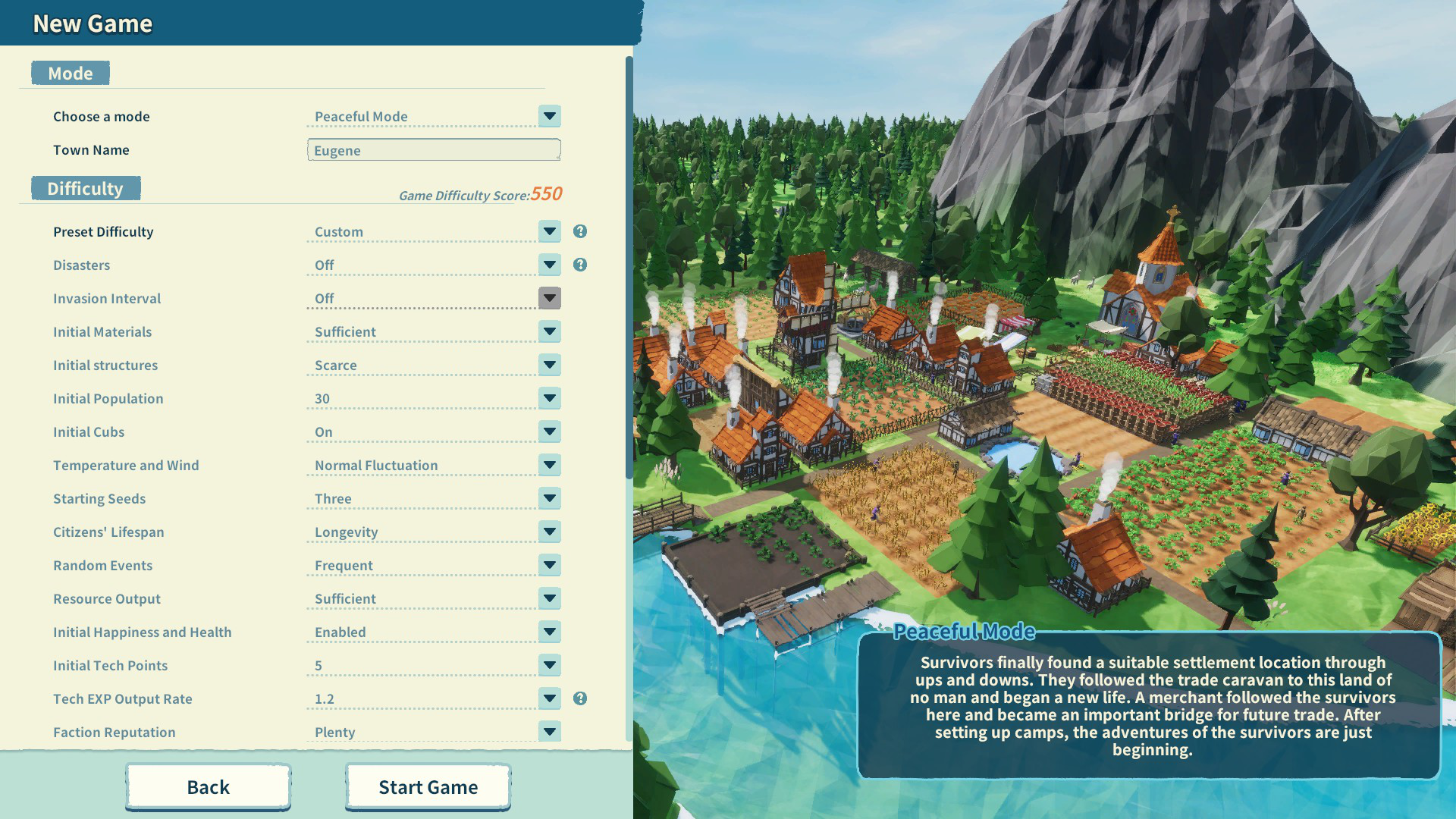
Settings
I simply play this game on “easy” difficulty settings to relax. That mainly means that natural disasters will not fall onto Eugene
NoteSettings
Settlement
Today, I will start with the beginning of the game—that is, what tends to be built in the first “year”. I am going to take some liberties and actually add more prerequisites in the beginning (otherwise, the graph simply starts with about 9 unlinked nodes).
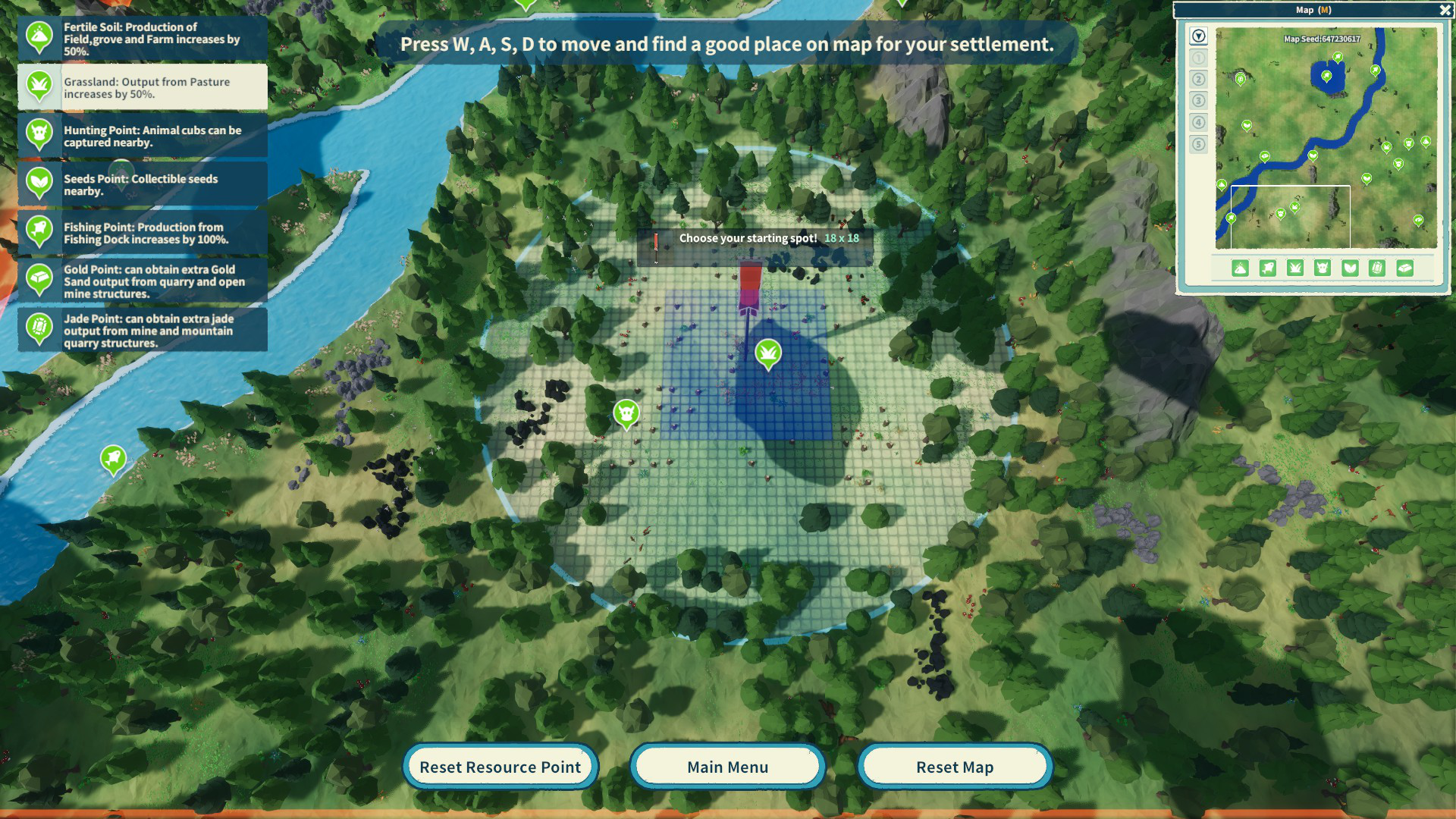
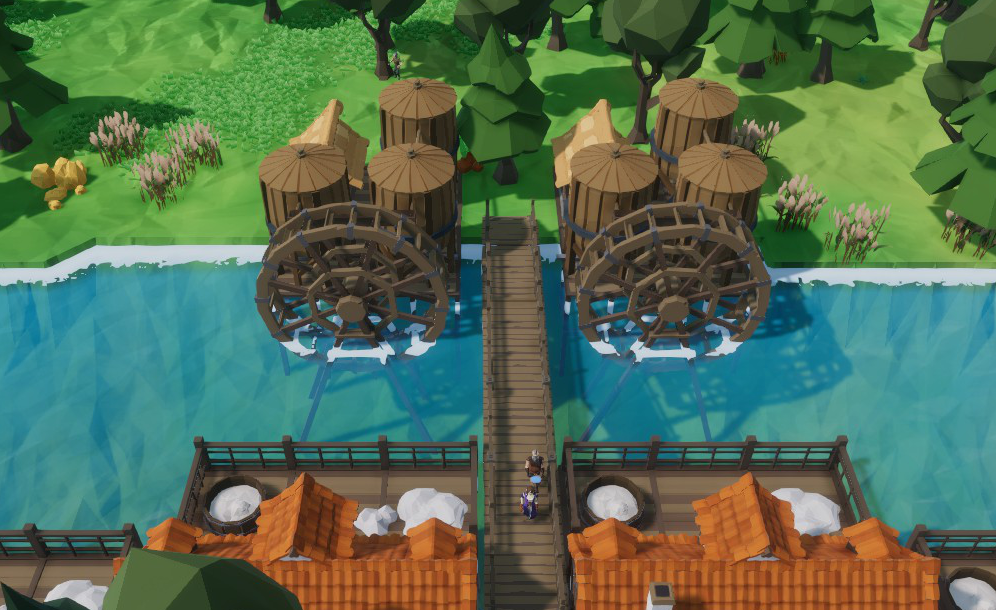
We choose a place that appeared to have promising grounds for hunting and farming while still near to some mountains.
year_1_tree <- DiagrammeR::mermaid("
  graph TD
  start[Select Location]

  house1[1 House]
  fields[3 Standard Fields]
  water[Big Well]
  forest_hut[Forester's Hut]
  gather_hut[Gatherer's Hut]
  hunter_hut[Hunter's Hut]
  chopping_house[Chopping House]
  house10[10 Houses]

  start --> house1
  start --> fields
  start --> water
  start --> hunter_hut

  house1 --> house10
  fields --> forest_hut
  water --> gather_hut
  hunter_hut --> chopping_house
")

# print
year_1_tree
Houses and Farms
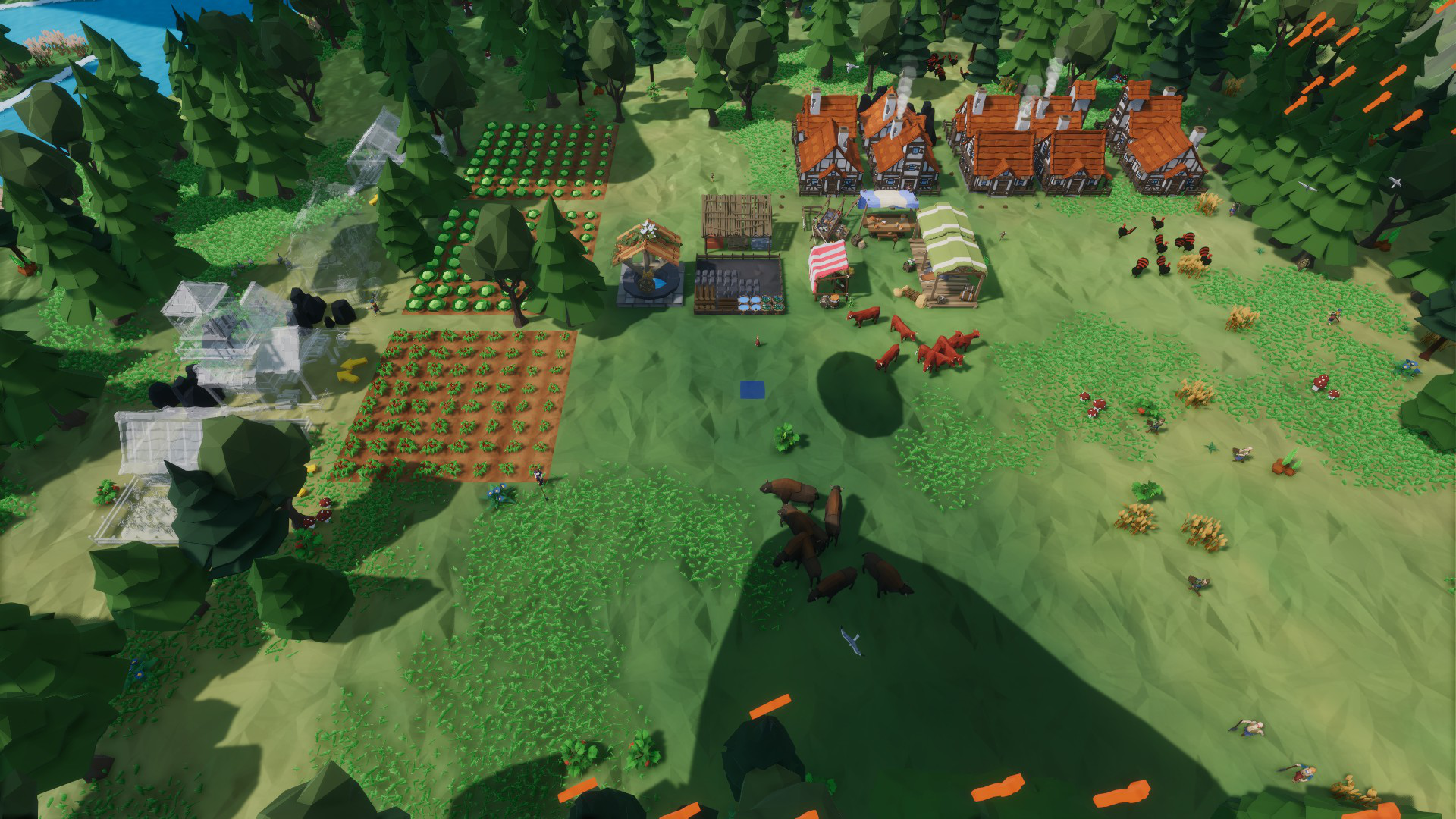
The initial 30 settlers want at least 7 houses to comfortably live with their families.
Meanwhile, we start with 3 standard fields to grow food
- 2 fields of cabbages
- one field of chili peppers
Division of Labor
After the farmers sow seeds for the year, I send some to build a Forester's Hut out in the woods to coordinate the chopping down of trees to get fuel for to survive the first winter.
Some folks quickly make a Big Well and one of them works as a water deliverer. Others move out to the forest too to build a Gatherer's Hut to gather wild herbs and berries.
TipForestry
You can toggle the desire for the foresters to
- fell trees
- plant trees
For instance, by telling the forester to not chop down trees, a lush forest will grow around the Forester's Hut, which may be better for the nearby Gatherer's Hut. You can always ask the townsfolk at large to chop down trees when needed.
A hunter also went out in to the woods to build a Hunter's Hut, but the town has a higher priority to have firewood, so the crew is sent back into the main village to build a Chopping House.
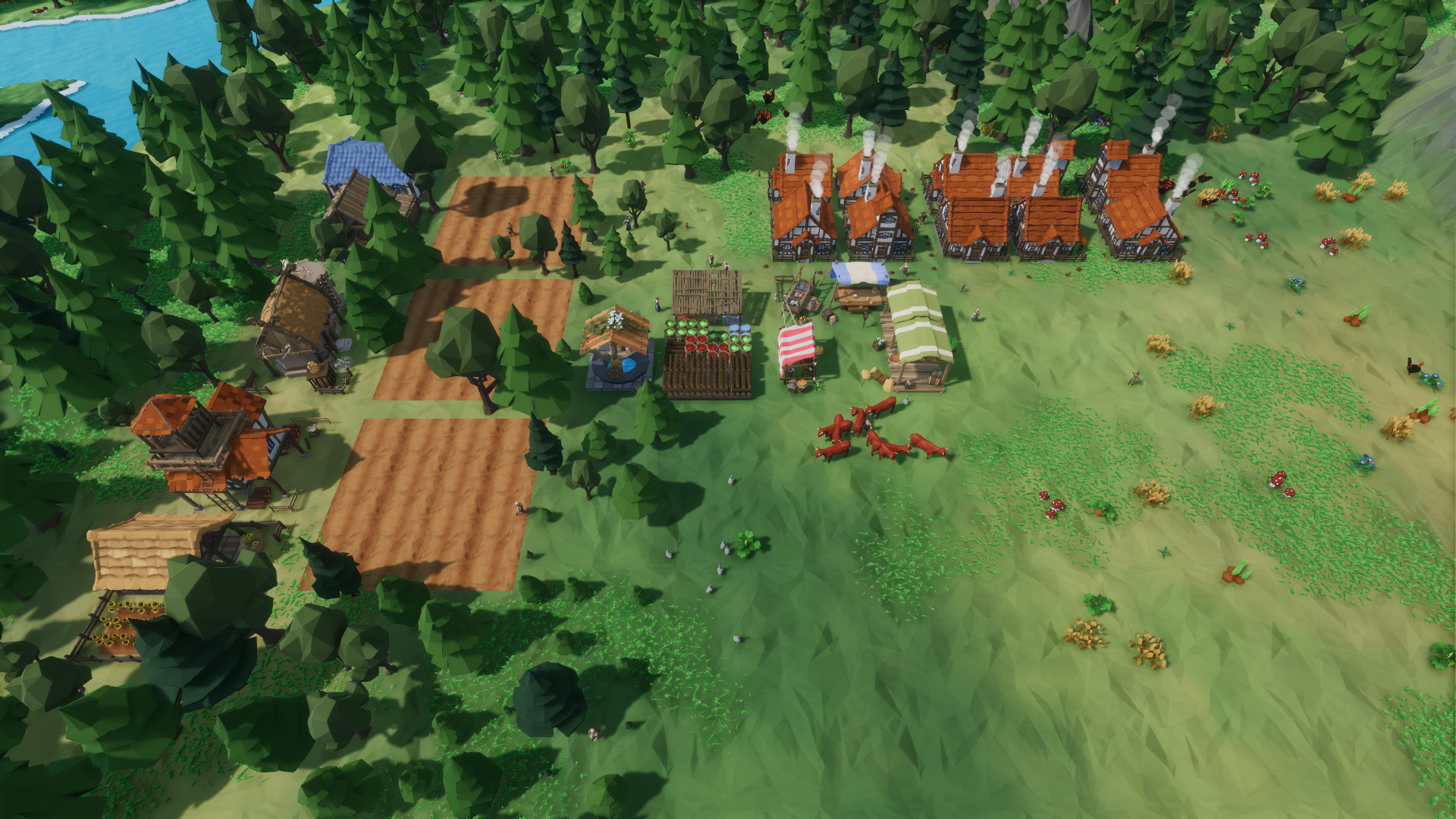
Early ambition leads to some surplus of supplies, so we spend a tech point to learn how to build a Warehouse for storage.
Community
After surviving the first winter on the inventory that we arrived with at the marketplace, our main priorities are to grow crops for sustenance and chopping wood for survival. Nevertheless, the townsfolk want to build a community, so let us build
- a
Chapel(for the game mechanic of happiness) - a
Clinic(for the game mechanic of health) - a
School(game mechanic where educated people are more productive at their jobs) - 2
Latrine(a lot of city planning is “Where does the poop go?”)
year_2_tree <- DiagrammeR::mermaid("
  graph TD
  start[Select Location]

  house1[1 House]
  fields[3 Standard Fields]
  water[Big Well]
  forest_hut[Forester's Hut]
  gather_hut[Gatherer's Hut]
  hunter_hut[Hunter's Hut]
  chopping_house[Chopping House]
  house10[10 Houses]
  chapel[Chapel]
  clinic[Clinic]
  school[School]
  latrine[2 Latrines]

  start --> house1
  start --> fields
  start --> water
  start --> hunter_hut

  house1 --> house10
  fields --> forest_hut
  water --> gather_hut
  hunter_hut --> chopping_house

  house10 --> chapel
  forest_hut --> clinic
  gather_hut --> school
  chopping_house --> latrine
")

# print
year_2_tree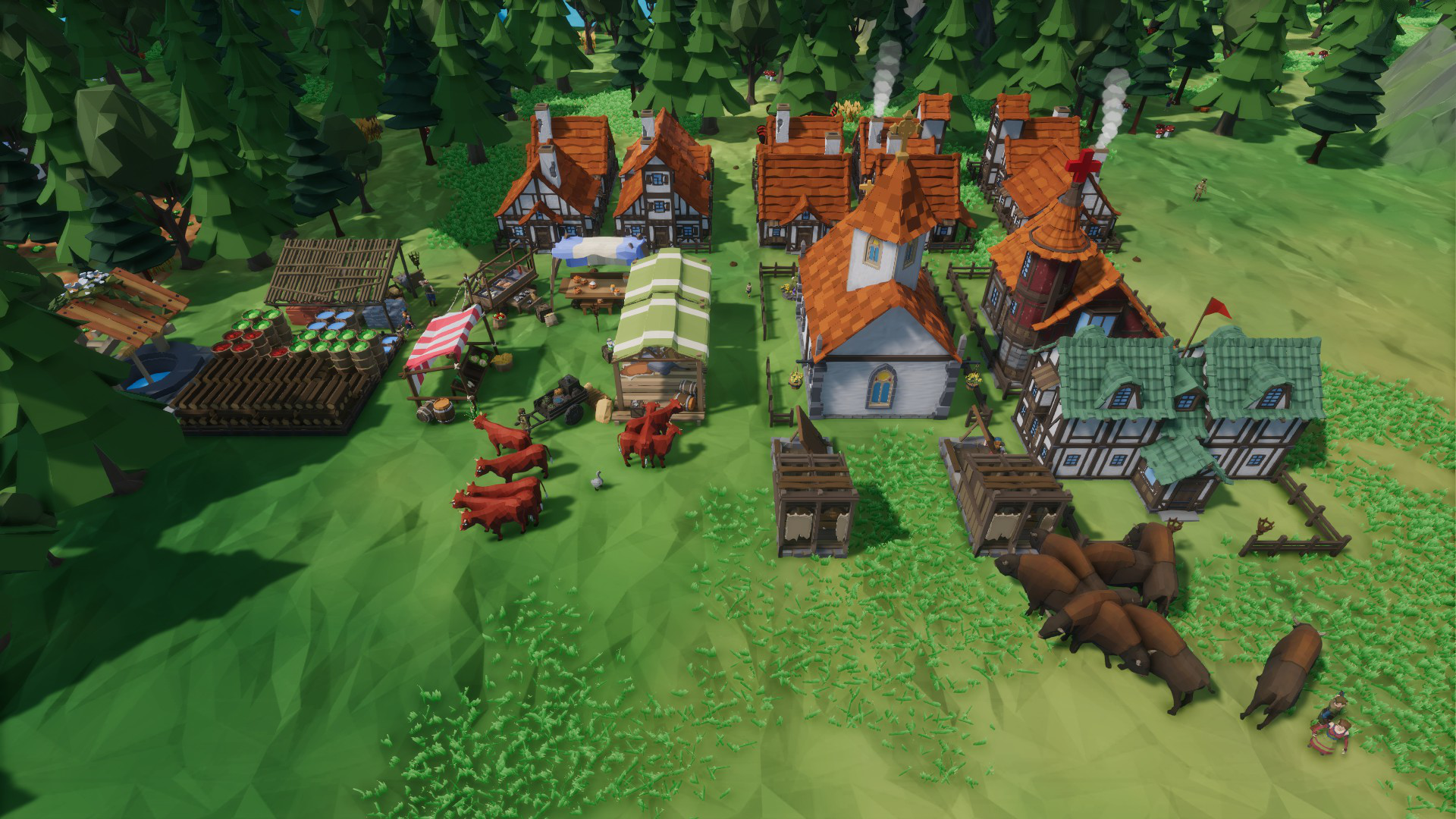
Immigration
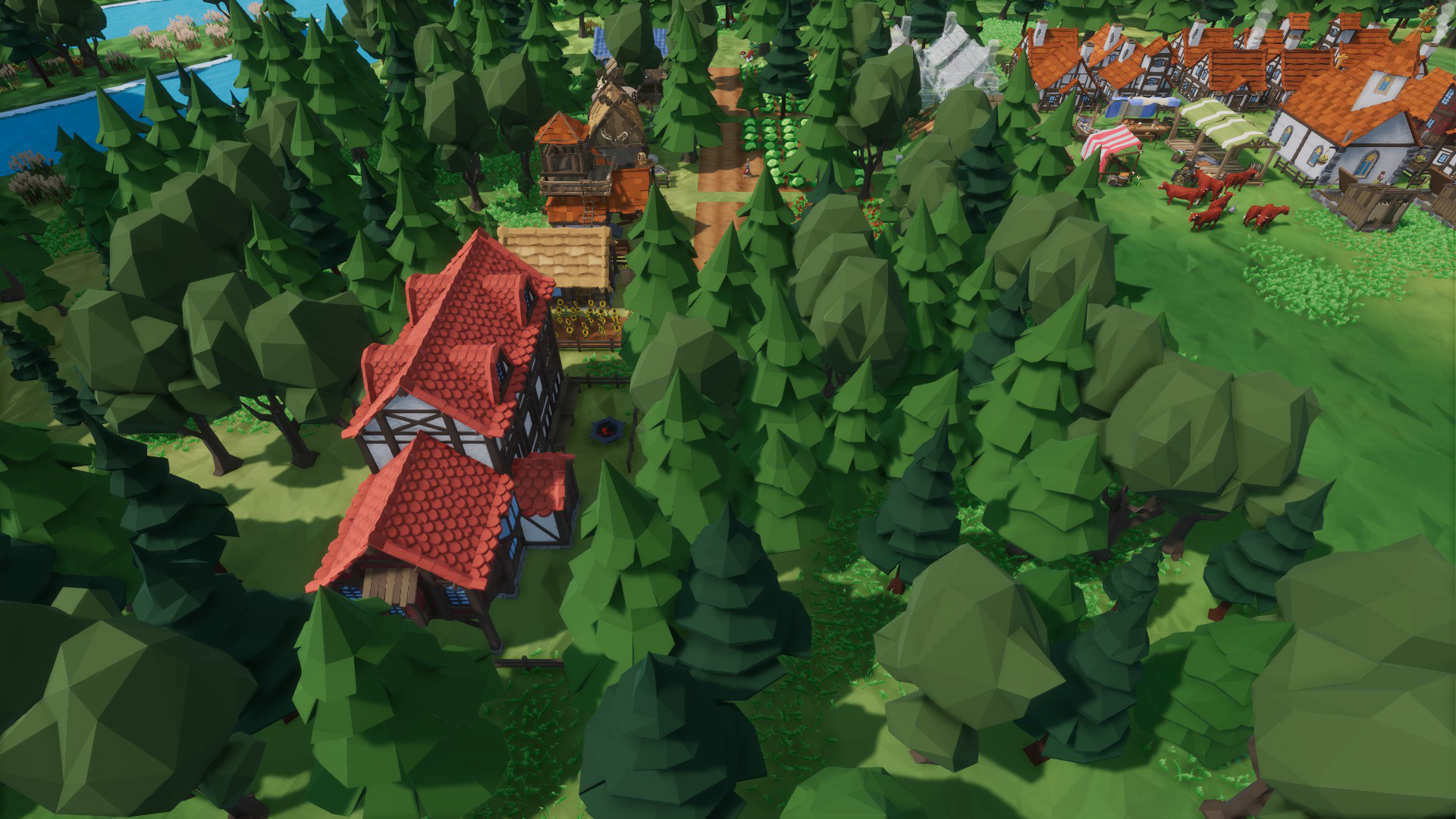
The original settlers are a little homesick and want some more of the variety that their former towns had. Alas, we don’t have many people leftover to take on new jobs, so we need to welcome immigrants to our settlement. This means demand for new homes to house them all and a Town Hall for these official matters.
year_3_tree <- DiagrammeR::mermaid("
  graph TD
  start[Select Location]

  house1[1 House]
  fields[3 Standard Fields]
  water[Big Well]
  forest_hut[Forester's Hut]
  gather_hut[Gatherer's Hut]
  hunter_hut[Hunter's Hut]
  chopping_house[Chopping House]
  house10[10 Houses]
  chapel[Chapel]
  clinic[Clinic]
  school[School]
  latrine[2 Latrines]
  town_hall[Town Hall]

  start --> house1
  start --> fields
  start --> water
  start --> hunter_hut

  house1 --> house10
  fields --> forest_hut
  water --> gather_hut
  hunter_hut --> chopping_house

  house10 --> chapel
  forest_hut --> clinic
  gather_hut --> school
  chopping_house --> latrine

  chapel --> town_hall
  clinic --> town_hall
  school --> town_hall
  latrine --> town_hall
")

# print
year_3_tree
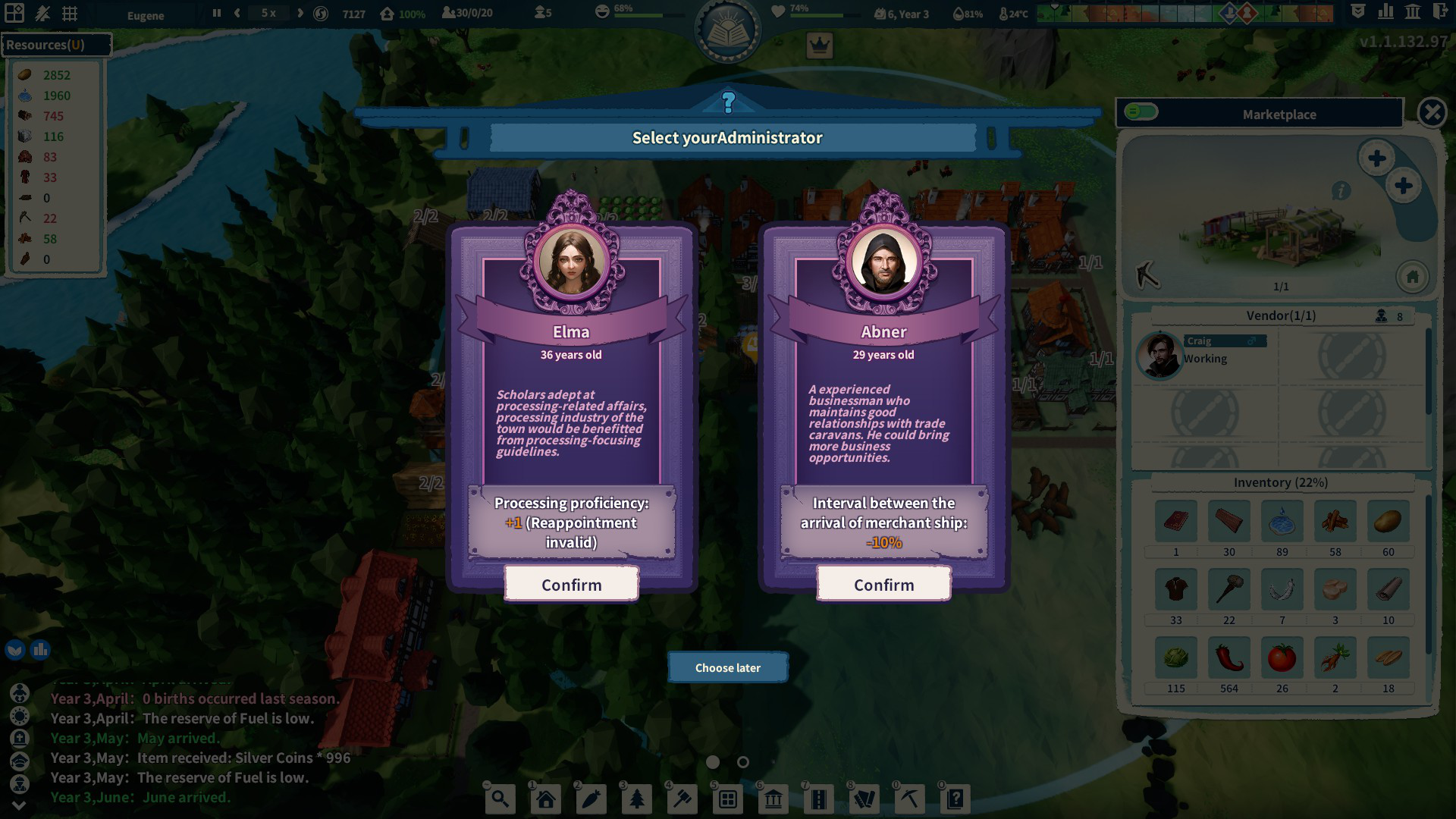
Upon reaching a population of 50, we elected an administrator to start to oversee matters. The wise Elma uses her scholarly expertise to increase processing proficiency.
The other candidate was personable too, but ran on a platform of increased mercantile arrivals (but we don’t have any docks yet).
Clothes
The next priority is producing clothes. The villagers have the tailor skills to make rough clothes, but they also need a supply chain of leather, so we define a 6x6 space for a pasture. The villagers then herded the cows into the pasture.
tailor_tree <- DiagrammeR::mermaid("
  graph TD
  town_hall[Town Hall]
  pasture[Pasture]
  tailor[Tailor]

  town_hall --> pasture
  pasture --> tailor
")

# print
tailor_tree 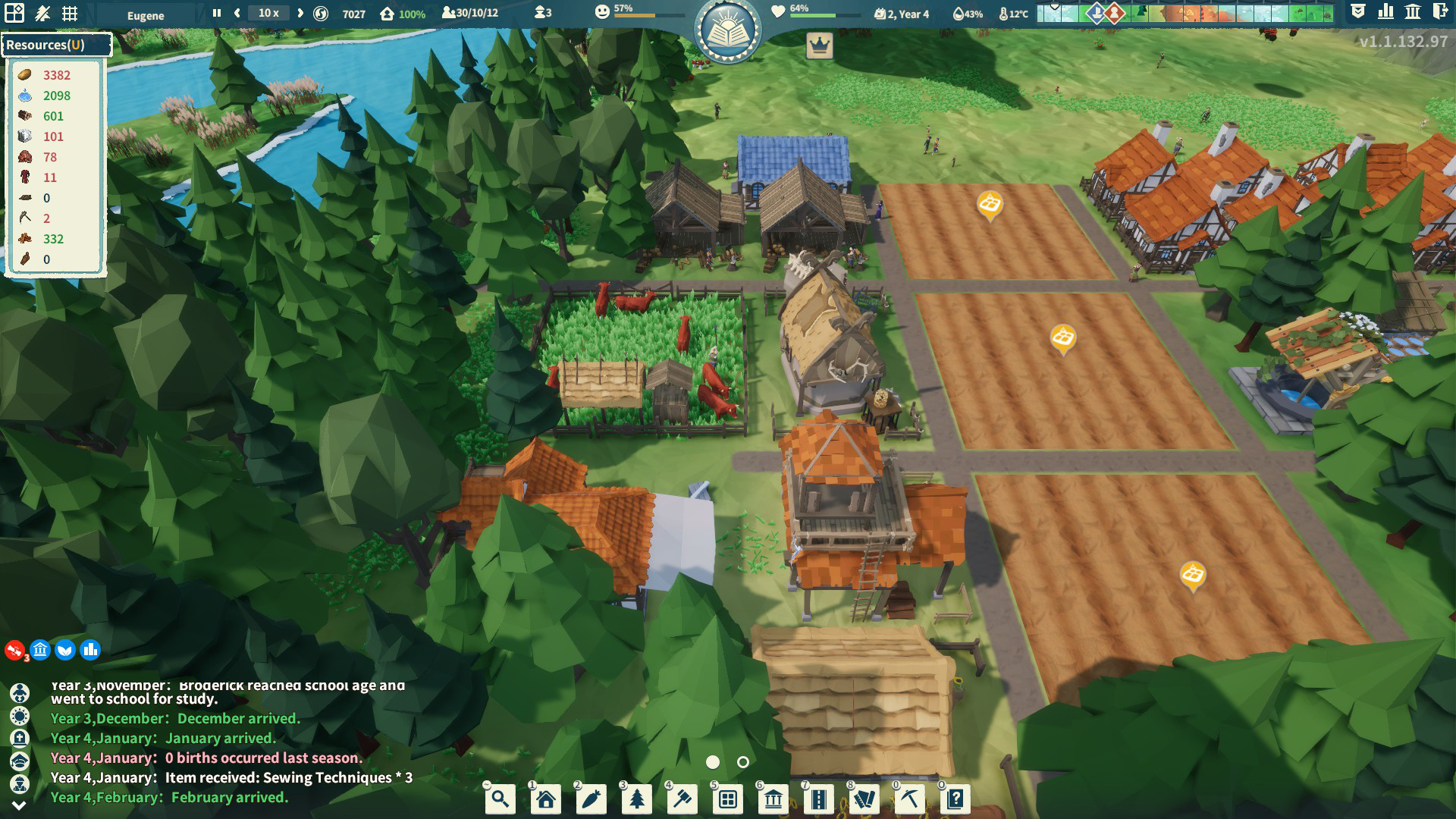
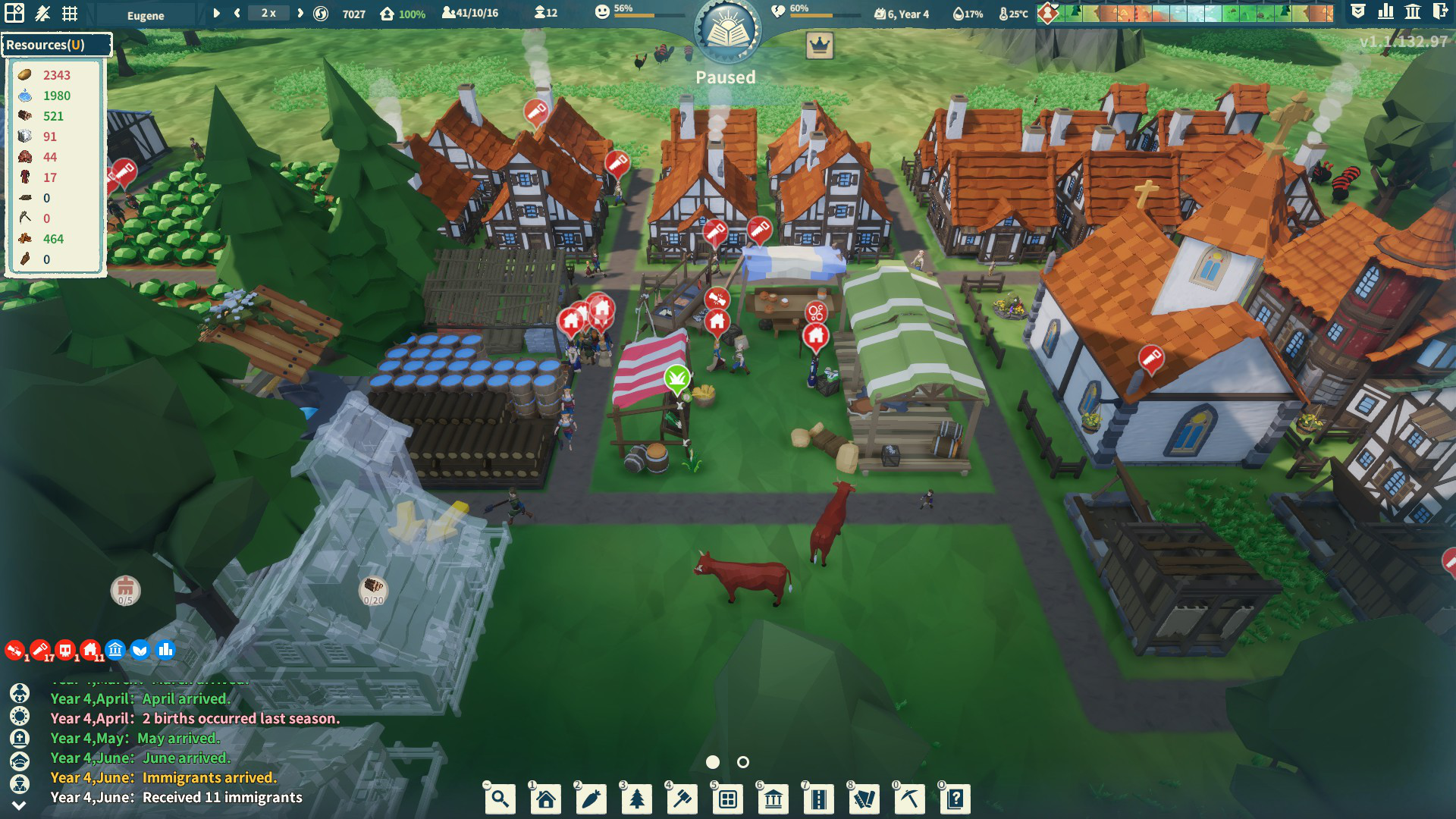
We also welcomed our first set of immigrants. Alas, there was one who might have a bit of cholera, but fortunately we have a doctor who is working on that case (along with the usual workplace injuries.)
Mining
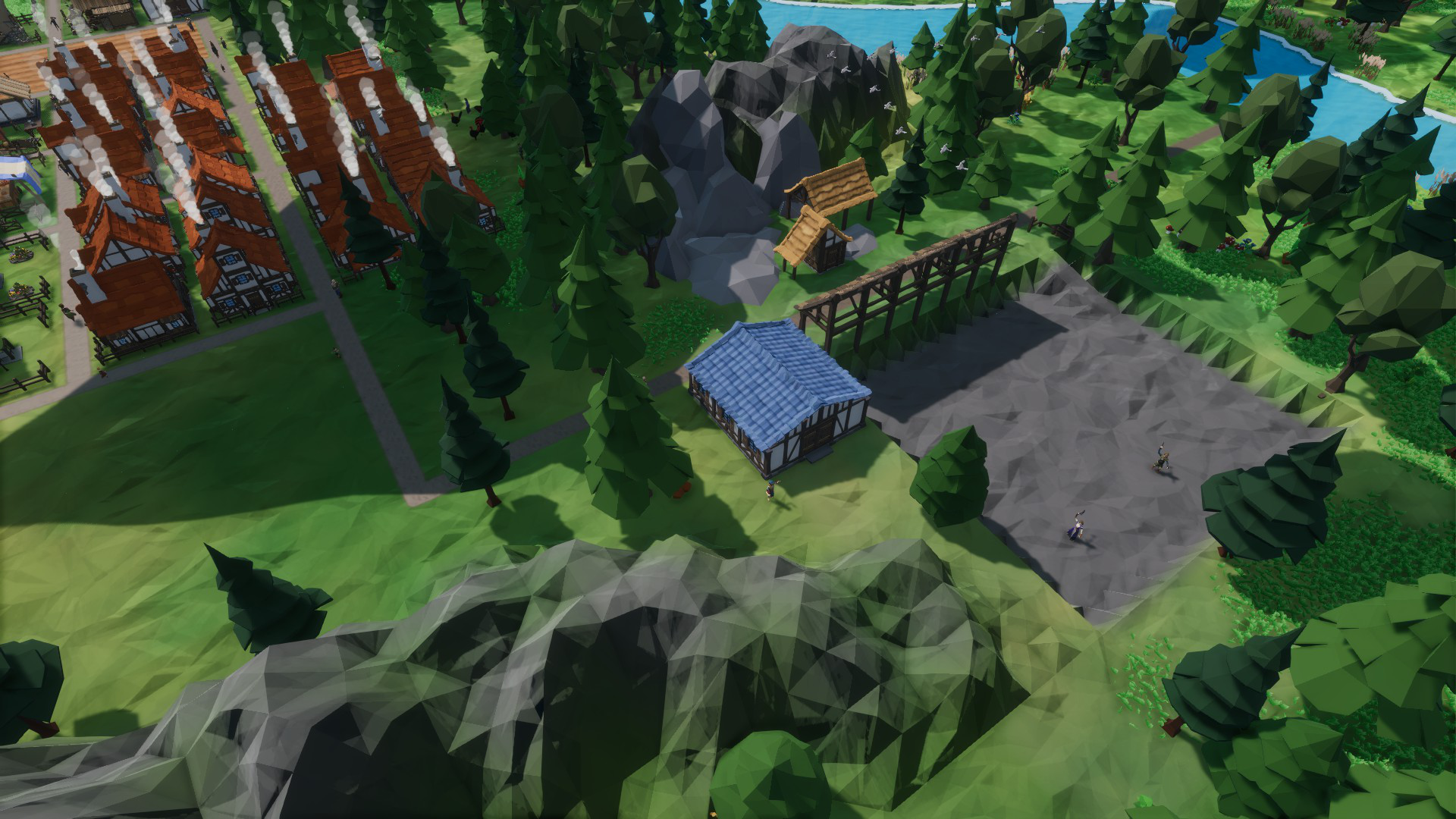
In this magical land, the trees grow back quickly, so having enough lumber is easy to achieve. However, stone and iron ore do not replenish in the grassy valleys, so we ask the young laborers to excavate
- a
Minein a mountainside - a
Quarryacross the road
Both are indestructible (cannot reclaim the land nor materials), so we placed both features far from the main community areas.
mining_tree <- DiagrammeR::mermaid("
  graph TD
  town_hall[Town Hall]
  mine[Mine]
  pasture[Pasture]
  quarry[Quarry]
  tailor[Tailor]
  smithy[Smithy]

  town_hall --> pasture
  pasture --> tailor
  town_hall --> quarry
  quarry --> mine
  mine --> smithy
")

# print
mining_tree
Dredge
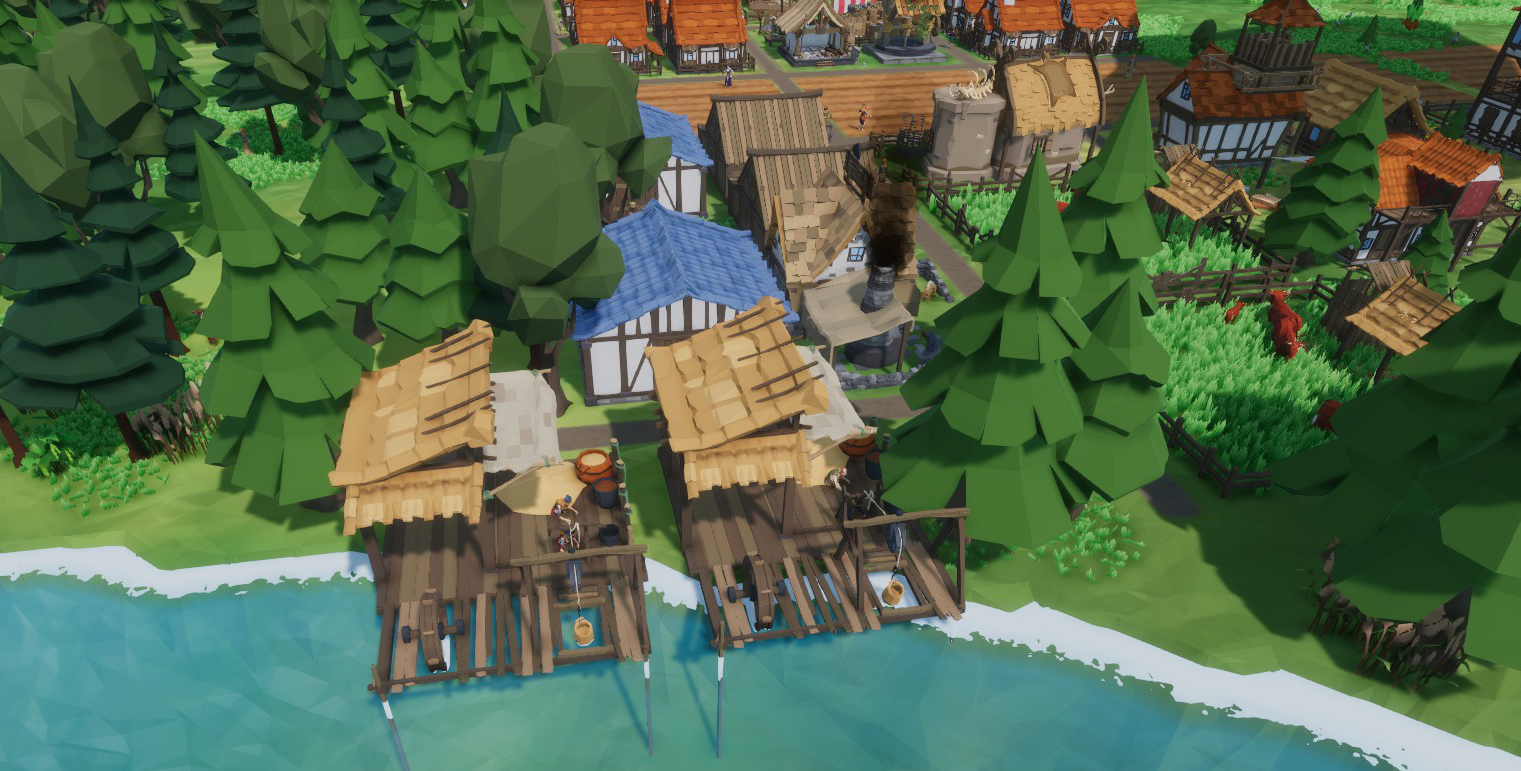
With a steady supply of stone and iron ore (for now), we can look toward the river for more resources. The clever townsfolk construct 2 Sandpit—one to gather sand, and another to gather clay. The sand pits are placed near the warehouses for quick storage.
dredge_tree <- DiagrammeR::mermaid("
  graph TD
  town_hall[Town Hall]
  mine[Mine]
  pasture[Pasture]
  quarry[Quarry]
  tailor[Tailor]
  sandpit_clay[Sandpit: Clay]
  sandpit_sand[Sandpit: Sand]
  smithy[Smithy]

  town_hall --> pasture
  pasture --> tailor

  town_hall --> quarry
  quarry --> mine
  mine --> smithy

  quarry --> sandpit_clay
  mine --> sandpit_clay
  quarry --> sandpit_sand
  mine --> sandpit_sand
")

# print
dredge_tree
Apriaries
A fad grabbed the attention of entreprenuerial townsfolk, and they built a couple of Apiary to raise bees. We can either gather honey or beeswax at apiaries, and we focus on the latter now by storing surplus beeswax in the warehouses.
NoteCommentary on Apiaries
I liked the apiaries in-game because the trade value of beeswax. However, patches of the game nerfed some abilities to accelerate the growth of settlements (while enhancing other aspects of the game). Now, the beeswax is no more valuable than selling crops from the fields. I chose to build 2 apiaries here (along with assigning 3 villagers to each) out of nostalgia. Furthermore, I liked having a crop (beeswax) that was separate from our main food supplies.
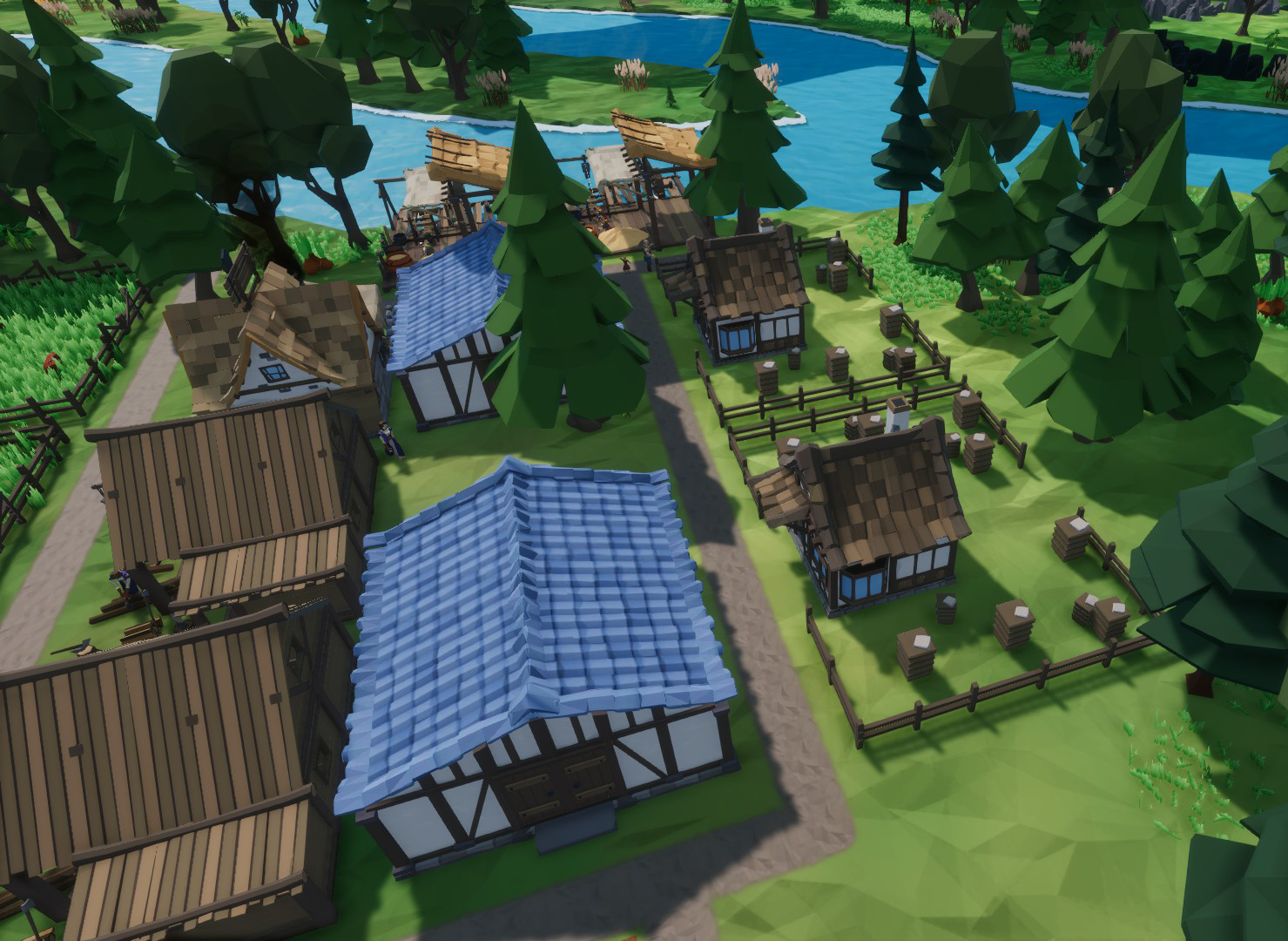
Also, with the growing town, finding animals through the Hunters Hut did not produce enough materials for the Tailor, so we dedicated some land as a Pasture to raise some cows to eventually get a steady supply of fur, fat, and meat.
apiaries_tree <- DiagrammeR::mermaid("
  graph TD
  town_hall[Town Hall]
  mine[Mine]
  quarry[Quarry]
  sandpit_sand[Sand Pit: Sand]
  sandpit_clay[Sand Pit: Clay]
  tailor[Tailor]
  smithy[Smithy]
  apiary[Apriary]
  pasture[Pasture]

  town_hall --> mine
  town_hall --> quarry

  mine --> sandpit_sand
  quarry --> sandpit_sand
  mine --> sandpit_clay
  quarry --> sandpit_clay
  town_hall --> pasture
  quarry --> smithy

  sandpit_sand --> apiary
  sandpit_clay --> apiary
  pasture --> tailor
")

# print
apiaries_tree
Cemetary
A few years into the settlement, alas, some of the villagers passed away. They requested having ways to mourn the losses, so now there is a cemetary in the corner.
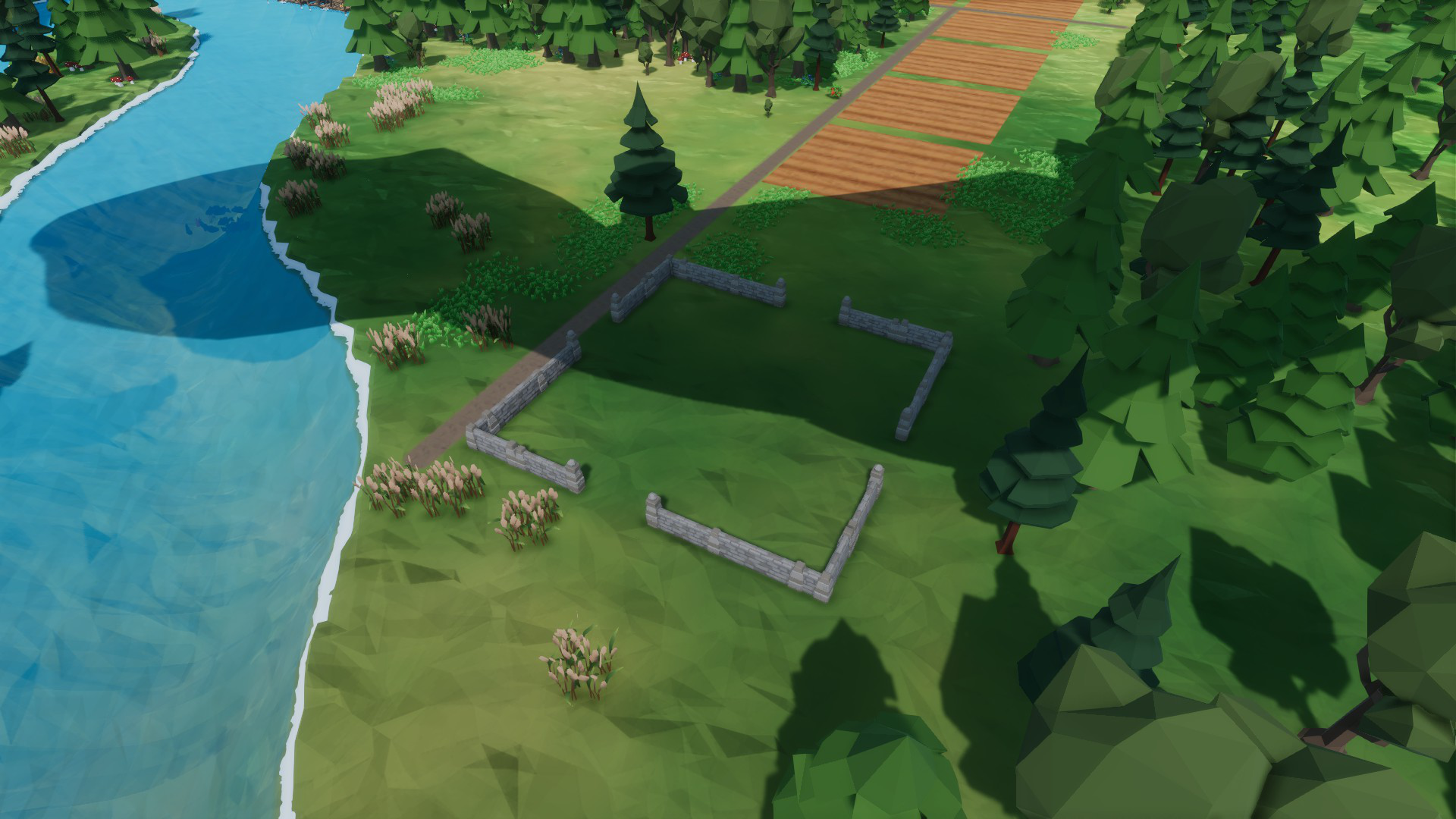
Also, the population growth got close to running out of food, so all of the unemployed villagers where assigned to new farms.
cemetary_tree <- DiagrammeR::mermaid("
  graph TD
  town_hall[Town Hall]
  mine[Mine]
  quarry[Quarry]
  sandpit_sand[Sand Pit: Sand]
  sandpit_clay[Sand Pit: Clay]
  tailor[Tailor]
  smithy[Smithy]
  apiary[Apriary]
  pasture[Pasture]
  cemetary[Cemetary]

  town_hall --> mine
  town_hall --> quarry

  mine --> sandpit_sand
  quarry --> sandpit_sand
  mine --> sandpit_clay
  quarry --> sandpit_clay
  town_hall --> pasture
  quarry --> smithy

  sandpit_sand --> apiary
  sandpit_clay --> apiary
  pasture --> tailor
  smithy --> cemetary
")

# print
cemetary_tree
Trade
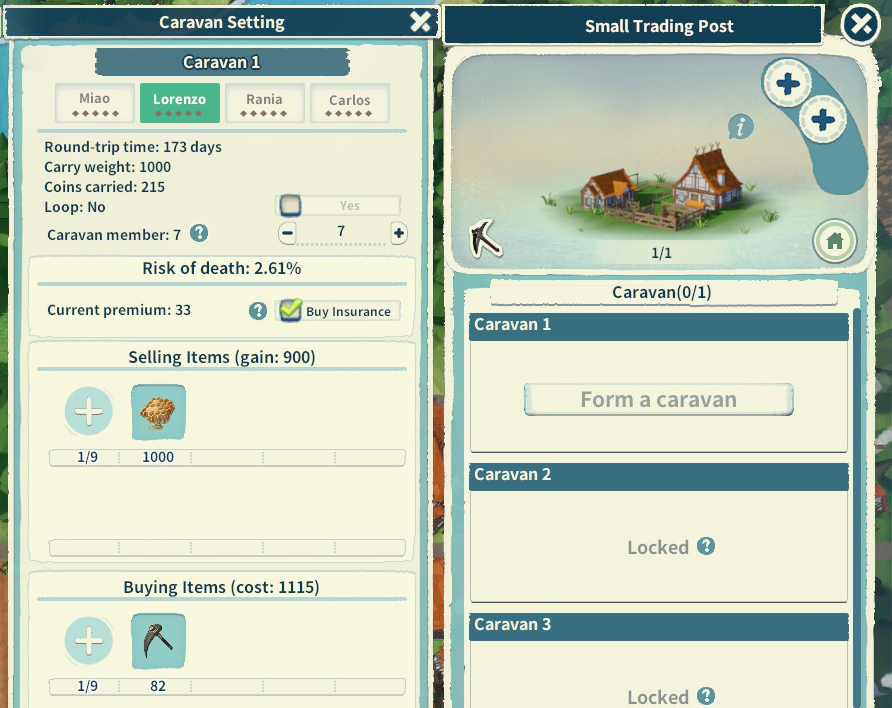
While the tailor and smithy are valued members of the community, it seems that production of clothes and tools respectively will not match the needs for a growing settlement. We build a Small Trading Post and send out caravans (7 villagers each) to buy those supplies. We have plenty of flax (from the initial settlement supplies) and beeswax (from the apiaries) to sell in the processes. I try to obtain each desired good at an amount of double the current population, but also mindful to try to make the caravan have a positive gain in silver coins.
NoteCommentary on Insurance
Yes, it seems to be good to always get the insurance (small cost now, but pays out if the caravan trip does not return). The game has been refined to make the insurance worth it.
We also invest in tech points to augment trade (in the left column of the technology-trade menu):
- Insurance
- Quick Preparation
- Superior Insurance
- Well-Known Reputation
trading_post_tree <- DiagrammeR::mermaid("
  graph TD
  town_hall[Town Hall]
  mine[Mine]
  quarry[Quarry]
  sandpit_sand[Sand Pit: Sand]
  sandpit_clay[Sand Pit: Clay]
  tailor[Tailor]
  smithy[Smithy]
  apiary[Apriary]
  pasture[Pasture]
  cemetary[Cemetary]
  small_trading_post[Small Trading Post]

  town_hall --> mine
  town_hall --> quarry

  mine --> sandpit_sand
  quarry --> sandpit_sand
  mine --> sandpit_clay
  quarry --> sandpit_clay
  town_hall --> pasture
  quarry --> smithy

  sandpit_sand --> apiary
  sandpit_clay --> apiary
  pasture --> tailor
  smithy --> cemetary

  apiary --> small_trading_post
")

# print
trading_post_tree
The first trade sent beeswax and flax to Lorenzo’s faction in exchange for iron tools.
Cattle
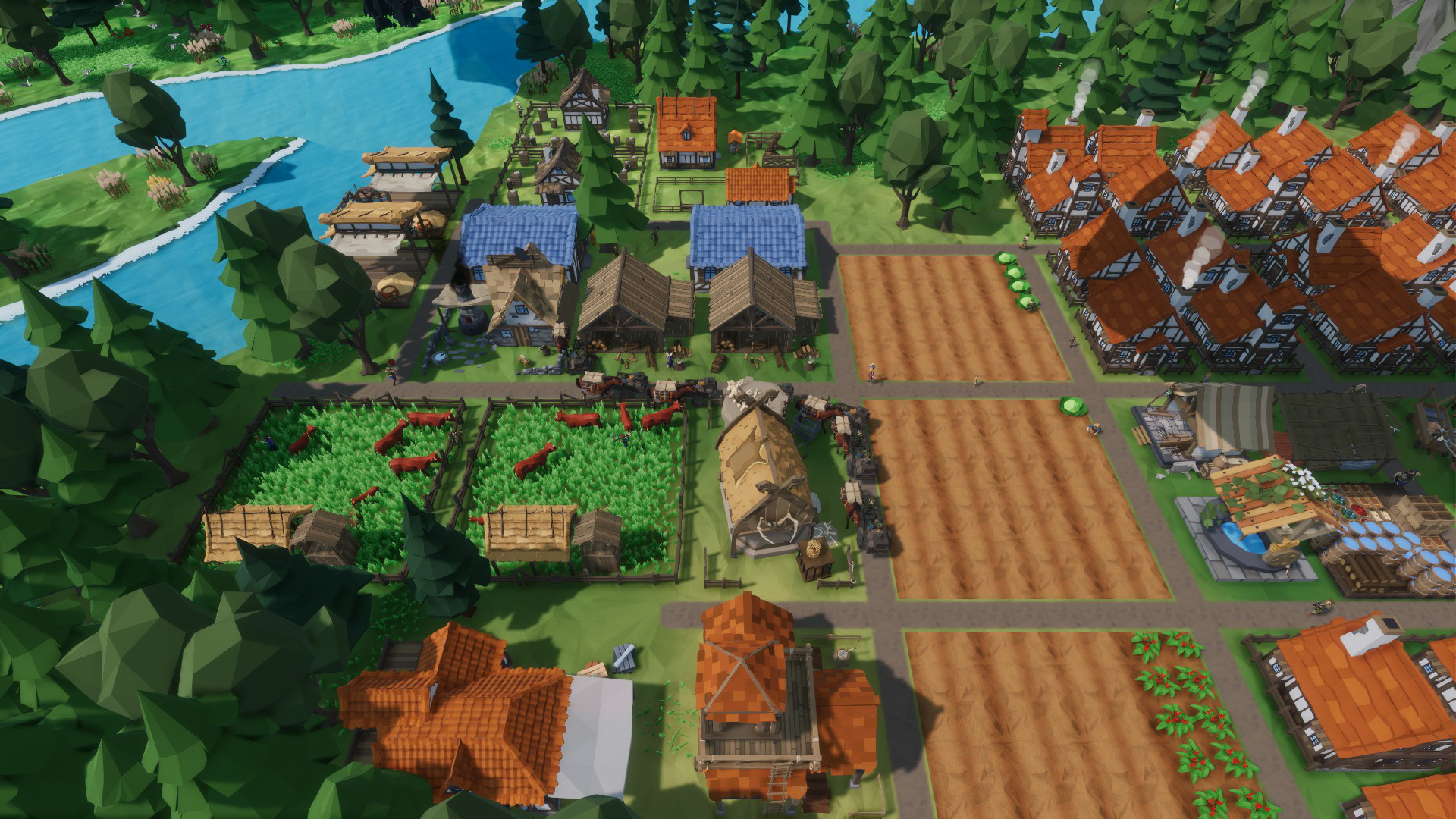
Raw materials for the tailor were running low —namely: leather—so we allocated more space for a couple of pasture to raise the cattle calves that the hunter found. This will lead to a steady supply of beef, leather, and dung.
pasture_tree <- DiagrammeR::mermaid("
  graph TD
  town_hall[Town Hall]
  mine[Mine]
  quarry[Quarry]
  sandpit_sand[Sand Pit: Sand]
  sandpit_clay[Sand Pit: Clay]
  tailor[Tailor]
  smithy[Smithy]
  apiary[Apriary]
  pasture[Pasture]
  cemetary[Cemetary]
  small_trading_post[Small Trading Post]

  town_hall --> mine
  town_hall --> quarry

  mine --> sandpit_sand
  quarry --> sandpit_sand
  mine --> sandpit_clay
  quarry --> sandpit_clay
  town_hall --> pasture
  quarry --> smithy

  sandpit_sand --> apiary
  sandpit_clay --> apiary
  pasture --> tailor
  smithy --> cemetary

  apiary --> small_trading_post
")

# print
pasture_tree
Lumber
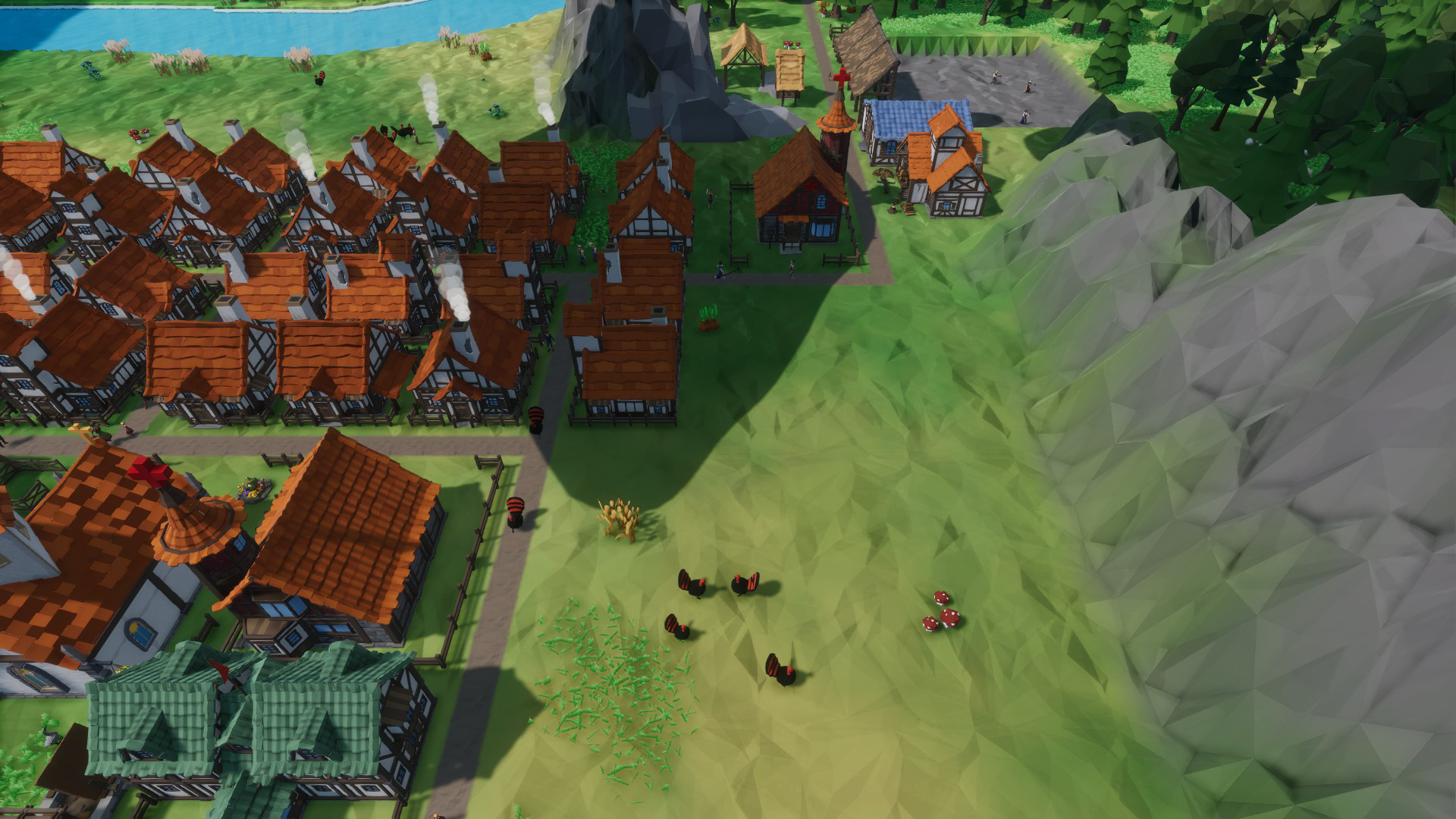
We upgraded the chopping houses to sawmills in order to refine the lumber into planks.
lumber_tree <- DiagrammeR::mermaid("
  graph TD
  town_hall[Town Hall]
  mine[Mine]
  quarry[Quarry]
  sandpit_sand[Sand Pit: Sand]
  sandpit_clay[Sand Pit: Clay]
  tailor[Tailor]
  smithy[Smithy]
  apiary[Apriary]
  pasture[Pasture]
  cemetary[Cemetary]
  small_trading_post[Small Trading Post]
  sawmill[Sawmill]

  town_hall --> mine
  town_hall --> quarry

  mine --> sandpit_sand
  quarry --> sandpit_sand
  mine --> sandpit_clay
  quarry --> sandpit_clay
  town_hall --> pasture
  quarry --> smithy

  sandpit_sand --> apiary
  sandpit_clay --> apiary
  pasture --> tailor
  smithy --> cemetary

  apiary --> small_trading_post
  tailor --> sawmill
")

# print
lumber_tree
Fishing
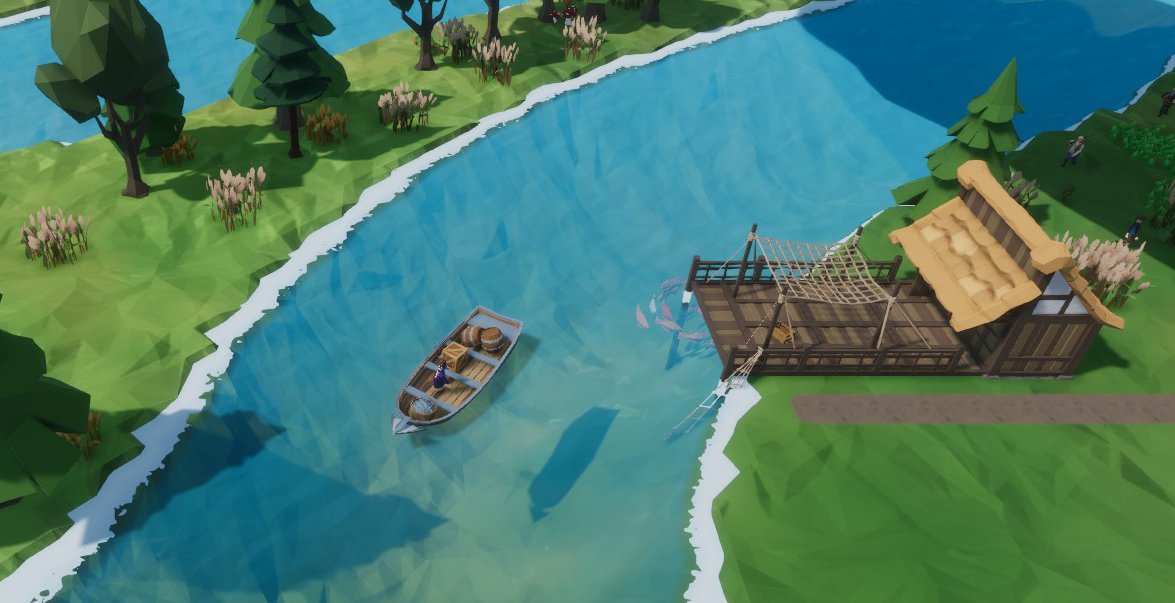
Now that we have a steady supply of plank, it is time to build a fishing dock. Scouts reported a particular place in the river that was rife with fish, so the fishermen would be able to obtain fish at a higher rate.
dock_tree <- DiagrammeR::mermaid("
  graph TD
  town_hall[Town Hall]
  mine[Mine]
  quarry[Quarry]
  sandpit_sand[Sand Pit: Sand]
  sandpit_clay[Sand Pit: Clay]
  tailor[Tailor]
  smithy[Smithy]
  apiary[Apriary]
  pasture[Pasture]
  cemetary[Cemetary]
  small_trading_post[Small Trading Post]
  sawmill[Sawmill]
  dock[Dock]

  town_hall --> mine
  town_hall --> quarry

  mine --> sandpit_sand
  quarry --> sandpit_sand
  mine --> sandpit_clay
  quarry --> sandpit_clay
  town_hall --> pasture
  quarry --> smithy

  sandpit_sand --> apiary
  sandpit_clay --> apiary
  pasture --> tailor
  smithy --> cemetary

  apiary --> small_trading_post
  tailor --> sawmill
  sawmill --> dock
")

# print
dock_tree
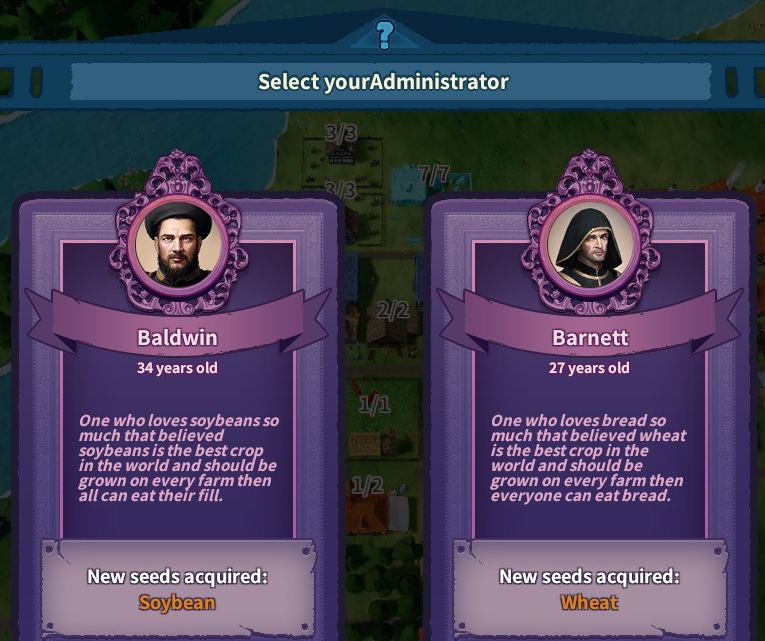
As the population surpassed 100 residents, we also elected our second administrator. We chose Baldwin, who promised to bring in soybean crops, which are said to be quite nutritious.
Salt
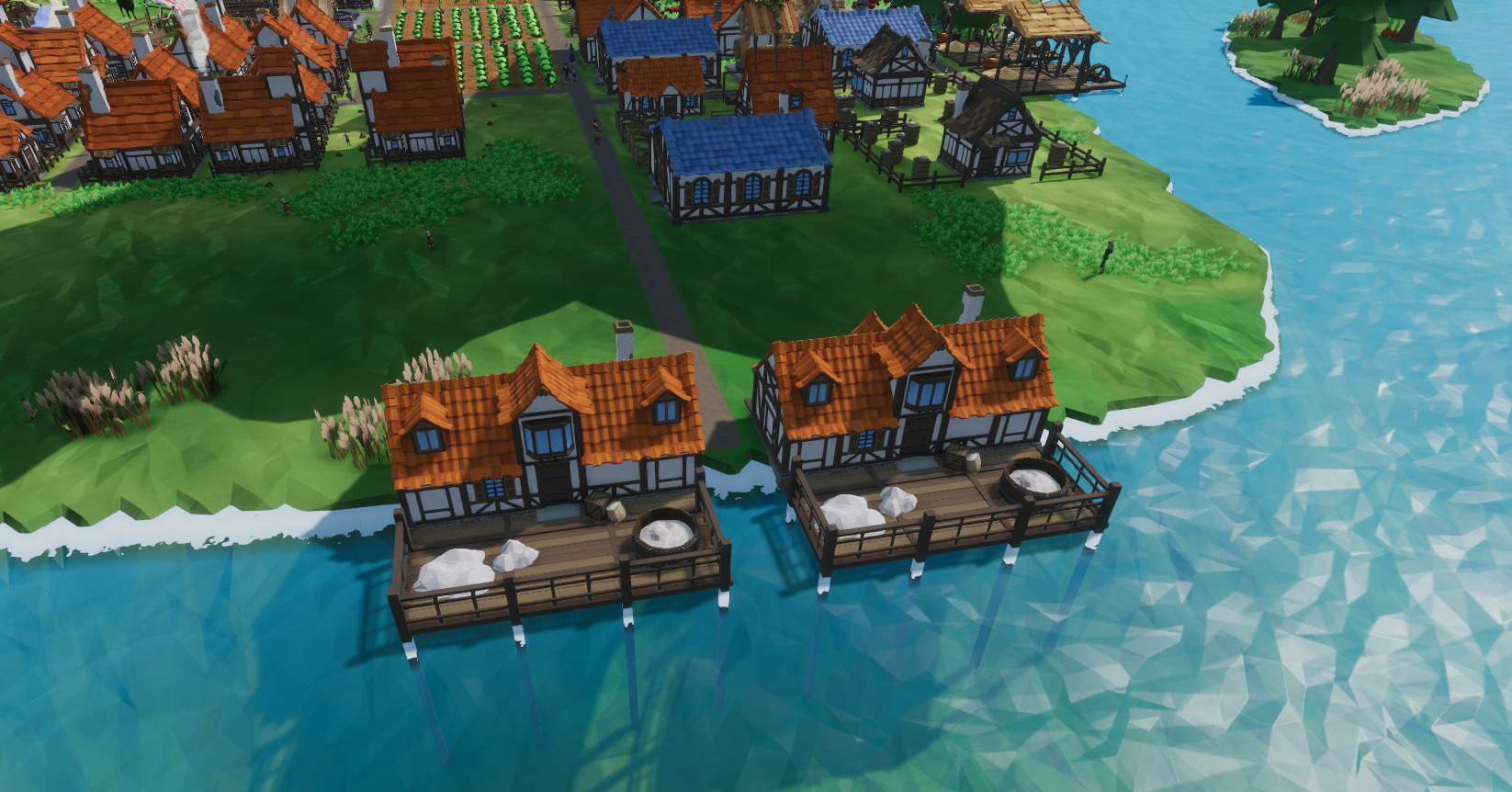
It’s finally time to get into the salt industry! Continuing to use the supply of plank, we built a pair of saltworks on the riverbank to the north.
salt_tree <- DiagrammeR::mermaid("
  graph TD
  town_hall[Town Hall]
  mine[Mine]
  quarry[Quarry]
  sandpit_sand[Sand Pit: Sand]
  sandpit_clay[Sand Pit: Clay]
  tailor[Tailor]
  smithy[Smithy]
  apiary[Apriary]
  pasture[Pasture]
  cemetary[Cemetary]
  small_trading_post[Small Trading Post]
  sawmill[Sawmill]
  dock[Dock]
  saltworks[Saltworks]

  town_hall --> mine
  town_hall --> quarry

  mine --> sandpit_sand
  quarry --> sandpit_sand
  mine --> sandpit_clay
  quarry --> sandpit_clay
  town_hall --> pasture
  quarry --> smithy

  sandpit_sand --> apiary
  sandpit_clay --> apiary
  pasture --> tailor
  smithy --> cemetary

  apiary --> small_trading_post
  tailor --> sawmill
  sawmill --> dock
  sawmill --> saltworks
")

# print
salt_tree
The salt proved to be more valuable, so this replaced the beeswax as our trading goods.
Masonry
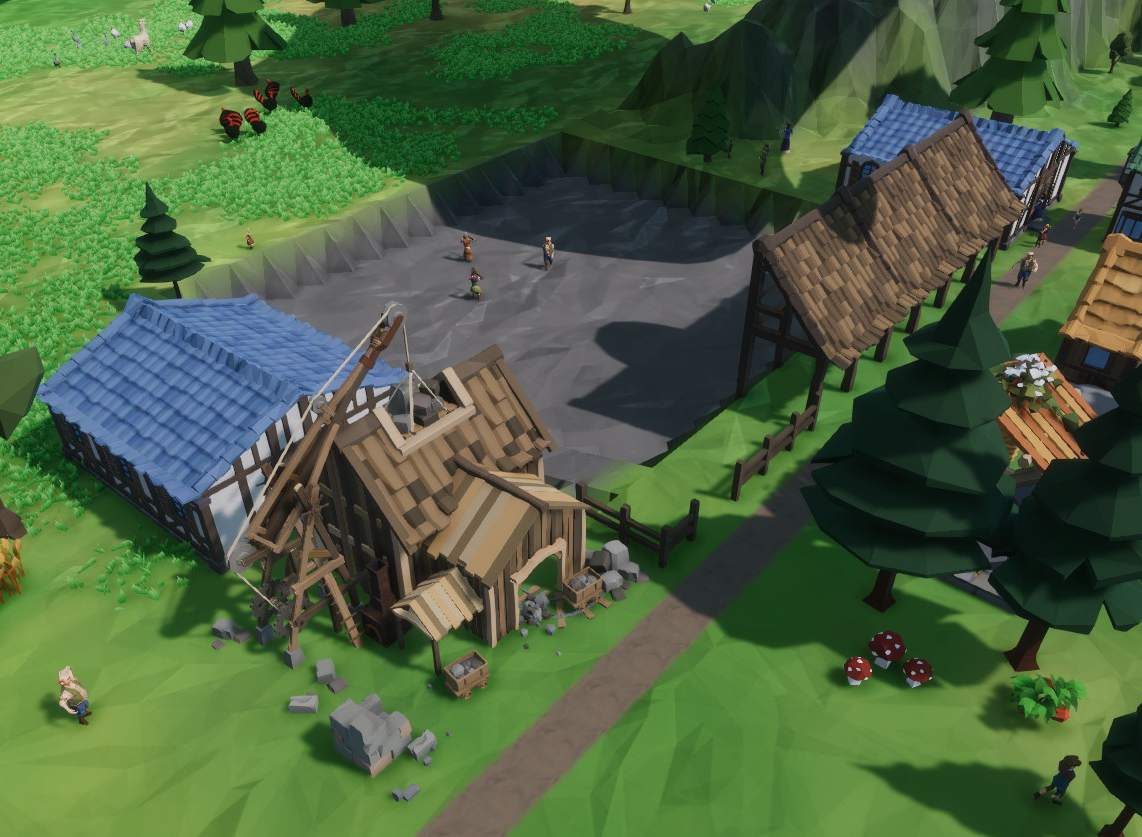
As our town progresses and folks want more advanced buildings, the scholars designed and built a Masonry Workshop to refine the quarry products into cut stone.
masonry_tree <- DiagrammeR::mermaid("
  graph TD
  town_hall[Town Hall]
  mine[Mine]
  quarry[Quarry]
  sandpit_sand[Sand Pit: Sand]
  sandpit_clay[Sand Pit: Clay]
  tailor[Tailor]
  smithy[Smithy]
  apiary[Apriary]
  pasture[Pasture]
  cemetary[Cemetary]
  small_trading_post[Small Trading Post]
  sawmill[Sawmill]
  dock[Dock]
  saltworks[Saltworks]
  masonry[Mason Workshop]

  town_hall --> mine
  town_hall --> quarry

  mine --> sandpit_sand
  quarry --> sandpit_sand
  mine --> sandpit_clay
  quarry --> sandpit_clay
  town_hall --> pasture
  quarry --> smithy

  sandpit_sand --> apiary
  sandpit_clay --> apiary
  pasture --> tailor
  smithy --> cemetary

  apiary --> small_trading_post
  tailor --> sawmill
  sawmill --> dock
  sawmill --> saltworks
  cemetary --> masonry
")

# print
masonry_tree
Security
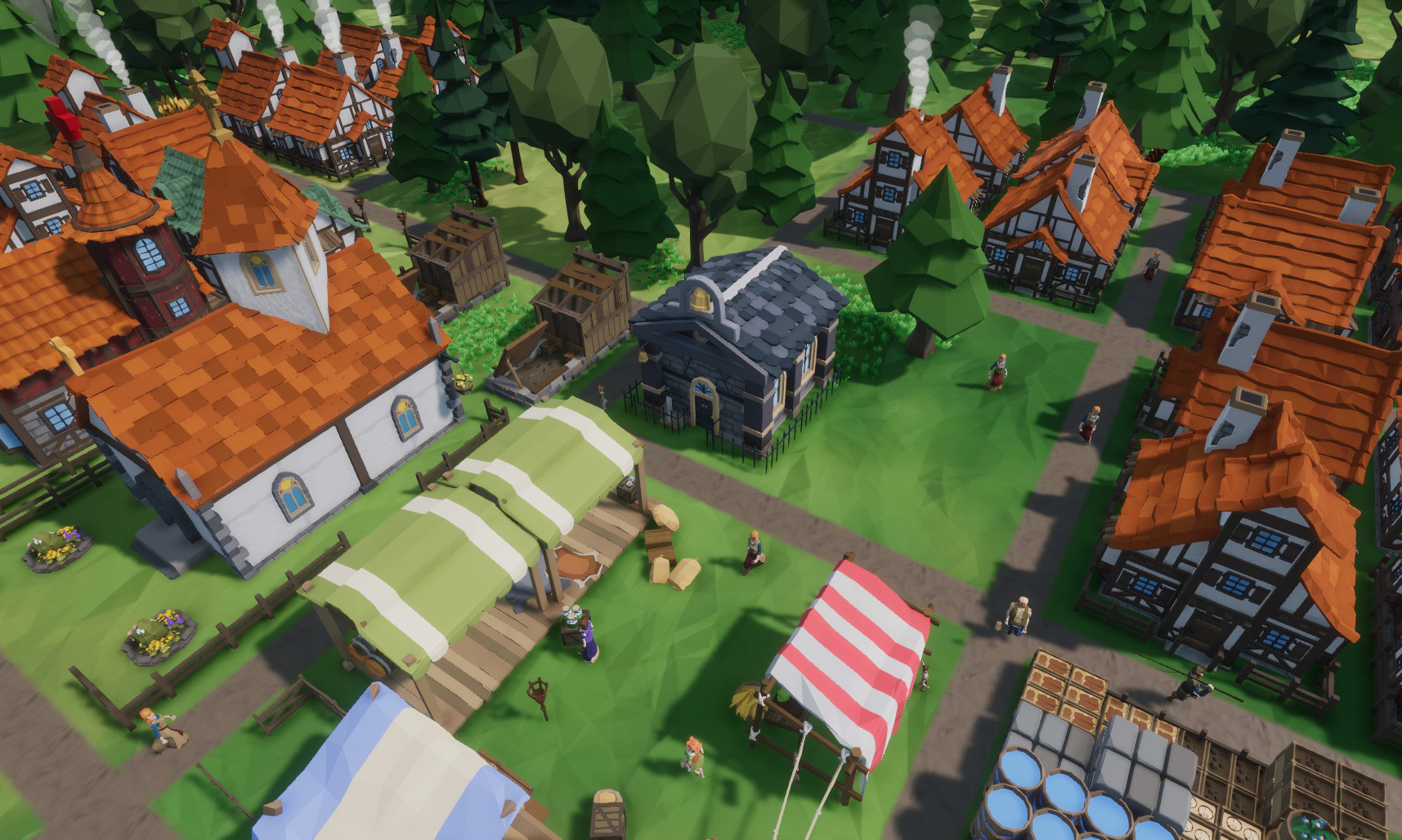
Now that we have cut stone from the masonry, we can build a police station. This building houses a sherrif that can arrest criminals and, if need be, banish a person (e.g. remove a sick person before an outbreak occurs).
police_tree <- DiagrammeR::mermaid("
  graph TD
  town_hall[Town Hall]
  mine[Mine]
  quarry[Quarry]
  sandpit_sand[Sand Pit: Sand]
  sandpit_clay[Sand Pit: Clay]
  tailor[Tailor]
  smithy[Smithy]
  apiary[Apriary]
  pasture[Pasture]
  cemetary[Cemetary]
  small_trading_post[Small Trading Post]
  sawmill[Sawmill]
  dock[Dock]
  saltworks[Saltworks]
  masonry[Mason Workshop]
  police[Police Station]

  town_hall --> mine
  town_hall --> quarry

  mine --> sandpit_sand
  quarry --> sandpit_sand
  mine --> sandpit_clay
  quarry --> sandpit_clay
  town_hall --> pasture
  quarry --> smithy

  sandpit_sand --> apiary
  sandpit_clay --> apiary
  pasture --> tailor
  smithy --> cemetary

  apiary --> small_trading_post
  tailor --> sawmill
  sawmill --> dock
  sawmill --> saltworks
  cemetary --> masonry

  masonry --> police
")

# print
police_tree
Heating
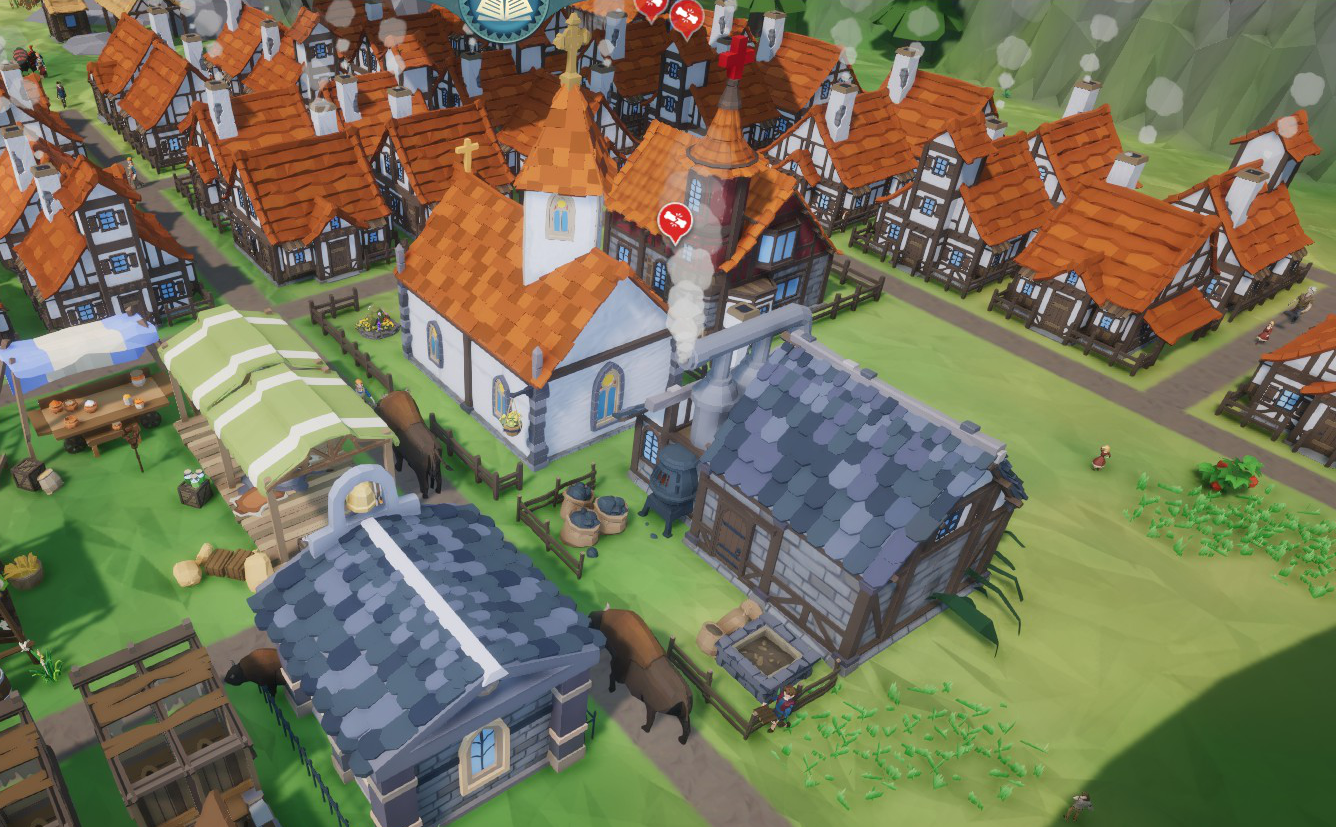
The town survived the first few winters, but fuel is not easy to obtain. The push into newer technology allowed us to build a Boiler whose radius will heat nearly every house in the town.
boiler_tree <- DiagrammeR::mermaid("
  graph TD
  town_hall[Town Hall]
  mine[Mine]
  quarry[Quarry]
  sandpit_sand[Sand Pit: Sand]
  sandpit_clay[Sand Pit: Clay]
  tailor[Tailor]
  smithy[Smithy]
  apiary[Apriary]
  pasture[Pasture]
  cemetary[Cemetary]
  small_trading_post[Small Trading Post]
  sawmill[Sawmill]
  dock[Dock]
  saltworks[Saltworks]
  masonry[Mason Workshop]
  police[Police Station]
  boiler[Boiler]

  town_hall --> mine
  town_hall --> quarry

  mine --> sandpit_sand
  quarry --> sandpit_sand
  mine --> sandpit_clay
  quarry --> sandpit_clay
  town_hall --> pasture
  quarry --> smithy

  sandpit_sand --> apiary
  sandpit_clay --> apiary
  pasture --> tailor
  smithy --> cemetary

  apiary --> small_trading_post
  tailor --> sawmill
  sawmill --> dock
  sawmill --> saltworks
  cemetary --> masonry

  masonry --> police
  masonry --> boiler
")

# print
boiler_tree
We also invested a technology point into “School Expansion” (from 15 to 20 students each) which also increases the research rate from schools.
Research
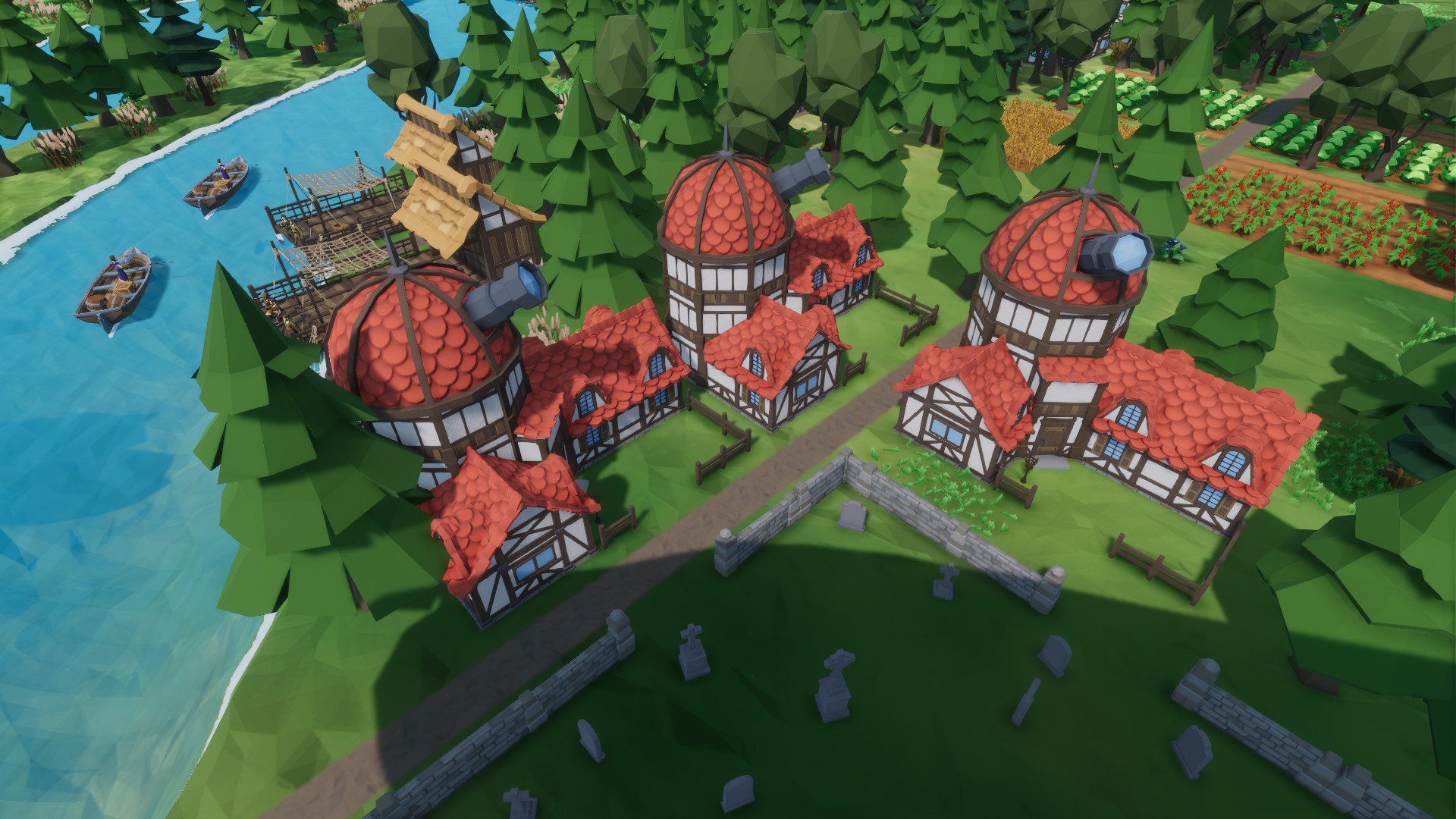
For technology points (one of the game mechanics), we were running low, so we built some Research Institute. With 3 buildings, we garner a technology point about every 2 minutes IRL.
research_tree <- DiagrammeR::mermaid("
  graph TD
  town_hall[Town Hall]
  mine[Mine]
  quarry[Quarry]
  sandpit_sand[Sand Pit: Sand]
  sandpit_clay[Sand Pit: Clay]
  tailor[Tailor]
  smithy[Smithy]
  apiary[Apriary]
  pasture[Pasture]
  cemetary[Cemetary]
  small_trading_post[Small Trading Post]
  sawmill[Sawmill]
  dock[Dock]
  saltworks[Saltworks]
  masonry[Mason Workshop]
  police[Police Station]
  boiler[Boiler]
  research[Research Institute]

  town_hall --> mine
  town_hall --> quarry

  mine --> sandpit_sand
  quarry --> sandpit_sand
  mine --> sandpit_clay
  quarry --> sandpit_clay
  town_hall --> pasture
  quarry --> smithy

  sandpit_sand --> apiary
  sandpit_clay --> apiary
  pasture --> tailor
  smithy --> cemetary

  apiary --> small_trading_post
  tailor --> sawmill
  sawmill --> dock
  sawmill --> saltworks
  cemetary --> masonry

  masonry --> police
  masonry --> boiler
  masonry --> research
")

# print
research_tree
Storage Logistics
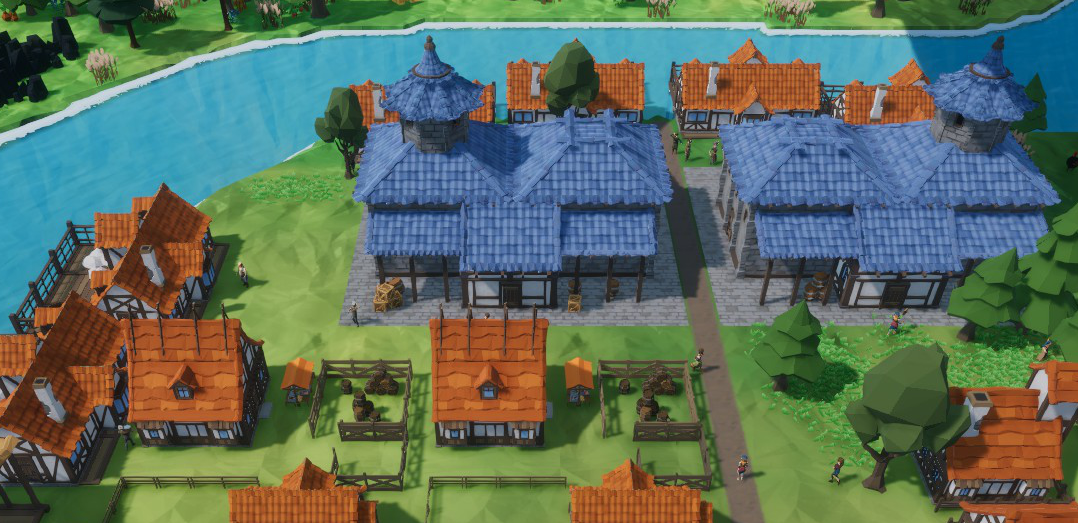
One of my favorite buildings in the game is the Storage Center. Each is an eyesore that has the floor space of about seven houses, but its storage capacity makes the gamer’s life easier.
storage_tree <- DiagrammeR::mermaid("
  graph TD
  town_hall[Town Hall]
  mine[Mine]
  quarry[Quarry]
  sandpit_sand[Sand Pit: Sand]
  sandpit_clay[Sand Pit: Clay]
  tailor[Tailor]
  smithy[Smithy]
  apiary[Apriary]
  pasture[Pasture]
  cemetary[Cemetary]
  small_trading_post[Small Trading Post]
  sawmill[Sawmill]
  dock[Dock]
  saltworks[Saltworks]
  masonry[Mason Workshop]
  police[Police Station]
  boiler[Boiler]
  research[Research Institute]
  storage[Storage Center]


  town_hall --> mine
  town_hall --> quarry

  mine --> sandpit_sand
  quarry --> sandpit_sand
  mine --> sandpit_clay
  quarry --> sandpit_clay
  town_hall --> pasture
  quarry --> smithy

  sandpit_sand --> apiary
  sandpit_clay --> apiary
  pasture --> tailor
  smithy --> cemetary

  apiary --> small_trading_post
  tailor --> sawmill
  sawmill --> dock
  sawmill --> saltworks
  cemetary --> masonry

  masonry --> police
  masonry --> boiler
  masonry --> research

  small_trading_post --> storage
  dock --> storage
  saltworks --> storage
")

# print
storage_tree
Synergy
Continuing to be mindful of game mechanics, one of the game patches for Settlement Survival introduced some synergy between the structures. We plan as such.
- Fertilizer may be used to boost farms
- Farms may produce fodder (e.g. from oats, beans, or cactus)
- Fodder may be used to boost pastures
- Pastures produce fertilizer—completing a cycle
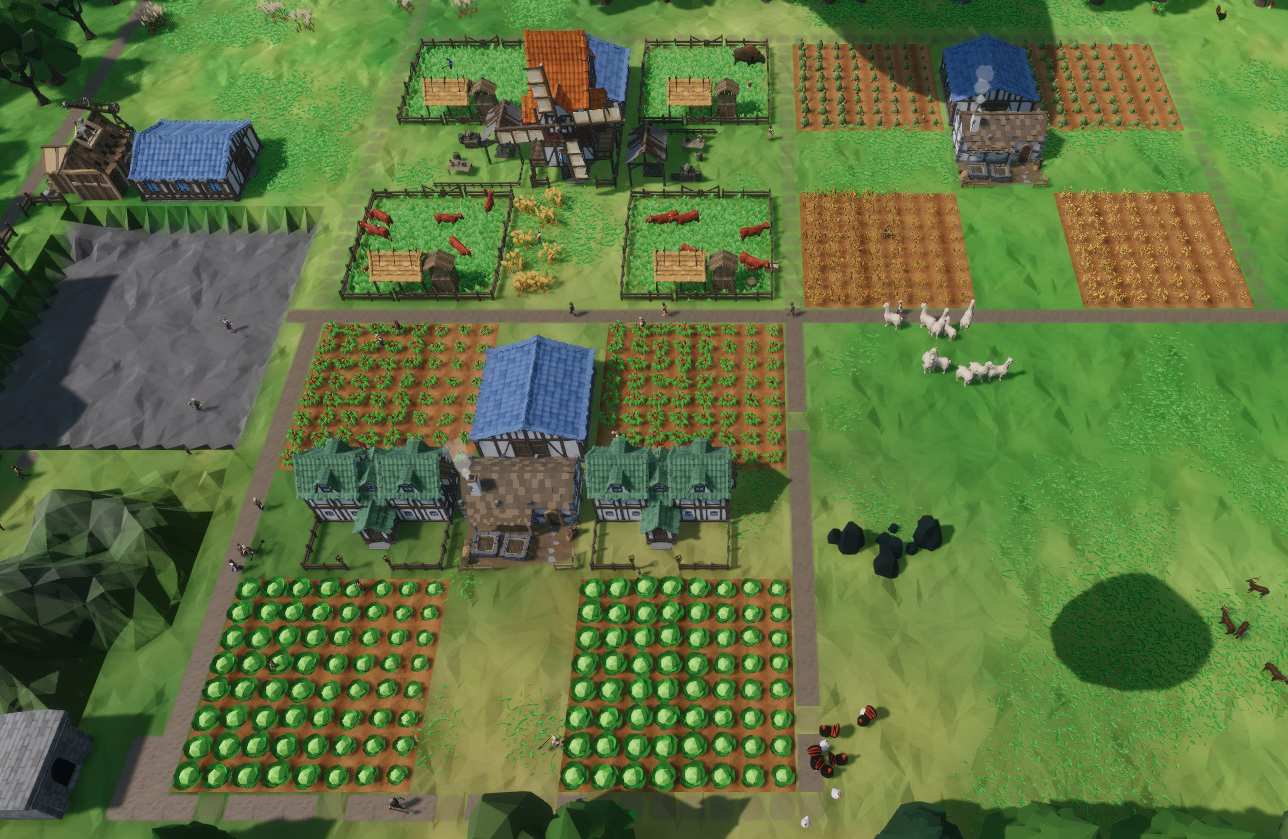
With that in mind, we plan out 21x21 plots
Compost Facilityin the middle of 4Farmsince the compost facility boosts those nearby farmsMillin the middle of 4Eco-Pasturesince the mill boosts those nearby eco-pastures
In the gaps, I have so far infilled the areas with Warehouse, School, and Cactus Workshop (from reaching level one prestige with Carlos through trade)
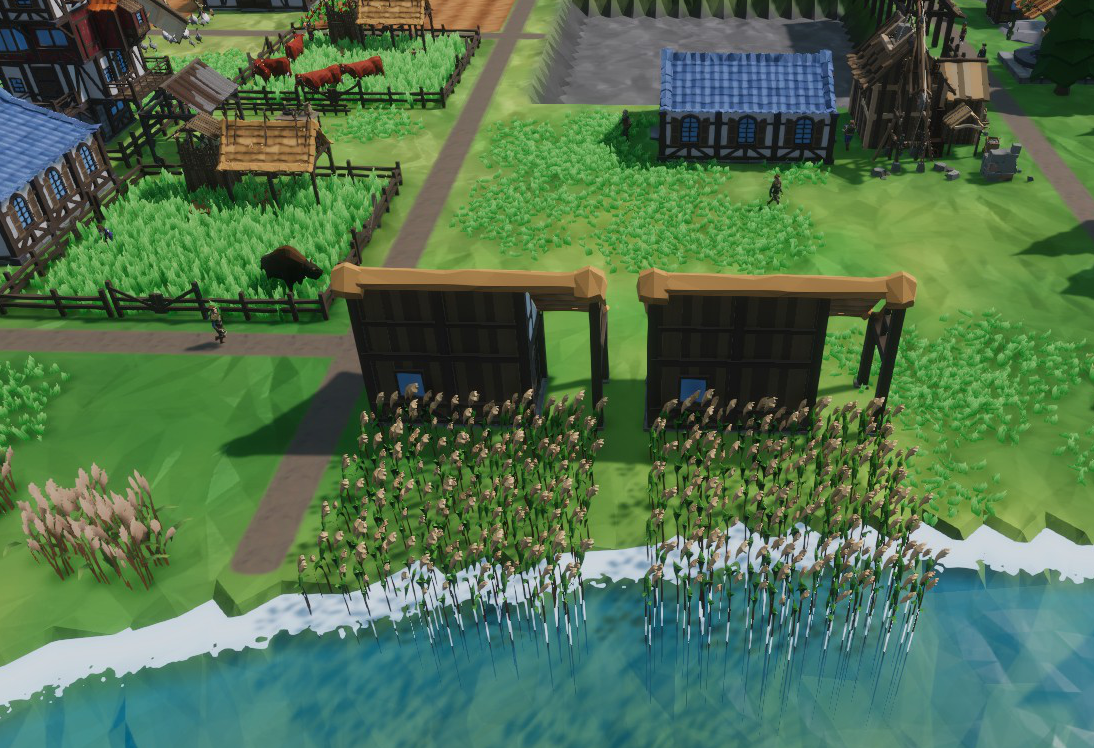
We also created some reed farm to move into a rope-based economy.
For brevity, I once again restart the flowchart.
synergy_tree <- DiagrammeR::mermaid("
  graph TD
  cactus[Cactus Workshop]
  fodder[Compost Facility]
  mill[Mill]
  reed[Reed]
  storage[Storage Center]

  storage --> cactus
  storage --> fodder
  storage --> mill
  storage --> reed
")

# print
synergy_tree
Fuel
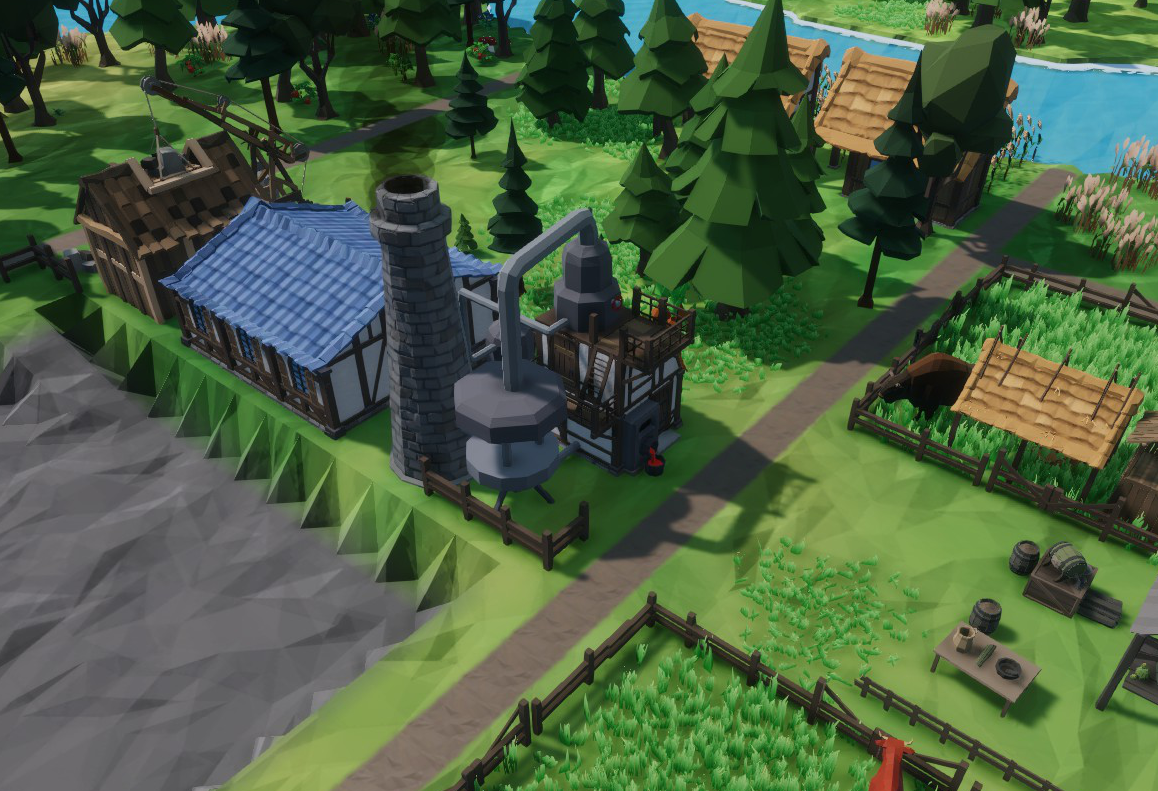
The Industrial movement is underway, and the engineers want to turn the coal into refined fuel, so we built a refinery by the mines and quarry.
refinery_tree <- DiagrammeR::mermaid("
  graph TD
  cactus[Cactus Workshop]
  fodder[Compost Facility]
  mill[Mill]
  reed[Reed]
  refinery[Refinery]
  storage[Storage Center]

  storage --> cactus
  storage --> fodder
  storage --> mill
  storage --> reed

  cactus --> refinery
  fodder --> refinery
  mill --> refinery
  reed --> refinery
")

# print
refinery_tree
Deep Mines
Eventually, we need lanterns for better mining, so we start out by building some Lighting Factory to process fat (from the pastures) into lamp oil
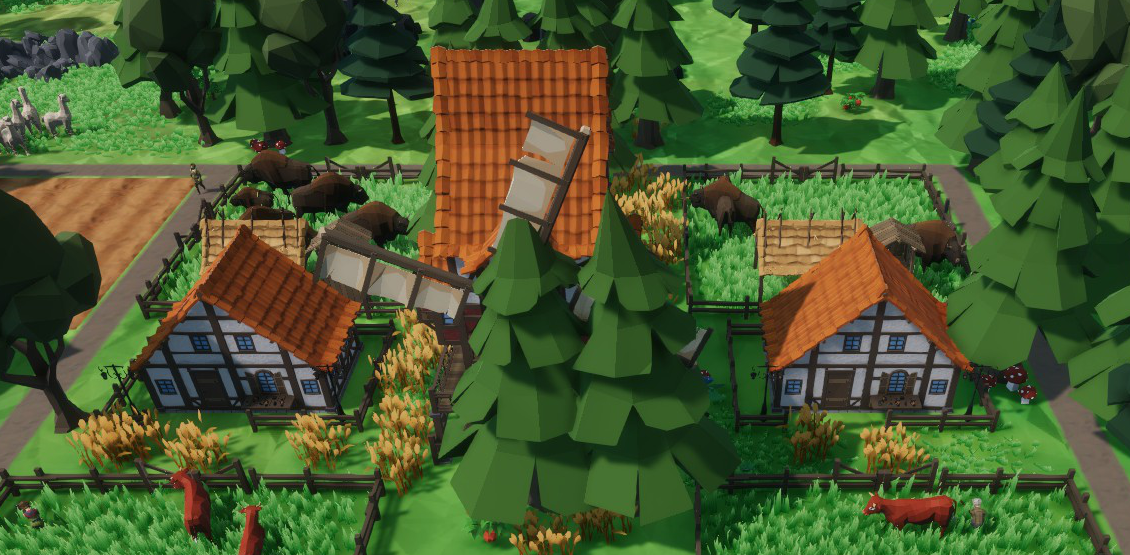
The engineers learned to build Deep Mines, each needing
- 60
building kits - 60
steelbeams - 120
lanterns
(acquired through trade since our factories are not built yet).
Now that we have started moving into the Industrial Age, we focus on securing a long-term supply of industrial materials.
Deep MineforcoalDeep Mineforore
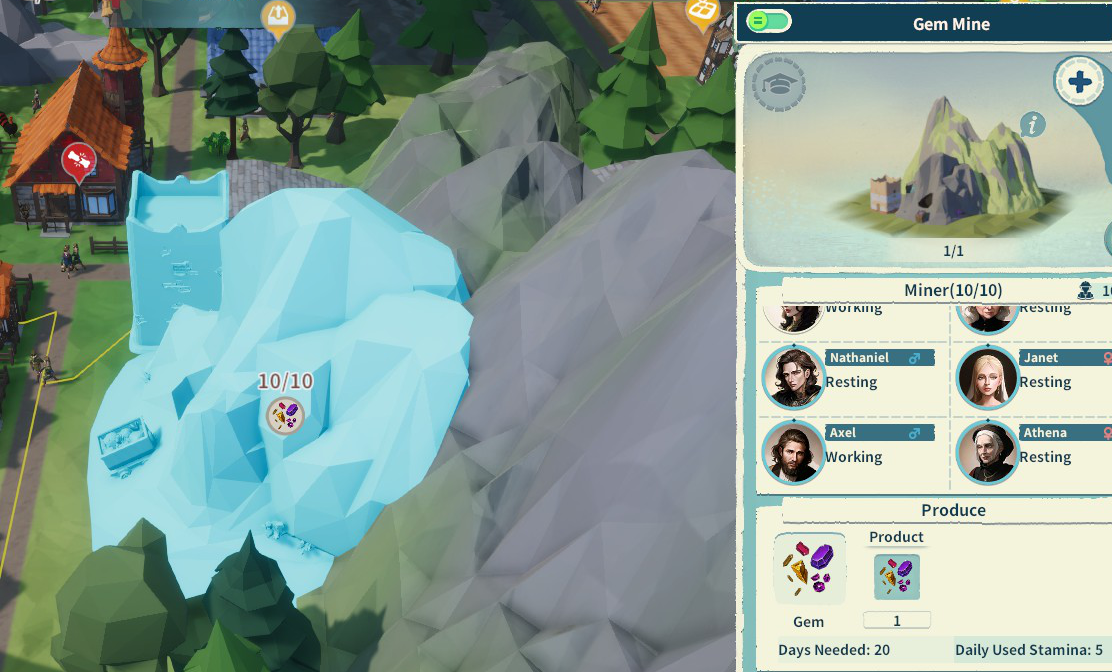
Meanwhile, we had built up level 3 trade reputation with Rania and Carlos, so we were also able to respectively build
Gem MineObsidian Mine
deep_mine_tree <- DiagrammeR::mermaid("
  graph TD
  coal[Deep Mine: Coal]
  gems[Gem Mine]
  lighting[Lighting Factory]
  obsidian[Obsidian Mine]
  ore[Deep Mine: Ore]
  refinery[Refinery]

  refinery --> lighting
  lighting --> coal
  lighting --> ore
  coal --> gems
  ore --> obsidian
")

# print
deep_mine_tree
Hospitals
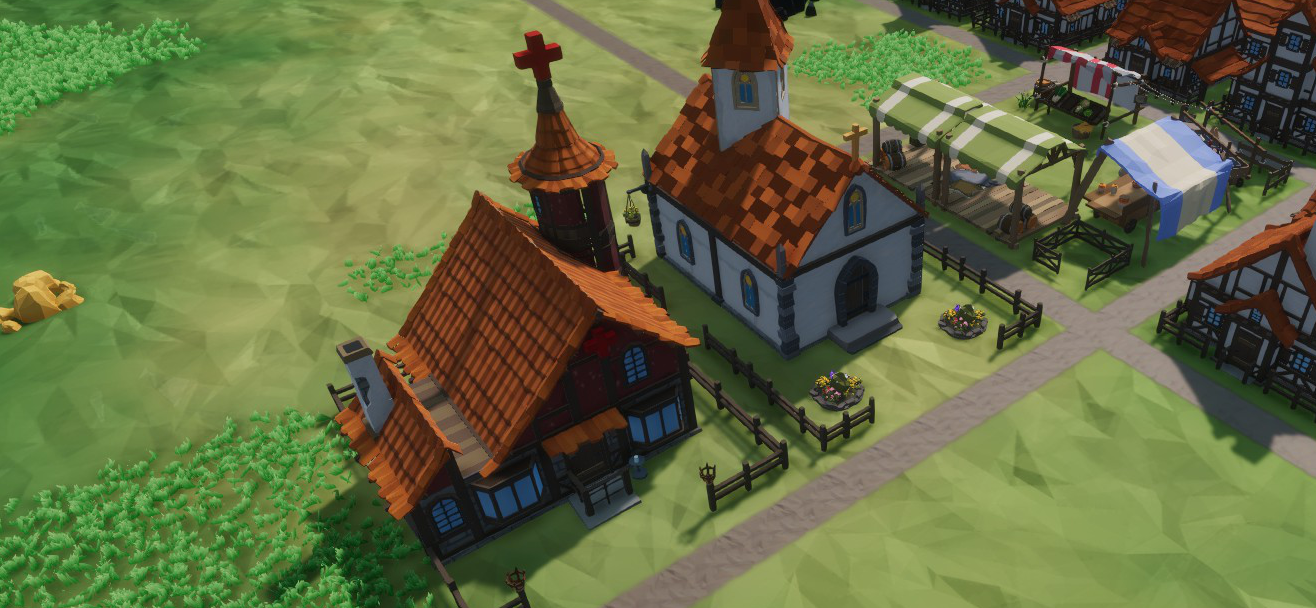
With all of the mining going on, we upgraded the Clinics to Hospitals.
hospital_tree <- DiagrammeR::mermaid("
  graph TD
  coal[Deep Mine: Coal]
  gems[Gem Mine]
  hospital[Hospital]
  lighting[Lighting Factory]
  obsidian[Obsidian Mine]
  ore[Deep Mine: Ore]
  refinery[Refinery]

  refinery --> lighting
  lighting --> coal
  lighting --> ore
  coal --> gems
  obsidian --> hospital
  ore --> obsidian
")

# print
hospital_tree
Bazaar
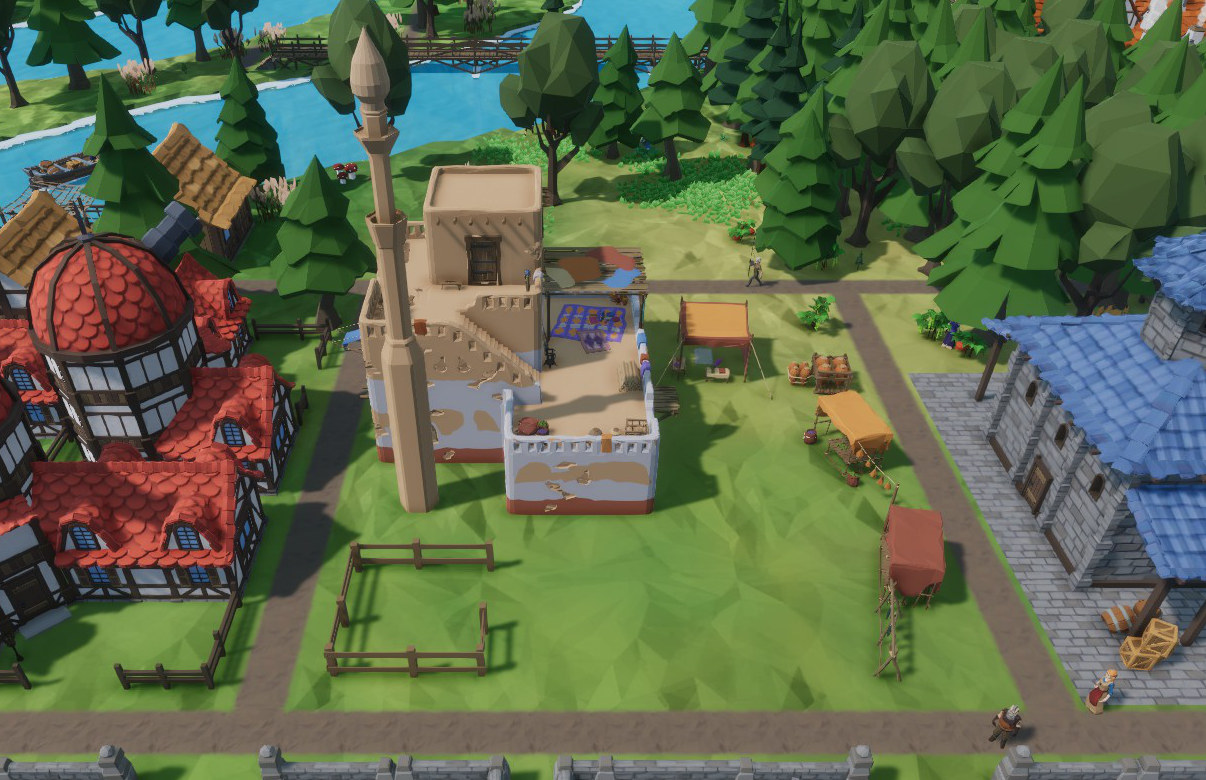
With the gem supply—and reading level 3 trading with Rania—we built a bazaar. Instead of a small trading post that handles one caravan of 7 villagers with 1300 weight, the bazaar allows two caravans each with 11 villagers and 4200 weight.
bazaar_tree <- DiagrammeR::mermaid("
  graph TD
  bazaar[Bazaar]
  coal[Deep Mine: Coal]
  gems[Gem Mine]
  hospital[Hospital]
  lighting[Lighting Factory]
  obsidian[Obsidian Mine]
  ore[Deep Mine: Ore]
  refinery[Refinery]

  refinery --> lighting
  lighting --> coal
  lighting --> ore
  coal --> gems
  ore --> obsidian

  gems --> bazaar
  obsidian --> hospital
")

# print
bazaar_tree
Materials
Rumors of Dense Farm tech are here. We need materials (such as glass and brick) to be able to cultivate these fields.
materials_tree <- DiagrammeR::mermaid("
  graph TD
  bazaar[Bazaar]
  bottles[Kiln: Glass Bottles]
  brick[Kiln: Brick]
  coal[Deep Mine: Coal]
  gems[Gem Mine]
  glass[Kiln: Glass]
  hospital[Hospital]
  lighting[Lighting Factory]
  obsidian[Obsidian Mine]
  ore[Deep Mine: Ore]
  refinery[Refinery]
  resevoir[Resevoir]

  refinery --> lighting
  lighting --> coal
  lighting --> ore
  coal --> gems
  ore --> obsidian

  gems --> bazaar
  obsidian --> hospital

  refinery --> resevoir
  resevoir --> brick
  brick --> glass
  glass --> bottles
")

# print
materials_tree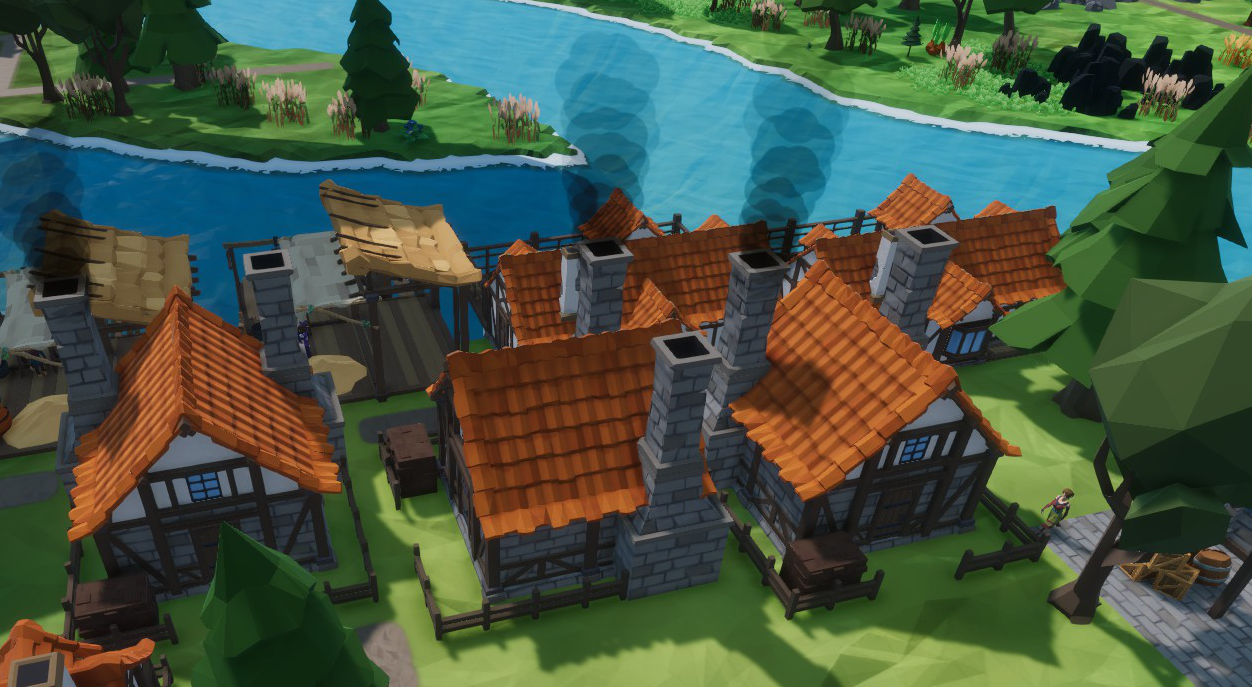
Bamboo
After a few years of training with Miao, we were granted some bamboo seeds. These are grown on a Forest Farm, so we needed to learn more agriculture to get there.
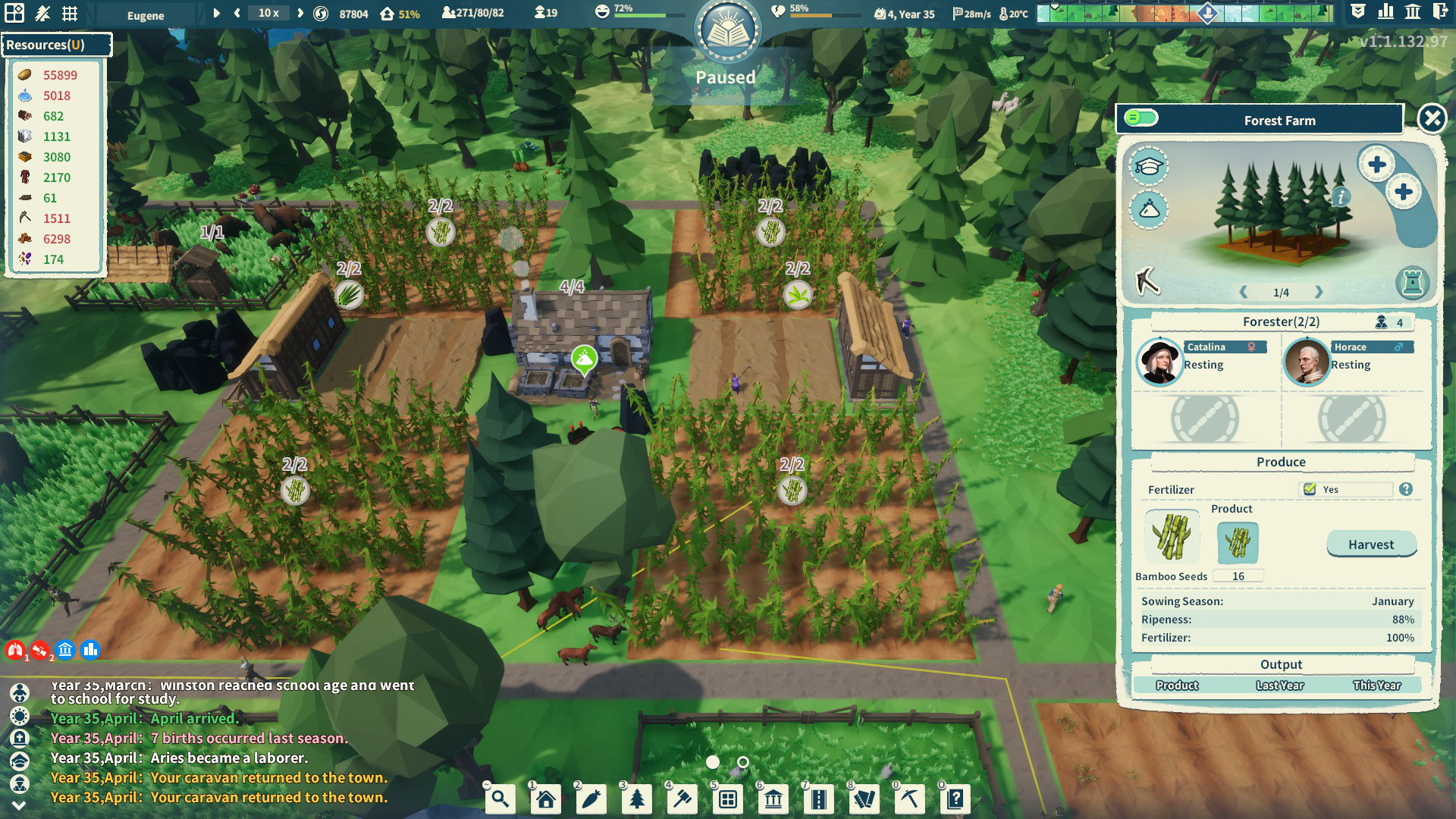
Meanwhile, we also set up a couple of Nurseries with agave and tobacco
Better Farming
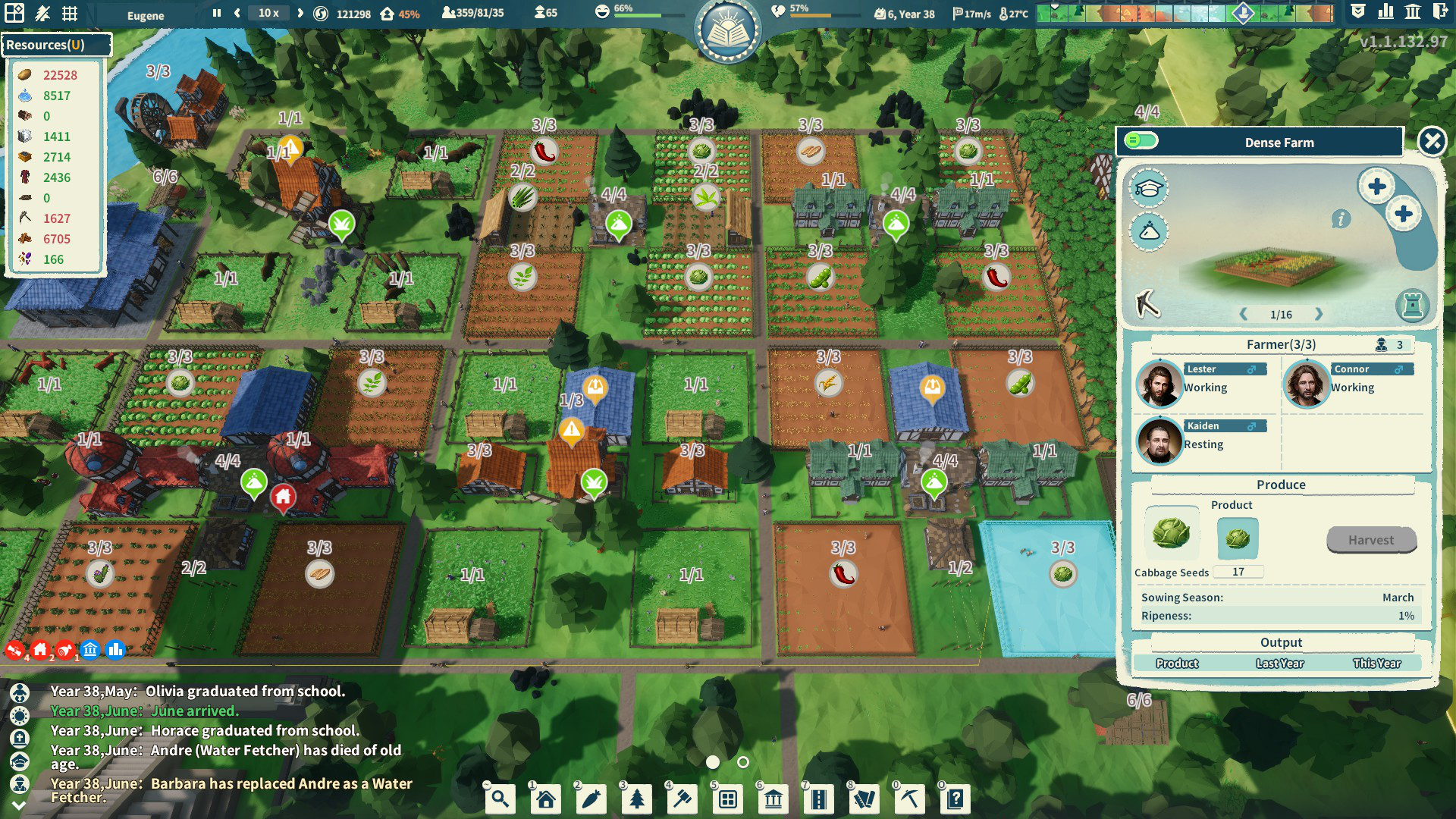
Further trading knowledge from Miao got access to the Dense Farm, which greatly increases agriculture output (important for a growing population). We had needed glass, brick and bamboo to build each dense farm.
Chichen Itza
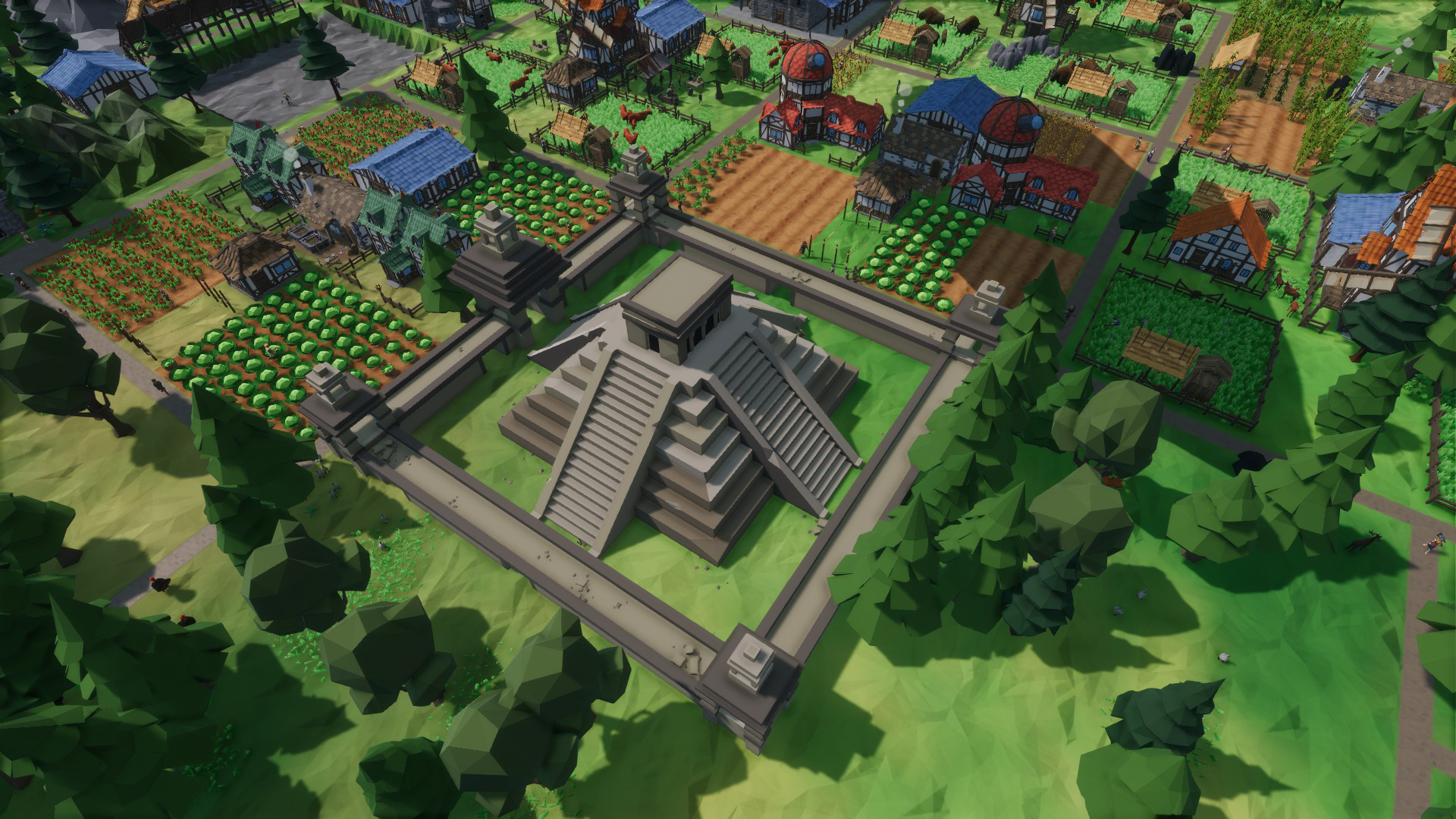
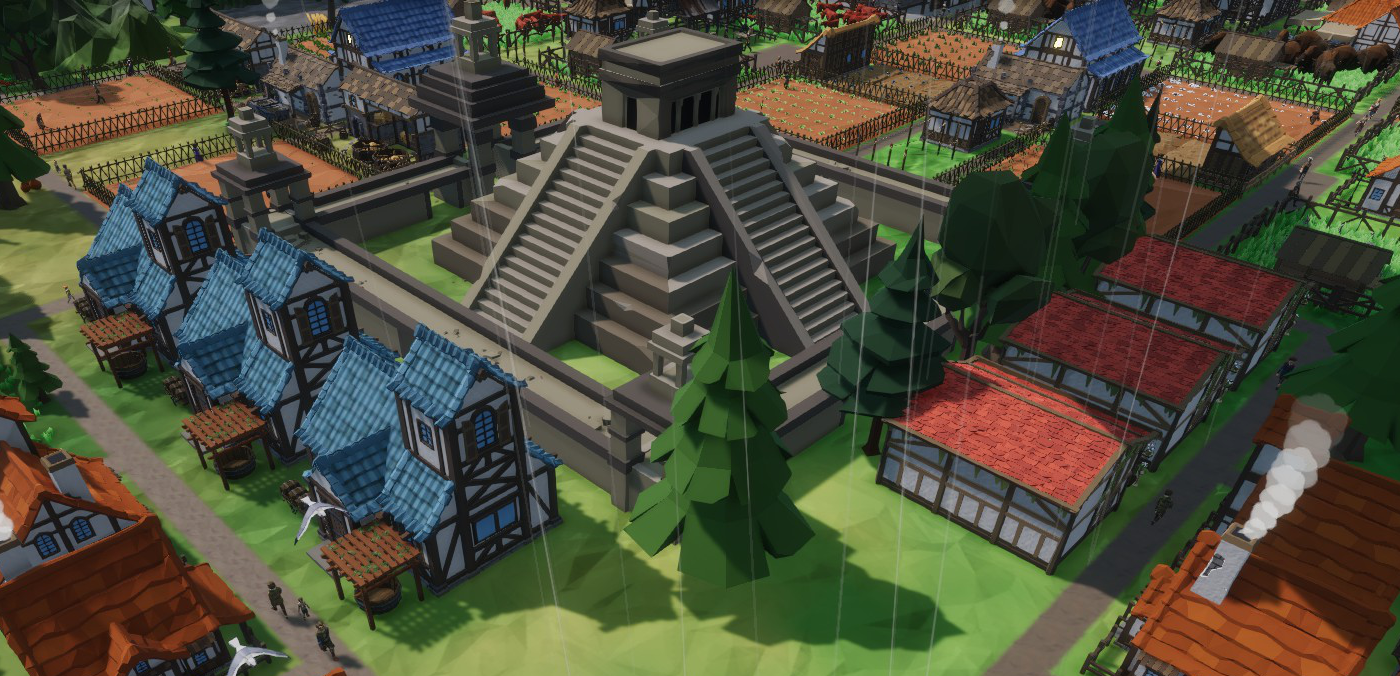
Upon reaching level 4 reputation with Carlos, we got the ability to build one of the great wonders in the game: Chichen Itza (the Mayan temple). In game, this structure allows the burial of unlimited deceased villagers. That is, instead of cemetaries (which take up land space) or crematoriums (which create respirtory disease), this solves the end-of-life concern in the game.
Edicts
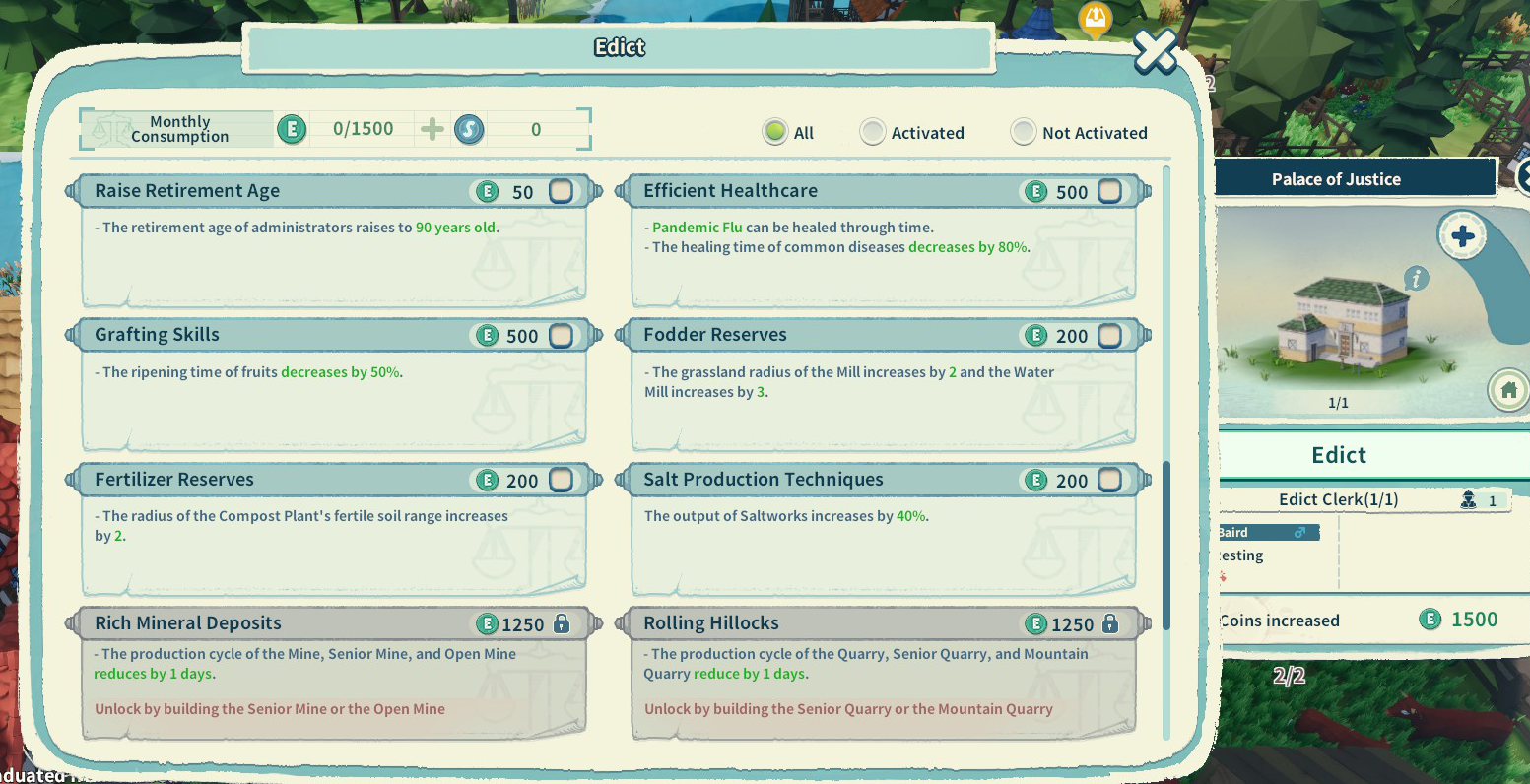
I kept forgetting that the Palace of Justice existed. It was introduced in a later patch in the game’s development. Along with the Office of Edict Administration, these buildings create a monthly supply of edict coins that can be used to boost certain structures or mechanics of the game. With 4 villagers serving as Edict Clerks, we were able to administer the following edicts:
- Bodybuilding (halves disease risk)
- Central Heating (Boiler Room effect expanded by 30%)
- Efficient Healthcare (common diseases healing time decreased by 80%)
- Neat and Tidy (Latrine range expanded by 30%)
- Practice Makes Perfect (increases growth rate of Proficiency Level by 25%)
- Salt Production (increased by 40%)
Docks
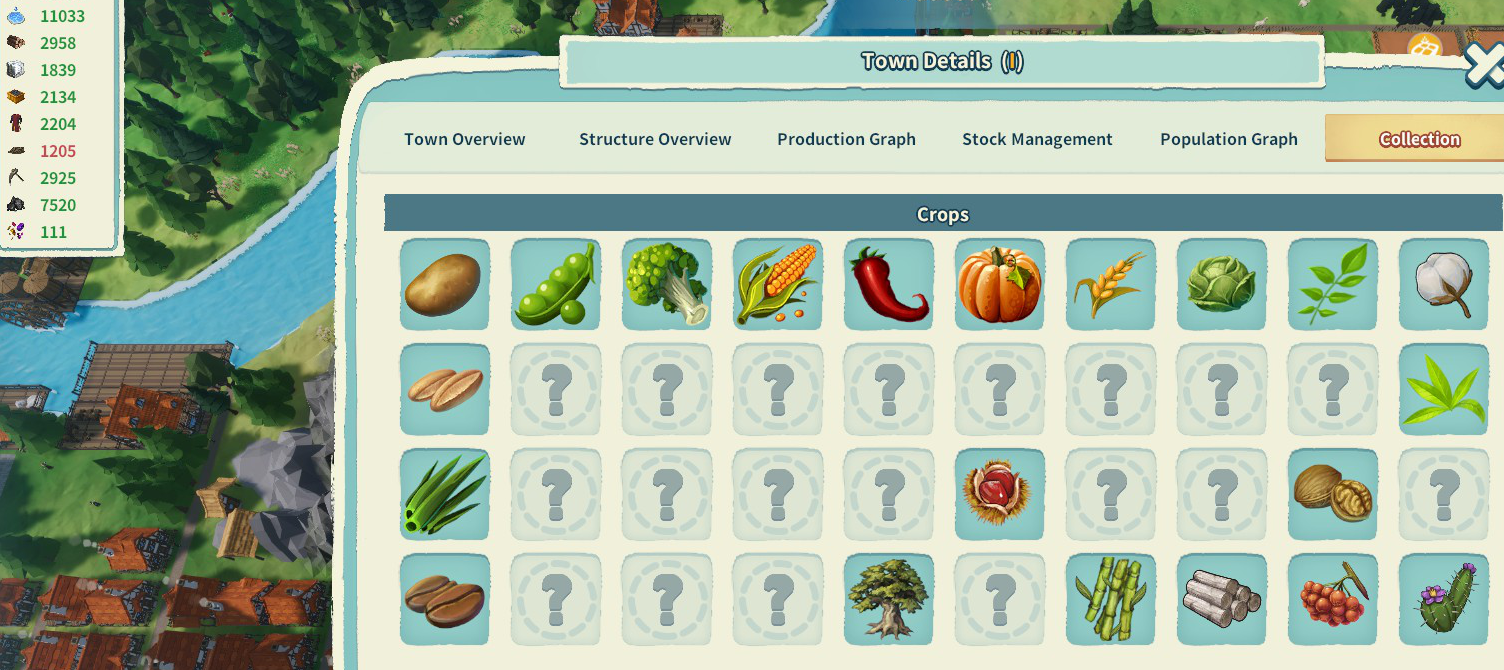
With the dense farms in place, demand increased for a greater variety of crops. In this game, we obtain seeds through seafaring trade through either the Docks or Seaport
Better Cattle
Upon reading level 2 reputation with Lorenzo, we got the ability to grow hardwood trees.
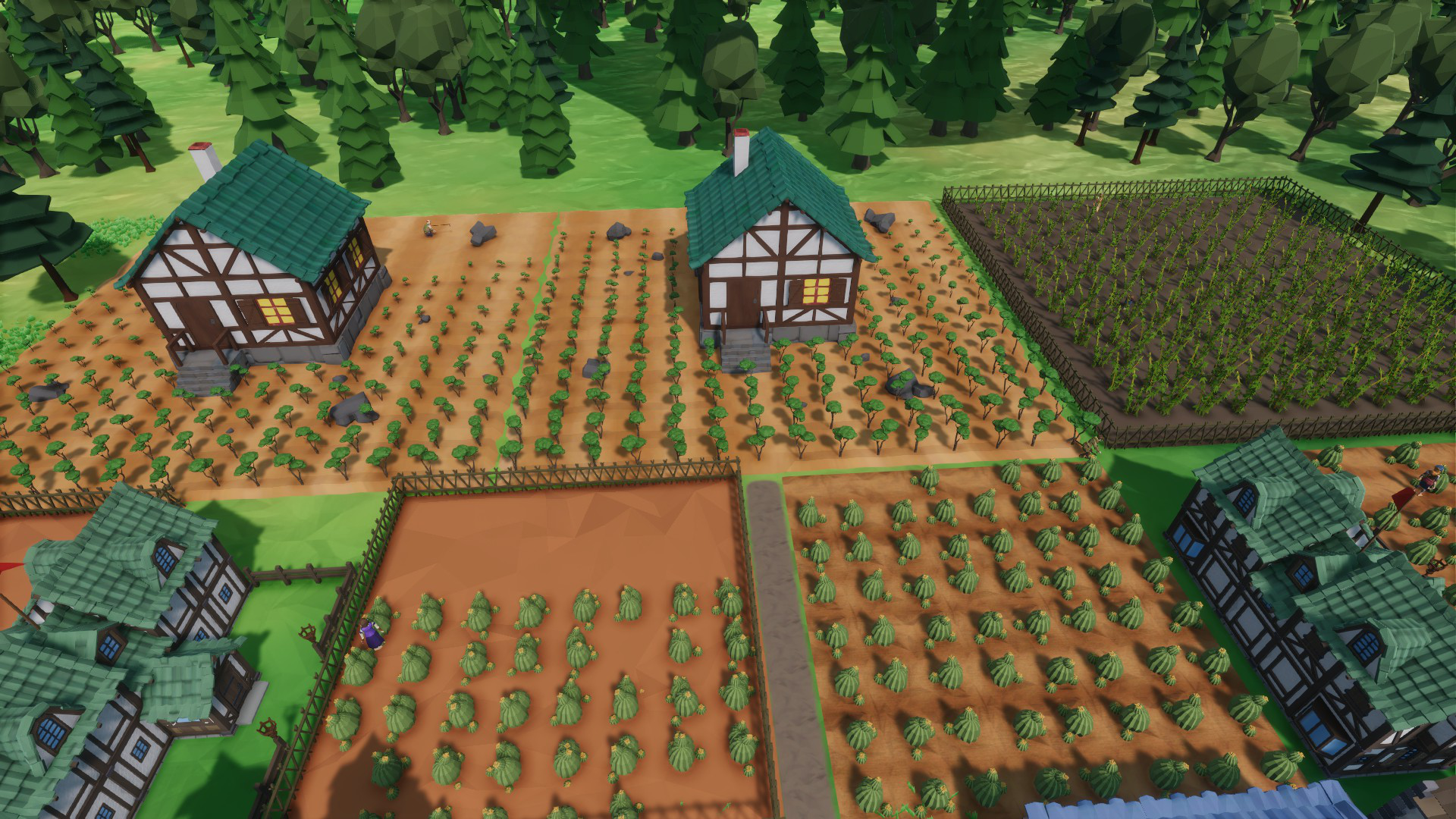
Then, the Hardwood Pastures that have double the capacity for cattle and animals.
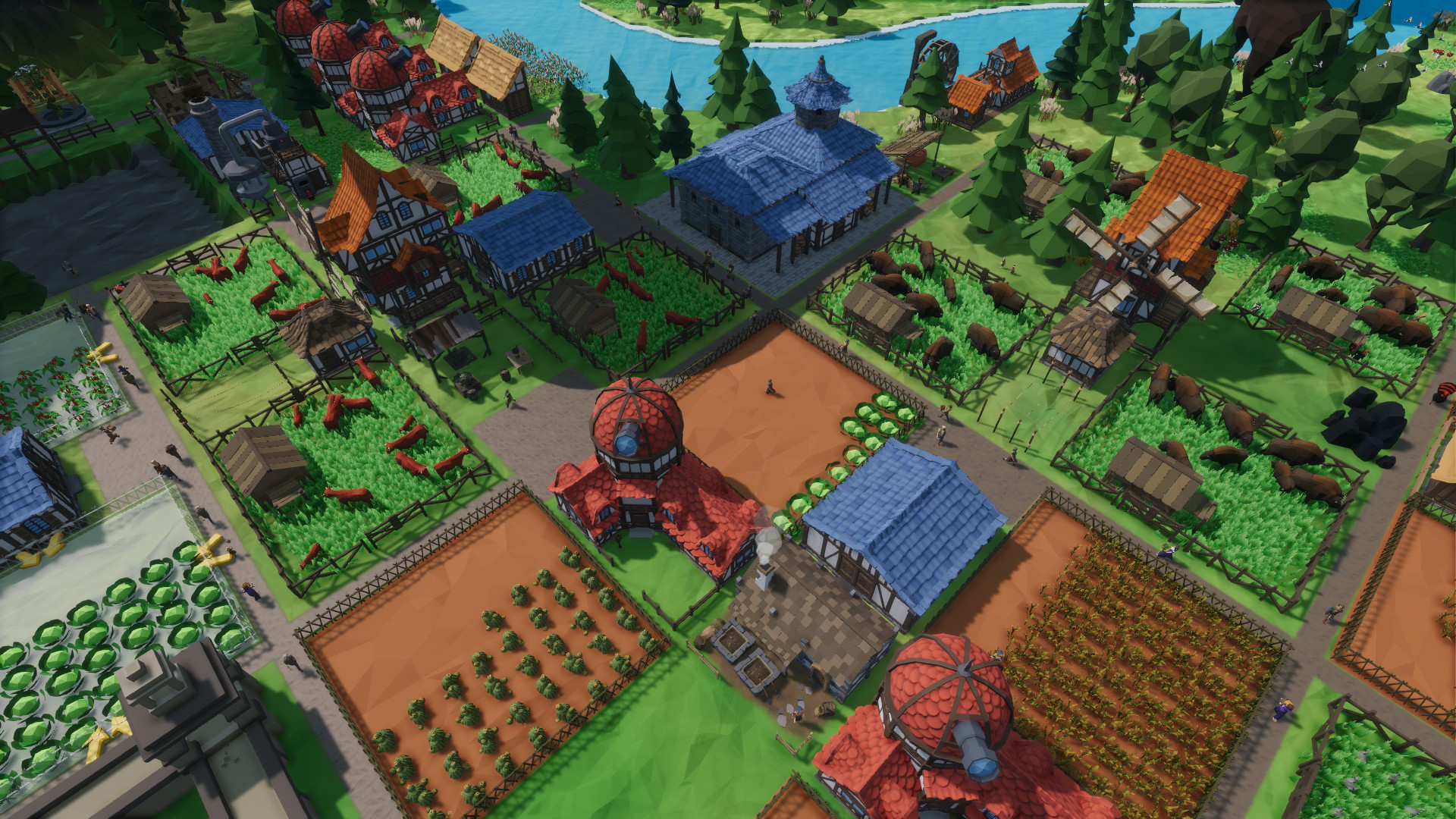
With the growth in animal husbandry, we have enough leather to welcome a couple of Advanced Tailor to produce a steady supply of rough clothes
With the surplus of hardwood, we welcome a couple of Advanced Smithy to produce a steady supply of hardwood tools.
Entertainment
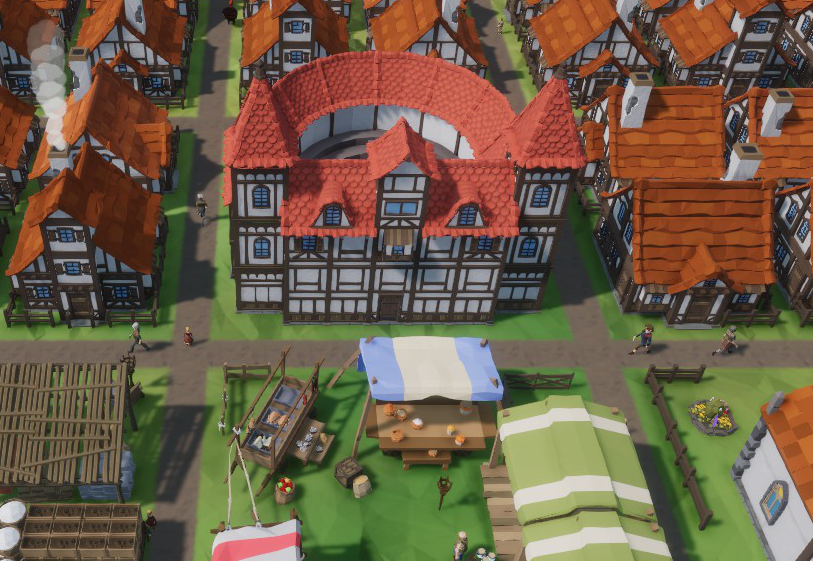
Now that many of the material and commercial needs of the settlement are currently met, we increased the happiness of the villagers by building a Theatre in the middle of the Old Town (built with imported costumes).
Trade relations with Miao also reached Level 4, so we got the blueprints for the Peking Opera Theatre. We built this one in the middle of the New Town
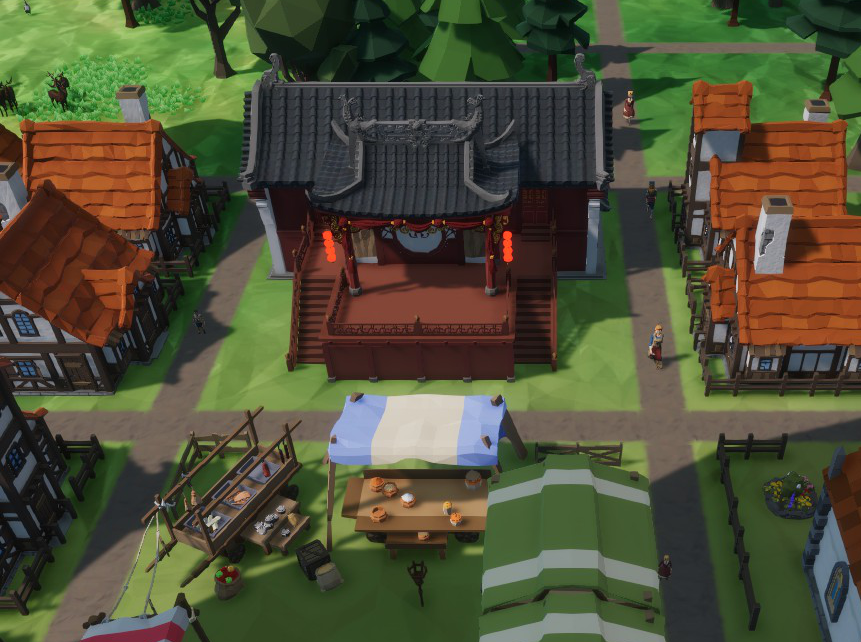
An additional technology point in Entertainment reduces the stress in the citizens by 10 percent.
Seeds
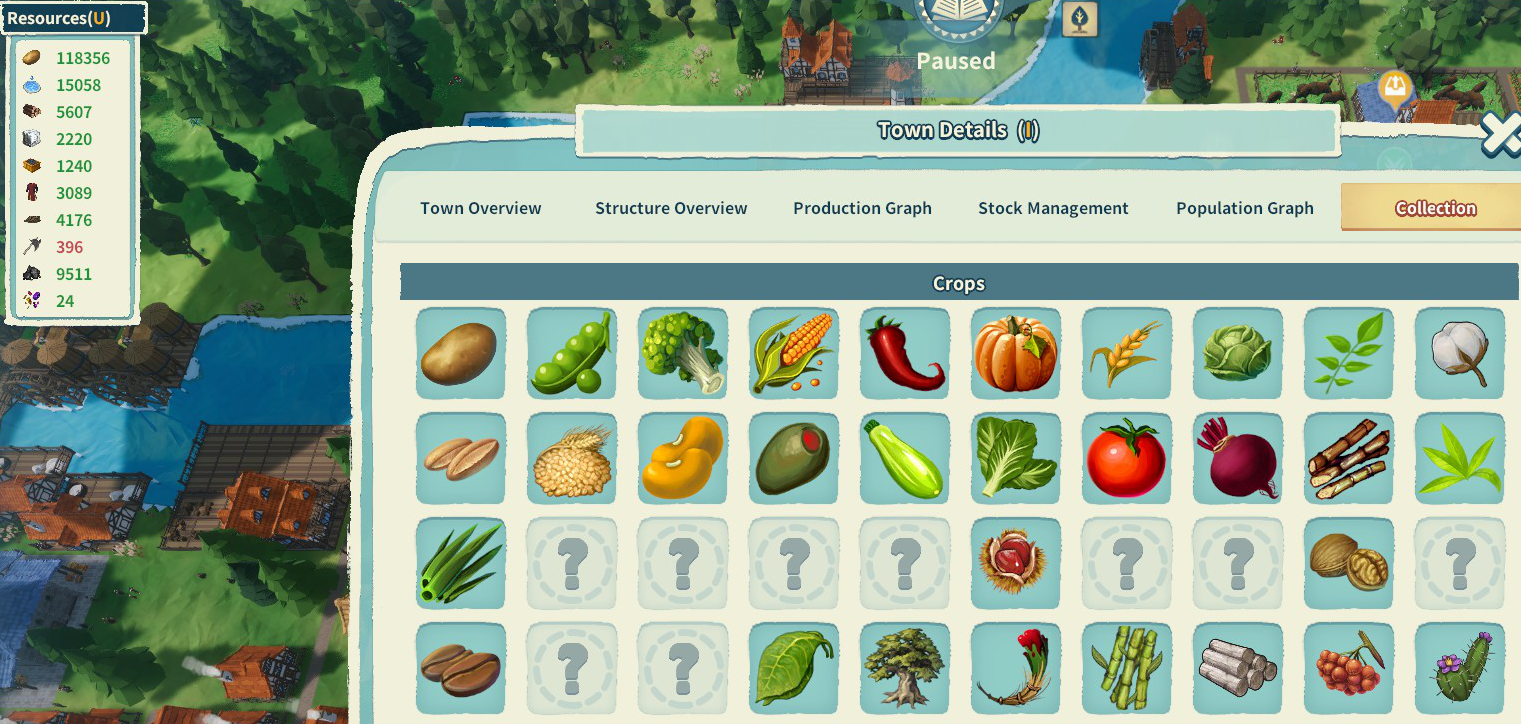
The seafarers from the Docks are able to reach out to faraway civilizations and bring in more seeds (than what the villagers brought initially).
Using many of the silver coins we have built up through trade, we purchased the seeds for all of the rest of the 20 farm crops.
There are also seeds for nurseries and trees, but let’s first restore a positive trade balance and restore the silver coin coffers.
Soap
Having already enhancing the stress levels (through entertainment like Theatre), we then turned our attention to improving the health of the villagers.
The
Herbalist Hutturnsherbsintomedicinal powderThe
Soap Factoriesmakemedicinal soapsalt soap
The
Pharmacyturnsmedicial powderandbottlesintospecial medicine
Beverages
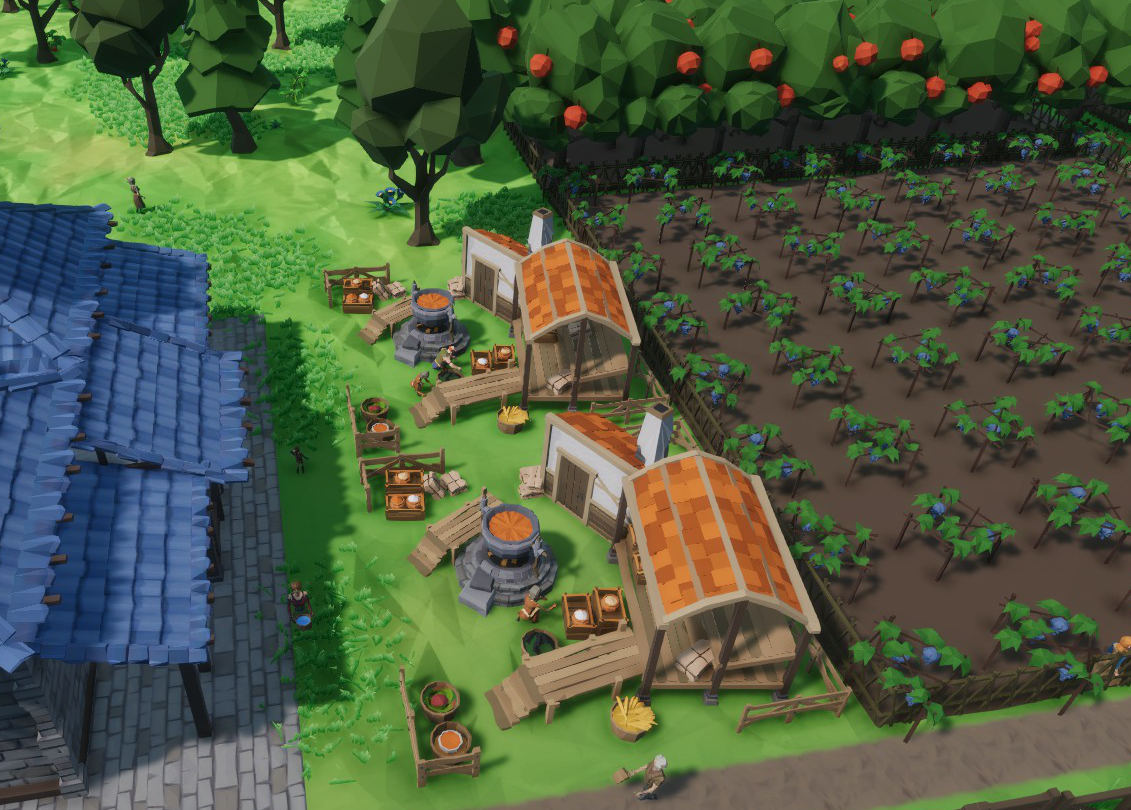
Continuing a push for more health, we now process the fruits from the orchards with
tea shop: coffee, tea, or hot chocolatewinery: whiskey, anisette, or tequila
Printing Press
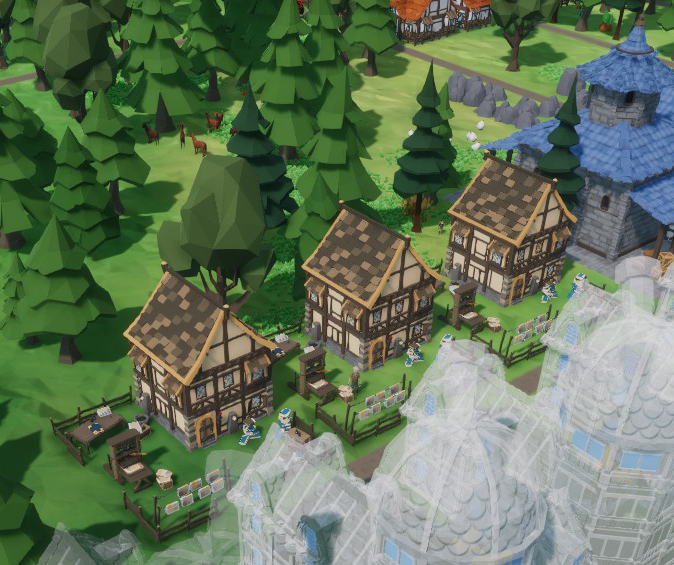
With the introduction of the Paper Mill and the Printing Press, we now can make paper, ink, and books. This will further the research goals of our town.
Sugar
The orchards have been quite fruitful (pun intended), so we turned our attention to production of sugar. In fact, we had so many sugar beets and so much sugar cane that we had 12 Sugar Workshops to temporarily process everything and build up a cache of over 20,000 sugar packages.
Leather
There has been a surplus of leather for quite a while since early production with buffalo and cattle. More technology allowed us to build Leather Shops to produce refined leather and to build Leatherware Huts to produce leather shoes and leather boots.
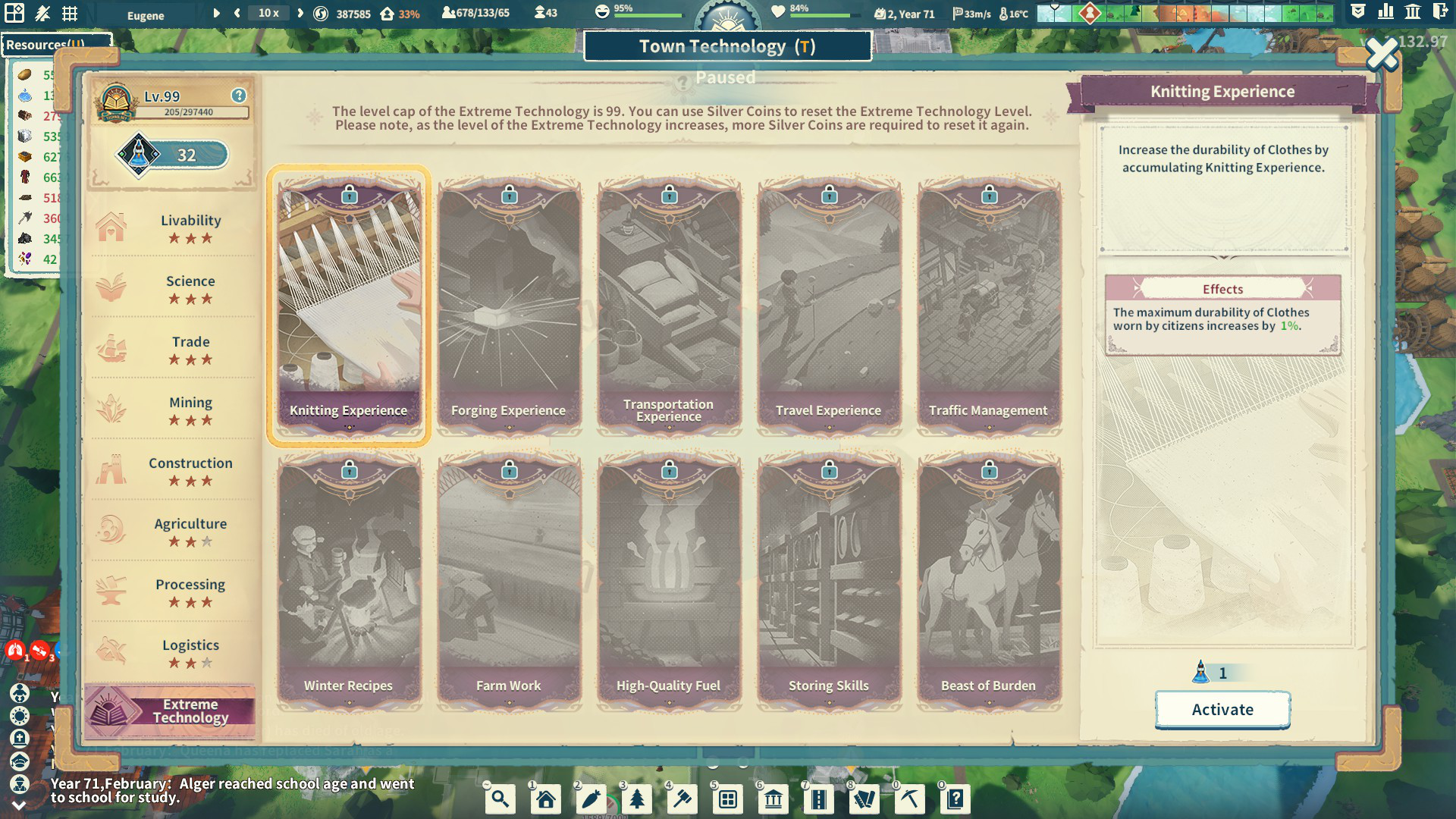
Extreme Technology
Around this point in the game, we reached level 99 in technology, and that unlocked a relatively newer game feature called “Extreme Technology”. This seems to be a rather endless way to continue improving the lives and productivity of the villagers.
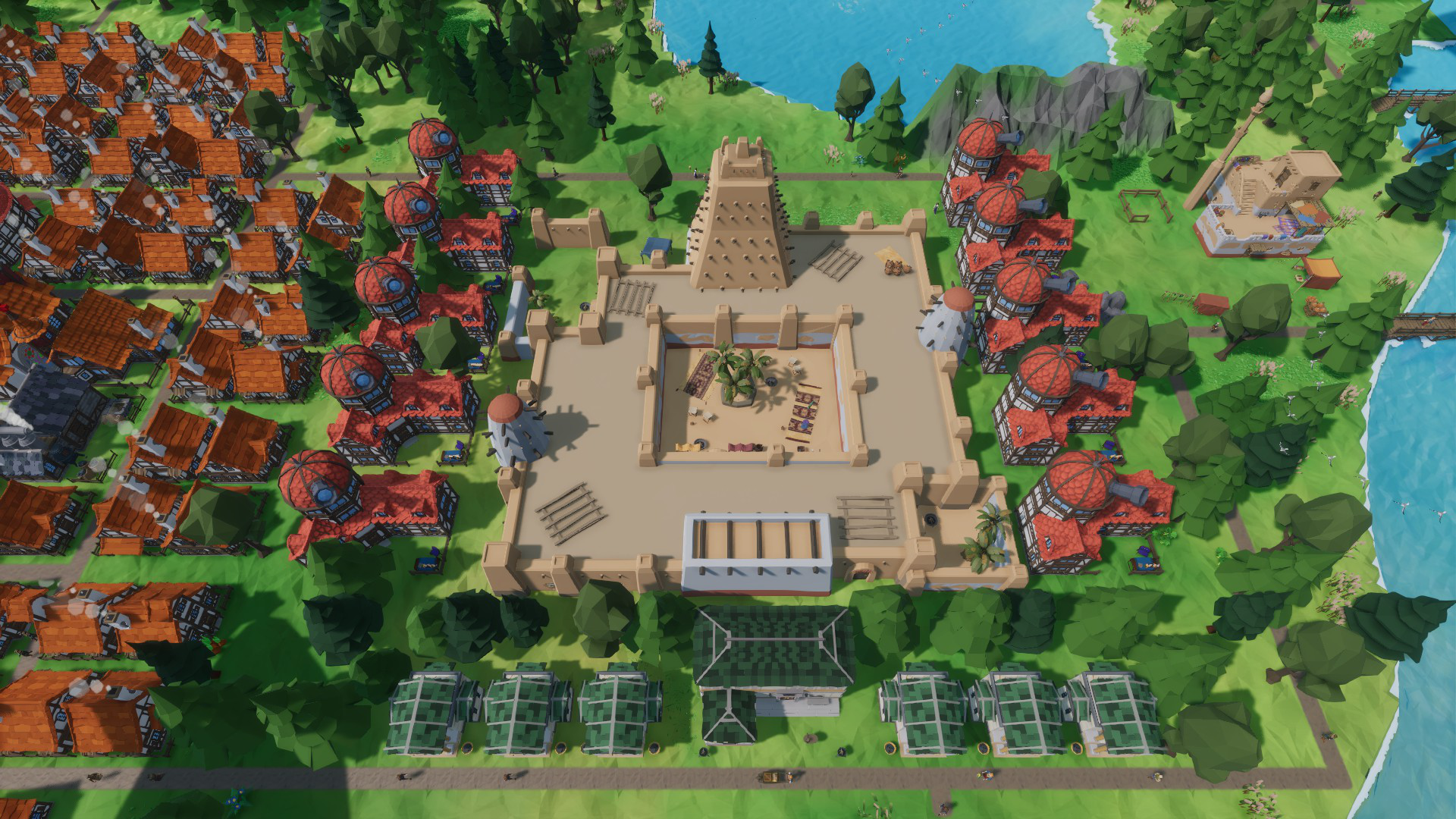
Sankore Madrasah
Our administration now pushes to imitate some “Great” wonders found around the world. It was a herculean endeavor to build the Sankore Madrasah—especially importing nearly ten thousand books through trade—but this education center completely replaces the Schools, Adult Schools, and Academies.
The structure also boosts Research Academies, so we rebuilt 10 of them around the Sankore Madrasah. We also moved the edict administration buildings nearby (for the heck of it).
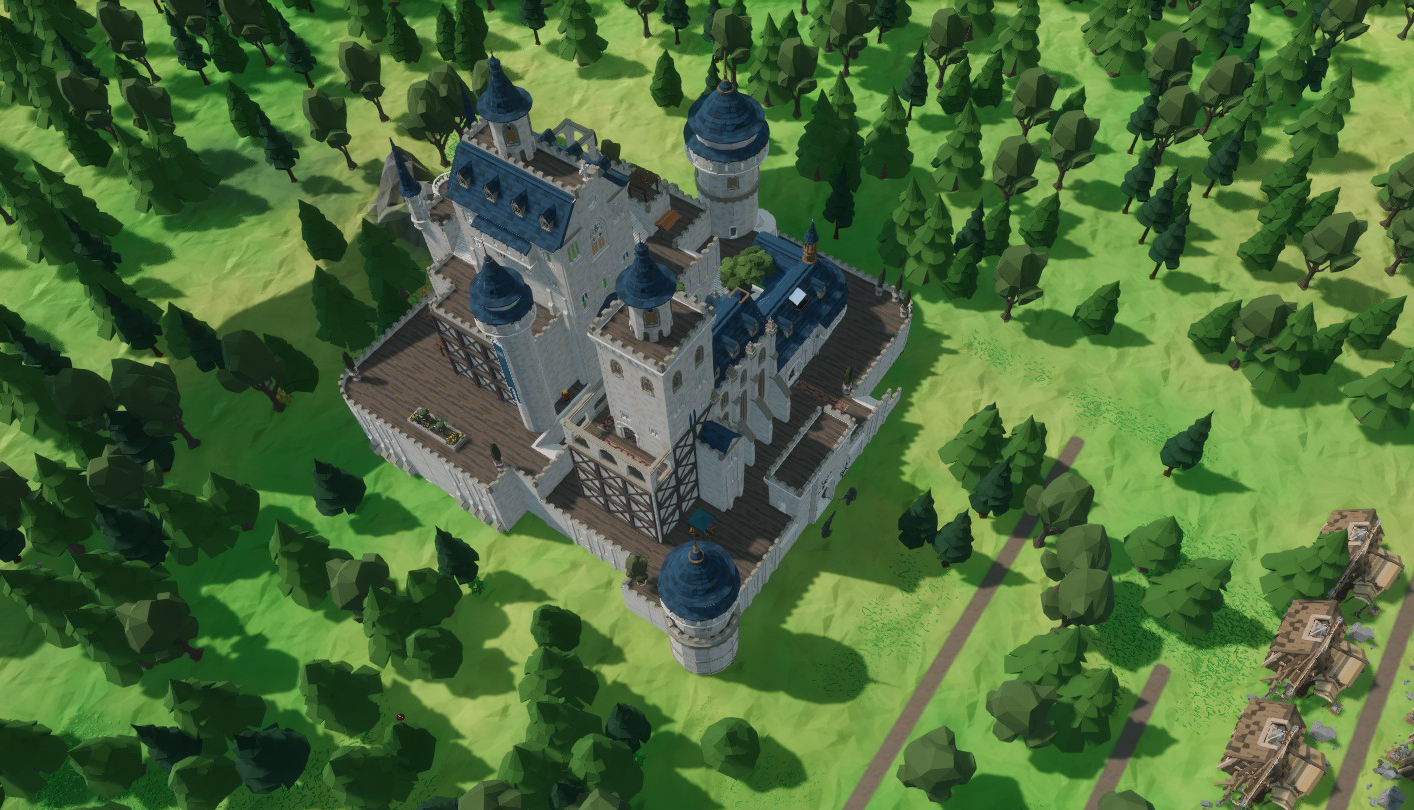
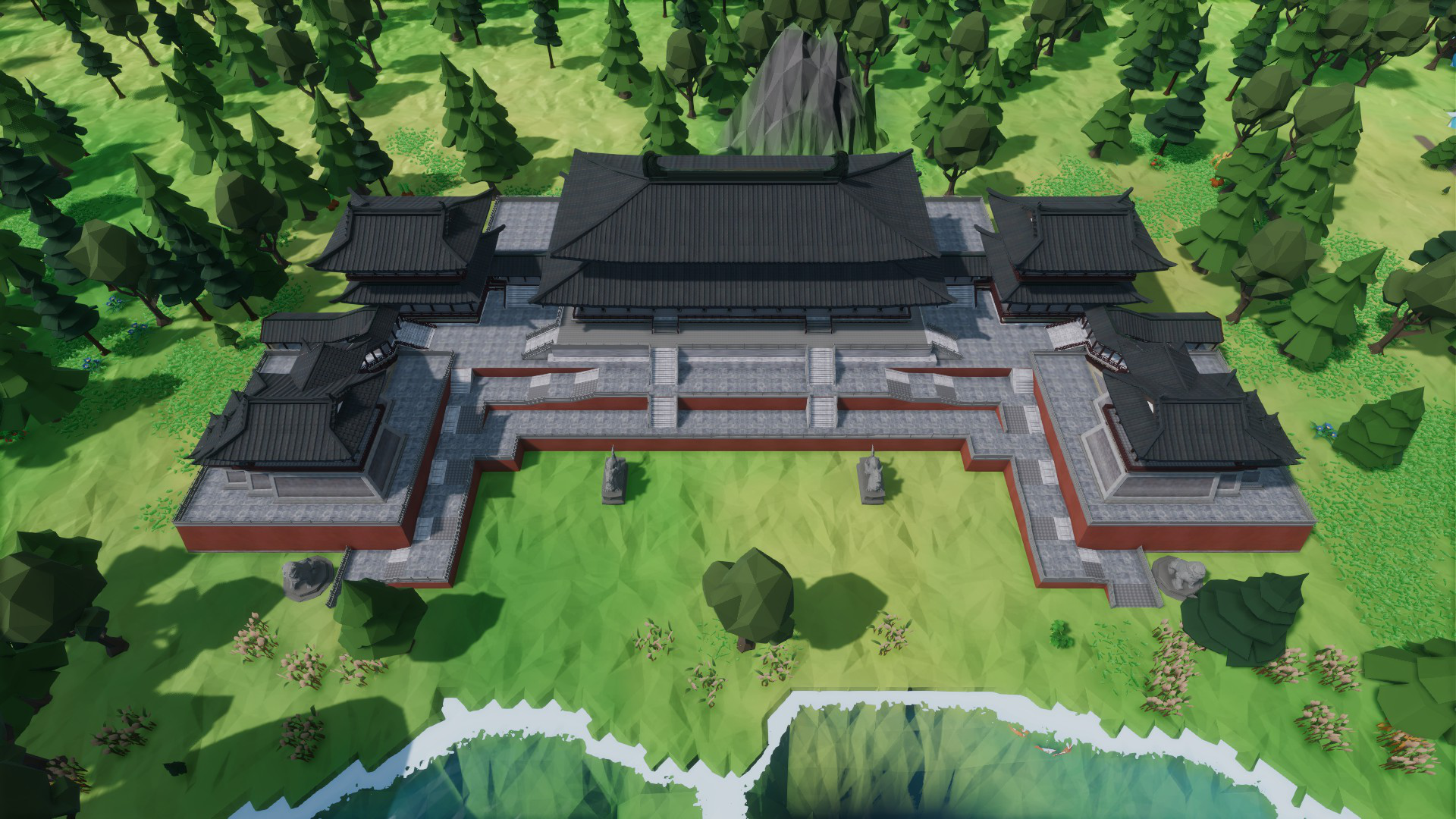
Great Castle
The next wonder that we were able to build was the Great Castle. Fortunately, we already had a surplus of hardwood. One thousand luxury furniture was imported through trade. We temporarily built 10 extra Kiln Factories to forge ten thousand bricks. From there, it took a couple more years to build the Great Castle.
Great Palace
Building the Great Palace was a tougher task for us. We temporarily built 10 extra Masonry Workshops to refine the 10k cut stone. However, even with full employment in our Deep Quarry, we still needed to import hundreds of stone. That was also necessary to supply the 10 extra Jade Factories to create 1000 jade (in addition to a Silver Mine that occasionally finds jade). We even temporarily built 10 extra Water Sawmill to supply 10k plank.
When that was finally built, we had room to hire nine administrators along with their immigration coordination.
Meat and Vegetables
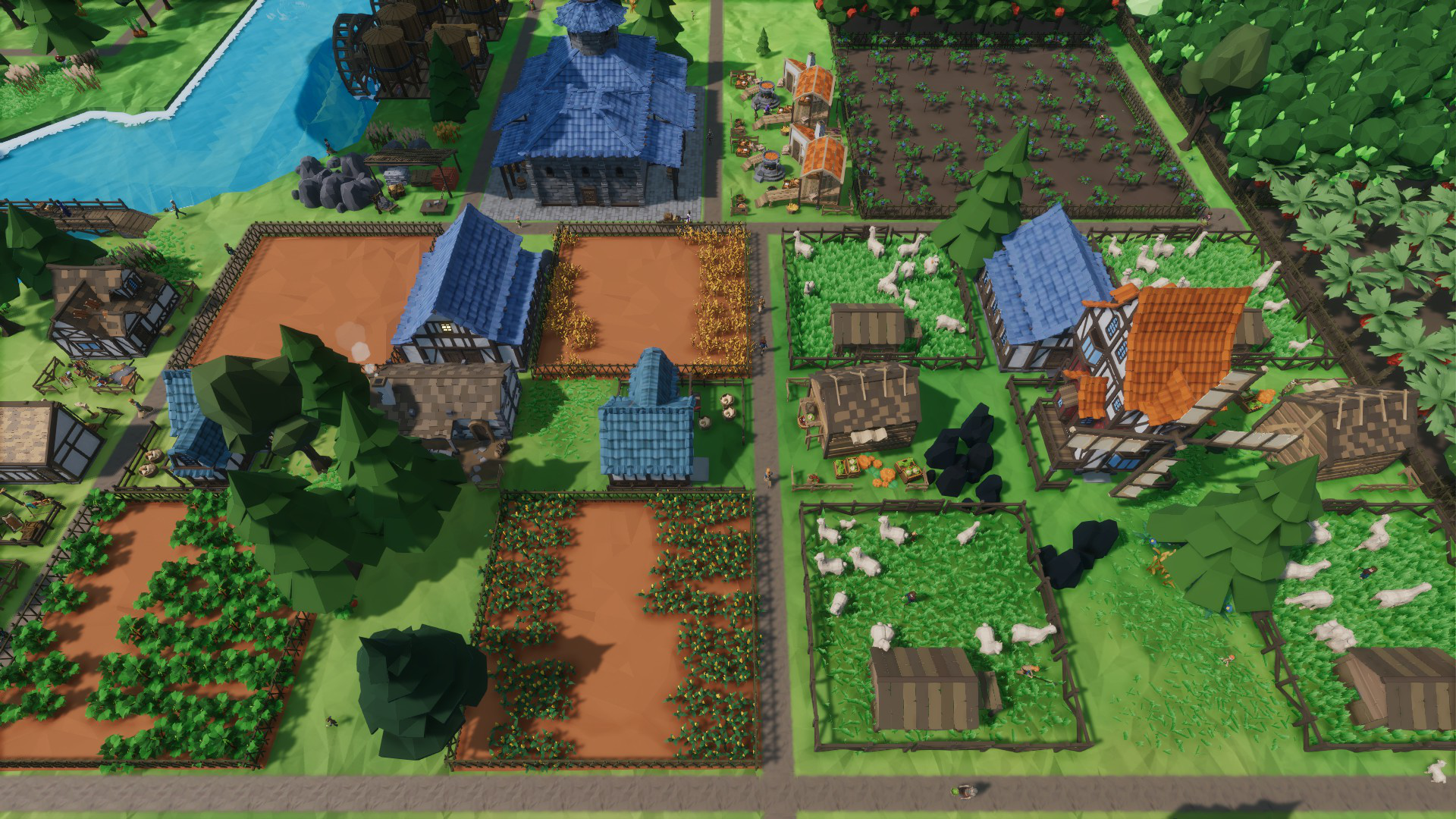
With the prosperity, prestige, health, and happiness in the town, the villagers want modern conveniences. Here we built
Butcherto convert meats tomeat chopVeg Standto convert vegetables tosalad
which (in-game mechanics) create more happiness and sate more hunger. It’s nice to let someone else do that hard work!
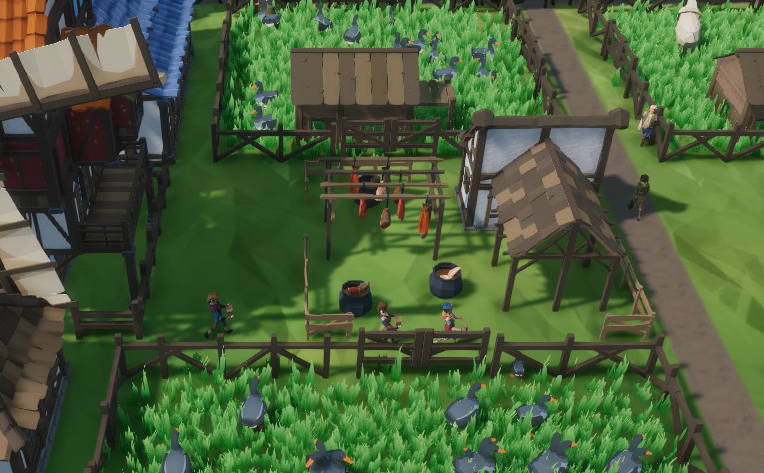
Preserves
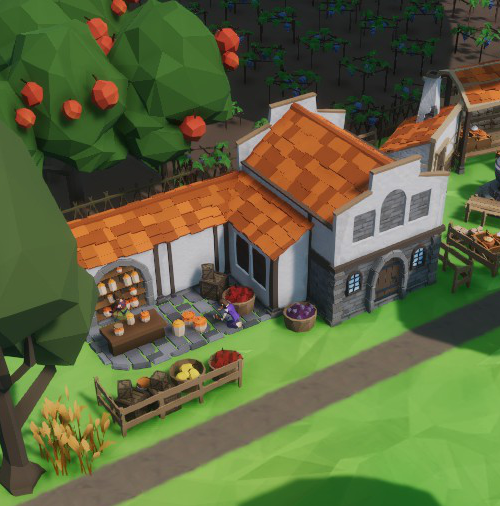
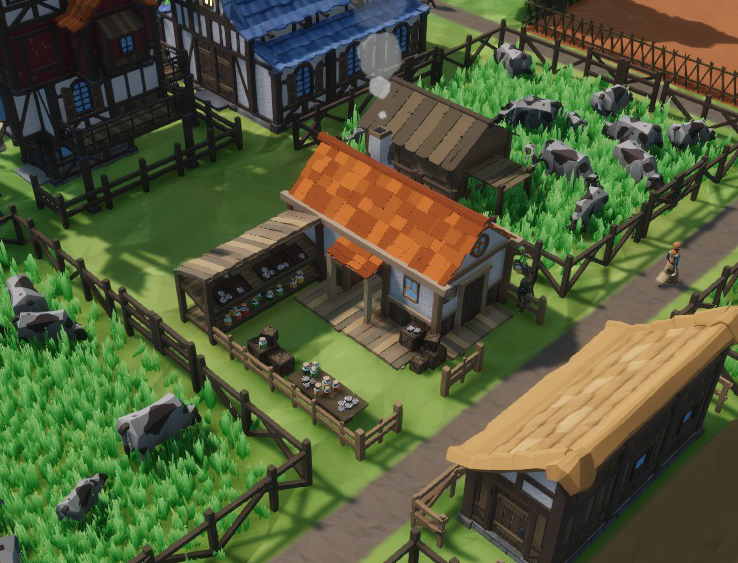
To help survive the tough winters and have more independence from agriculture, we built
Jam Workshopsto makejamfrom fruitCanneriesto makefruit cansandvegetable cansCuring Workshopsto createsalted fishandsalted meat
NoteFood Tiers
In this game, there are three tiers of food
- raw food
- simple food
- fancy food
Villagers are understandably bored of raw food and want to intake simple food whenever possible. However, we need caches of simple food to create the fancy food, so we go into the stock management panel to prohibit consumption of simple foods such as milk, eggs, and fruit to support the new industries
Bread and Butter
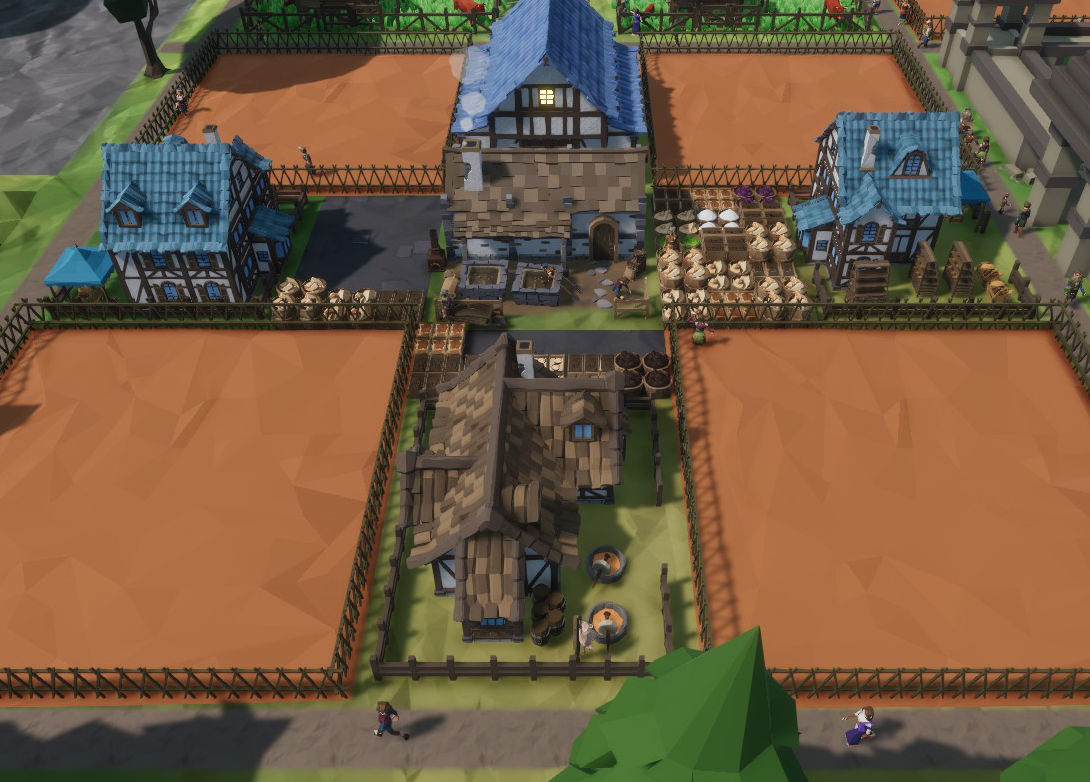
Finally using the massive stores of flour and milk, we built
Bread Makersto producepeasant breadandceremonial breadButter Workshopto makebutterfrommilk
But can we then make even fancier foods?
Horsepower
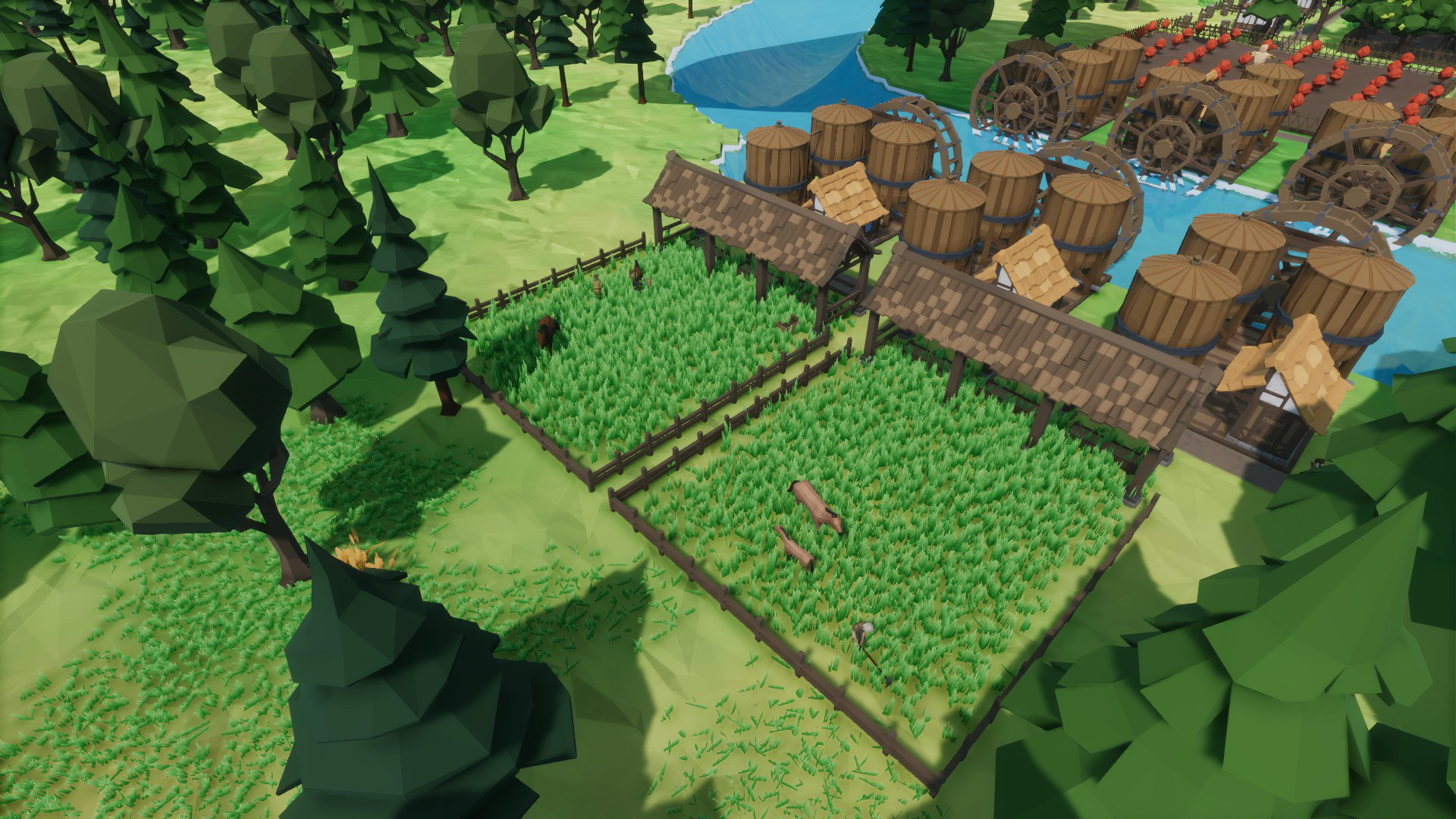
Our final animal acquisitions were the horse and donkey. Both have to raised in a Corral, but they allow the townsfolk to carry more supplies at work.
We also delegated
- some
Knitting Workshopsto makehand baskets - an
Advanced Tailorto makebackpacks - an
Advanced Smithyto makehandcarts
Steel Age
We built a Foundry to produce steel (and imported a lot too). This built up a cache to supply 3 Forges to produce building kits, gears, and tool kits.