NIST FALCON: AI Chat

Author

Derek Sollberger

Published

March 27, 2026

Instructors’ Statements of Artificial Intelligence Use in the Classroom

Introductions

NIST FALCON

AI Chat

Seminar Goal: update educator community about current trends in artificial intelligence

Seminar Objectives:

  • recap generative AI
  • ponder AI resilience
  • draft syllabi statements
  • answer concerns

NIST FALCON

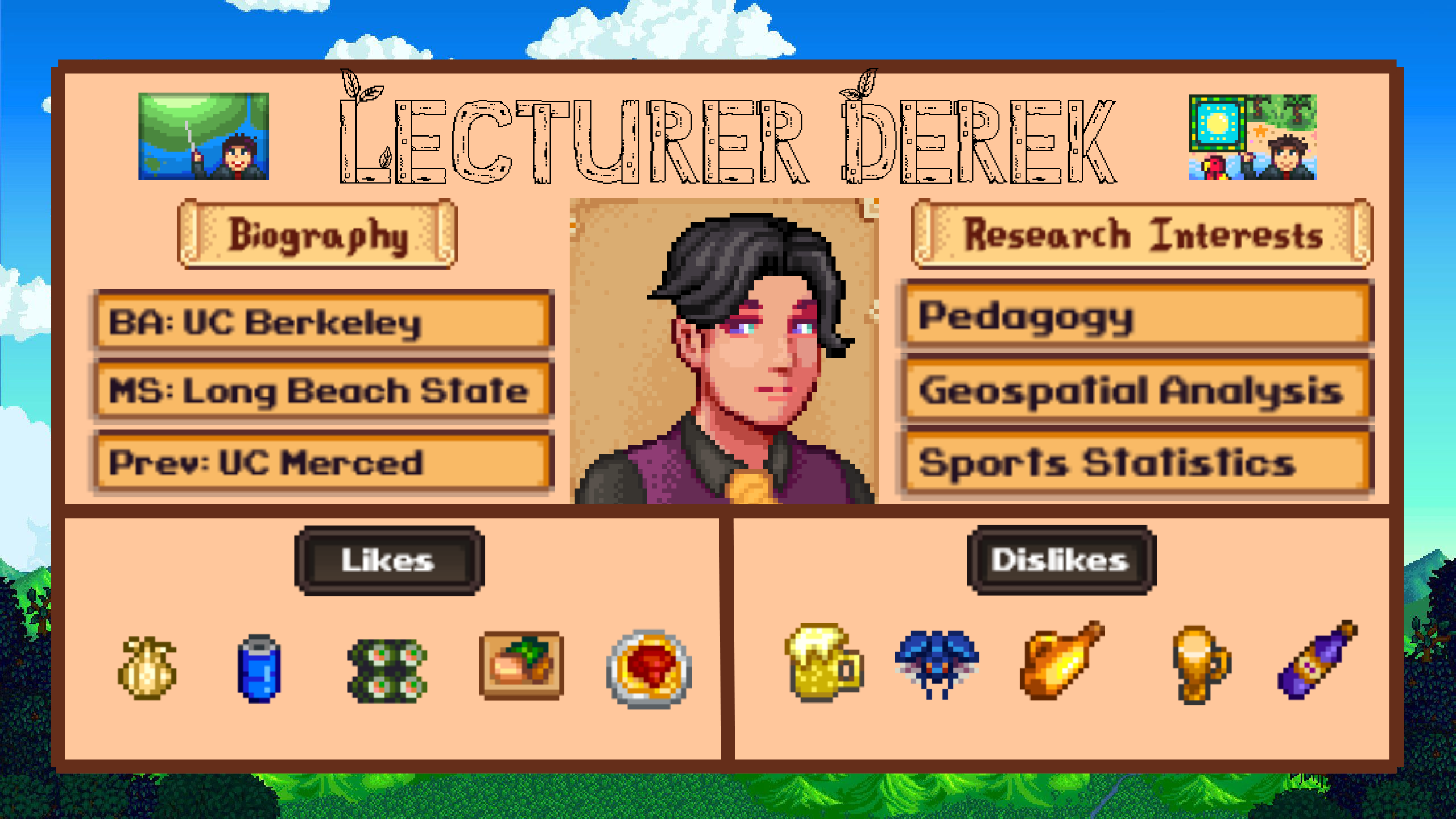
Presentor

Princeton Courses

  • sophomore level
  • 160 students

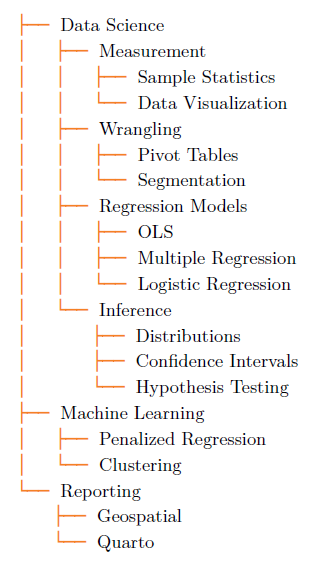
data science
  • junior level
  • 60 students

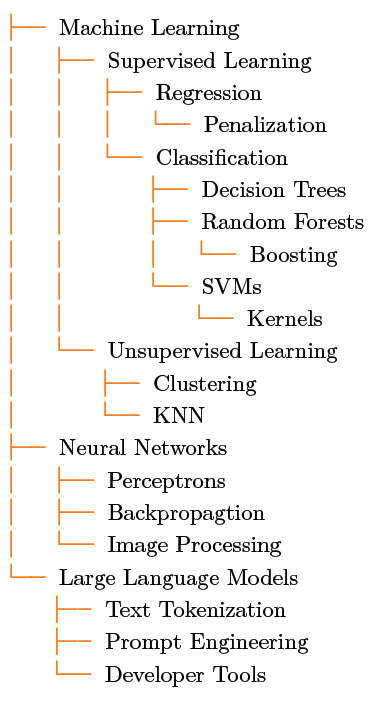
machine learning

Definitions

Statistics: Models that express probabilistic approaches

Machine Learning: Algorithms that modify models and parameters

Artificial Intelligence: Reshaping models and hyperparameters

June 2022

image source

Generative AI

Generative artificial intelligence methods produce novel text, images, sound, video, etc.; from training data.

August 2023

image source

Journey

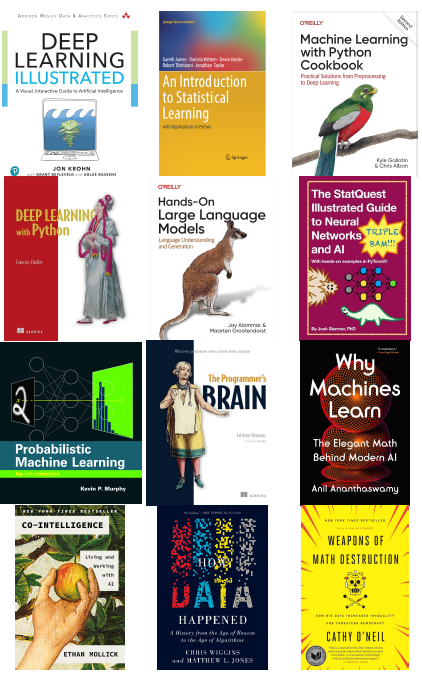
Over the past 3 years, I have read over 20 books about artificial intelligence.

books about AI

Explorations

Games

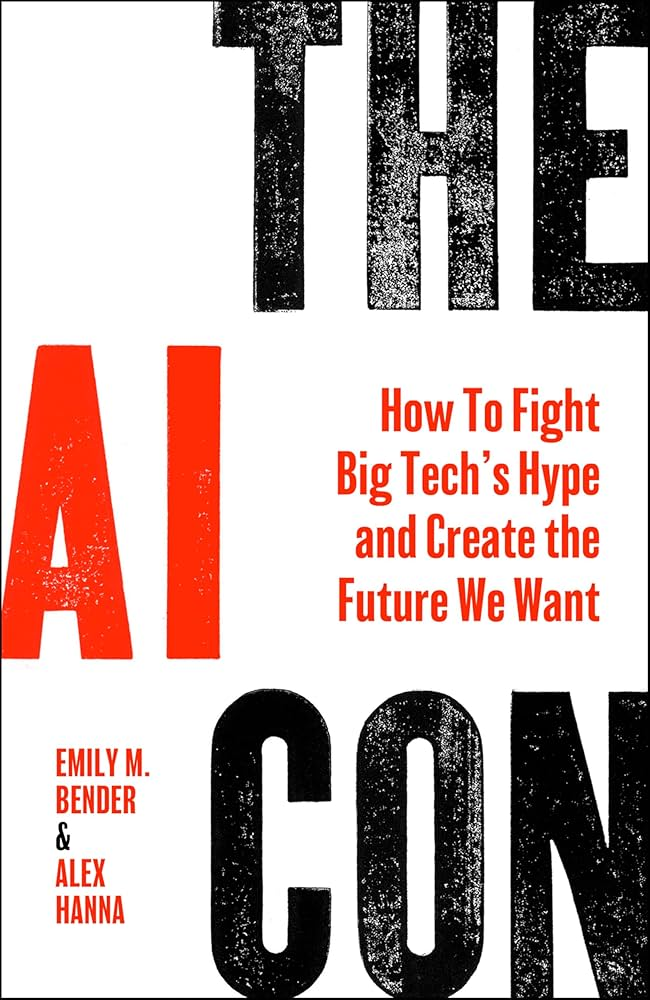
The AI Con

“In 1990, AI researcher and Dartmouth conference attendee John McCarthy popularized Soviet mathematician Aleksandr Kronrad’s phrase

chess is the Drosophila of AI

because, he believed, the game was an efficient way to do rapid experimentation towards a long-term goal.” — page 154

Progression

June 2022

image source

August 2023

image source

Synthesis

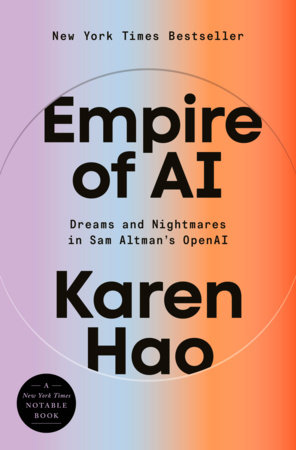
Empire of AI
  • “June 2022 … [Bill Gates] told the team that he would only start paying attention once GPT-4 scored a 5 on an AP Biology test—AP Bio because he felt it tested critical scientific thinking rather than a memorization of facts.” — page 245

  • “By late August …

Plagiarism

The AI Con
  • Turnitin, one of the most popular plagiarism detection systems (so much so that it is integrated with many learning management systems), released an AI detection tool that they argue is highly accurate. So accurate, they say, that it has a 1 percent false-positive rate.”
  • OpenAI itself has admitted, in a blog post geared toward educators, that AI detectors don’t work, or at least are not reliable enought to be used by educators to accuse students of using the tools.” — page 93

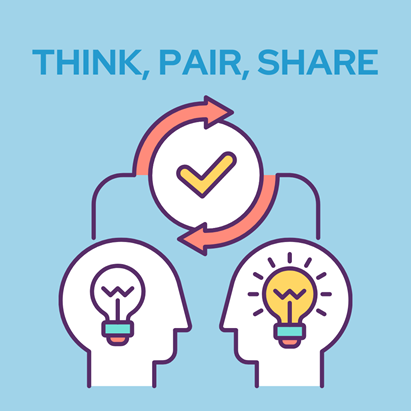
Think Pair Share

What have been some of your concerns about generative AI as the progression in technology have affected educators and students?

think pair share

Syllabi Statements

Broad Examples

The following examples are from The McGraw Center for Teaching and Learning at Princeton University.

All assignments (including drafts) you submit for this course must be your own work, and not generated by AI. Representing output generated by or derived from GAI as your own work is a violation of the University’s academic regulations (see RRR 2.4.6.). You may use AI for background research – not content generation – in which case you are responsible for verifying the output and disclosing your use by including a record of your prompts and the AI’s output along with your assignment. Please note that you may not make use of AI tools to summarize course readings or to edit your prose.

Intellectual honesty is vital to an academic community and for my fair evaluation of your work. All work submitted in this course (including drafts) must be your own, completed in accordance with the University’s rules, which stipulate that representing output generated by or derived from GAI as your own work is a violation of the University’s academic regulations (see RRR 2.4.6.).

You may make use of AI tools under limited circumstances. You may use AI on problem sets to check for errors and debug code, and – if you do – you must disclose this use, naming the tool (e.g., “checked for errors using Copilot”). You may not make use of AI to generate code or complete the problems. Failure to comply with this policy constitutes a violation of the University’s academic regulations (see RRR 2.4.6.). Please note that the exams in the course will be timed in-class exams that you will complete without AI assistance of any kind. Failure to comply with this policy constitutes a violation of the University’s academic regulations (see RRR 2.4.6.).

This course makes use of Bots++, an AI powered chatbot that has been trained on our course material and can answer questions about course concepts, terminology, and logistics. Your interaction with this chatbot is the only permissible use of AI in the course. In other words, you may not use AI to answer homework questions, complete lab reports, or assist you on the quizzes and exams. Doing so is a violation of the University’s academic regulations (see RRR 2.4.6).

Student Concerns

When I asked my students (Fall 2025, \(n = 60\)) to rank the following concerns about data and AI, the results were

  1. Privacy
  2. Authenticity
  3. Safety
  4. Regulation
  5. Economics

Derek’s Syllabus

My general guidance for students in SML 201 is that it is permitted to use artificial intelligence tools (such as ChatGPT or Claude large-language models (LLMs) to coach on broad concepts. Students may not have software answer homework or project tasks directly. Students may not upload data sets, exercise questions, data visualization, or model results into LLMs.

Permitted discourse includes

  • “How do I make a bar chart in R and ggplot?”
  • “Can you help me understand the concept of heteroskedasticity?”
  • “For exam preparation, create some multiple-choice questions about confidence intervals”

Prohibited discourse includes:

  • “Use this data set and give me summary statistics of the columns”
  • “Summarize this graph and give me advice on how to improve it”
  • “From the model results, how do we describe the null hypothesis?”

Here I want to disclose how the teaching staff may use artificial intelligence tools over the semester.

  • Responses for ‘During Class Prompts’ will be summarized through an AI technique called Topic Modeling
  • Gradescope submissions are collected and grouped by similar responses and handwriting to speed up grading of common answers.
  • Instructors use open-source foundation models offline to ensure student work will not be disseminated to the wider internet nor used to train future foundation models.
  • Project data scenarios may be explored through literature searches to see how other researchers approached the data.

Think Pair Share

How have you been refining your syllabi to address the presence of generative AI?

think pair share

Quo Vadimus?

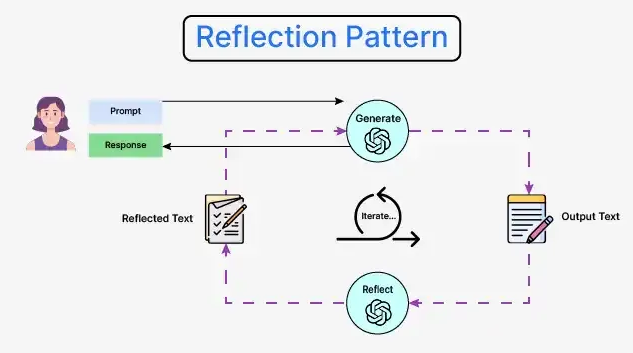
Agentic AI

feedback loops

Agentic AI (like having a librarian help you write an essay) creates a feedback loop that

  • verifies sources
  • refines writing
  • strengthens connections between sections
  • builds longer essays and reports

AI Resilience

My advice for “AI resilience” and adapting to the ever-changing tech is to simply continue what you have been doing.

  • Flipped classrooms
  • Alternative grading
  • Universal design for learning

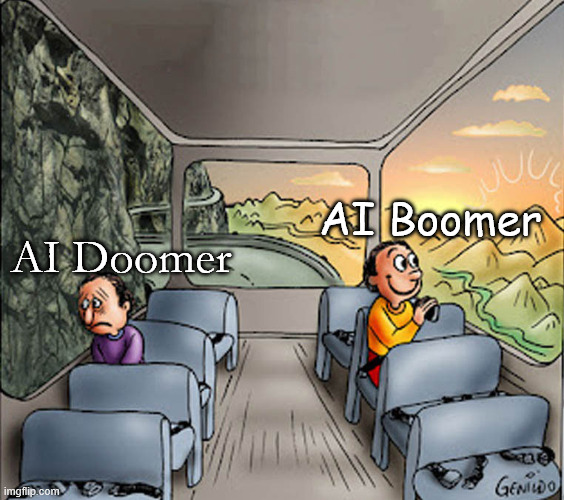
Stuck in the Middle

AI Boomer or AI Doomer?
TipTakeaway Message
  • You can be an AI boomer
  • You can be an AI doomer

Be neither

Thanks!

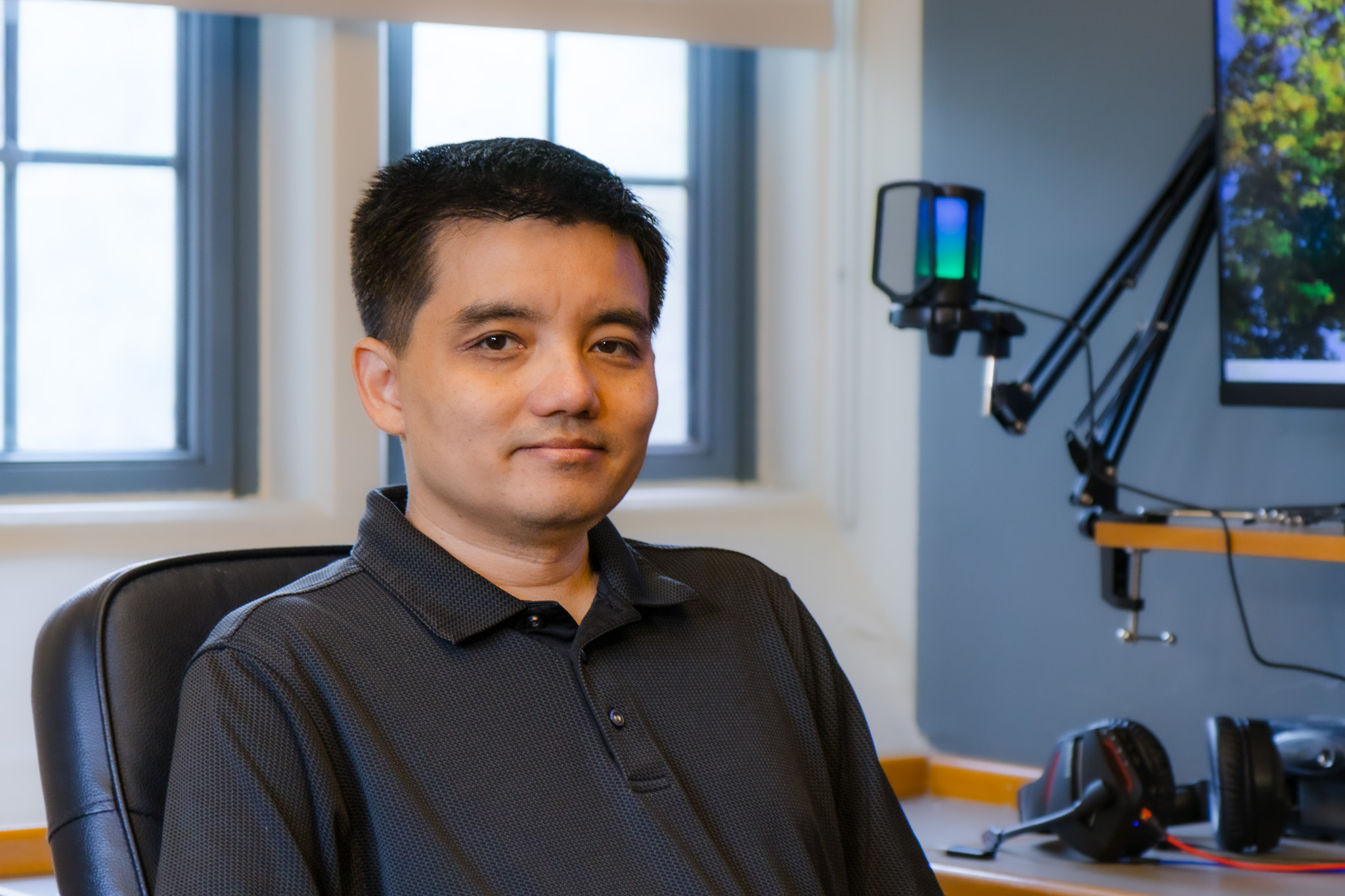
Derek Sollberger

Derek Sollberger

  • Lecturer of Data Science

  • Princeton University

    • Center for Statistics and Machine Learning
  • dsollberger[at]princeton[dot]edu

sessionInfo()
R version 4.5.2 (2025-10-31 ucrt)
Platform: x86_64-w64-mingw32/x64
Running under: Windows 10 x64 (build 19045)

Matrix products: default
  LAPACK version 3.12.1

locale:
[1] LC_COLLATE=English_United States.utf8 
[2] LC_CTYPE=English_United States.utf8   
[3] LC_MONETARY=English_United States.utf8
[4] LC_NUMERIC=C                          
[5] LC_TIME=English_United States.utf8    

time zone: America/New_York
tzcode source: internal

attached base packages:
[1] stats     graphics  grDevices utils     datasets  methods   base     

loaded via a namespace (and not attached):
 [1] htmlwidgets_1.6.4 compiler_4.5.2    fastmap_1.2.0     cli_3.6.5        
 [5] tools_4.5.2       htmltools_0.5.8.1 rstudioapi_0.17.1 rmarkdown_2.29   
 [9] knitr_1.50        jsonlite_2.0.0    xfun_0.52         digest_0.6.37    
[13] rlang_1.1.6       evaluate_1.0.4